

Yes, employers can conduct random drug tests, and for many safety-sensitive federal roles they’re required to. Private employers generally have wide latitude to test, though a handful of states limit how and when. If you’re selected, the process should be neutral and unannounced, backed by confirmatory lab testing before any discipline happens. Comply, document everything, and know you have the right to disclose medications and request a review.
TL;DR:
- Random drug tests are conducted through neutral, computer-generated selection processes that prevent discrimination claims and occur without prior notice.
- Testing types vary, with hair follicle tests detecting drug use over months, urine tests covering days to weeks, and oral fluid tests capturing only hours to a couple of days.
- Confirmed positive results are reviewed by a licensed medical officer, who considers prescriptions and OTC medications before reporting to employers.
- Employers must maintain a documented, consistent, and confidential testing process to defend against discrimination or legal challenges.
- Employees can proactively disclose medications, request repeat testing, and use pre-test kits to better understand their current drug use status before scheduled tests.
Table of Contents
- What Is a Random Drug Test at Work and How Does Selection Work?
- Is Random Drug Testing Legal? Federal, State, DOT, and Union Rules
- Urine, Oral Fluid, or Hair: Which Test Catches What?
- What Happens If You’re Selected? Collection, Confirmation, and Your Rights
- Building a Defensible Random Testing Program
- What You Can Actually Do Before and After a Random Test
- How Do Prescriptions and OTC Medications Affect Test Results?
- Does Random Drug Testing Actually Improve Workplace Safety?
- How Is Your Privacy Protected During a Random Test?
- Can You Fight a Positive Result? Consequences and the Appeals Process
- Detox Experts’ Take: Fairness, Safety, and Where Preparation Actually Fits
- Prepare for Hair Testing With Products Built for the Job
- Sources
- FAQ
What Is a Random Drug Test at Work and How Does Selection Work?
A random drug test at work is exactly what it sounds like: an unannounced screening where employees get pulled from a pool using a neutral, statistically valid process, usually a computer random number generator managed by the employer or a third-party administrator (TPA). Nobody picks names off a clipboard. The point of randomness is to make selection impossible to predict and hard to challenge as discriminatory.
That neutrality matters legally. When an employer singles out a specific worker for testing based on suspicion or behavior tied to a possible disability, it opens the door to an ADA-related discrimination claim. True random selection sidesteps that risk entirely because the computer doesn’t know who anyone is.
The operational flow usually looks like this:
- The employer or TPA builds a testing pool of eligible employees, often everyone in safety-sensitive or covered positions.
- A random selection run pulls names at set intervals, sometimes quarterly, sometimes monthly.
- Selected employees get notified only shortly before collection, often the same day.
- A collector verifies identity and gathers the specimen under documented chain-of-custody procedures.
- The lab runs an initial screen and, if needed, a confirmatory test.
Employers under U.S. Department of Transportation rules don’t get to choose their own pace either. DOT-regulated safety-sensitive employees face federally mandated annual testing rates that typically run between 25% and 50% of the covered workforce, depending on the mode of transportation and industry-wide positivity rates.
Is Random Drug Testing Legal? Federal, State, DOT, and Union Rules
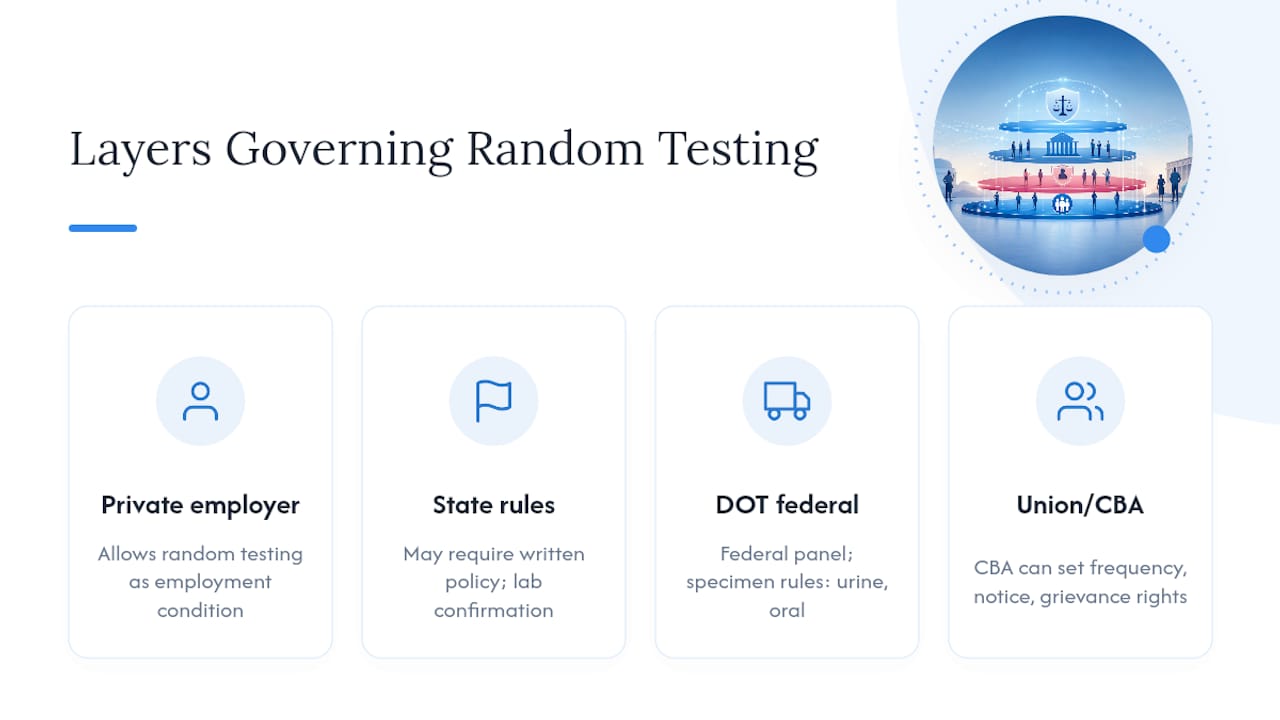
Random testing is legal in the United States, but the rules that govern it stack up in layers, and which layer applies depends entirely on your job. Private employers generally can adopt drug testing policies, including random testing, as a condition of employment. Courts have consistently upheld this authority, especially in at-will employment states where there’s no contract limiting the employer’s discretion.
That general rule bends in specific places. A number of states impose their own restrictions, such as requiring advance written policies, limiting random testing to safety-sensitive positions only, or mandating specific notice periods before a program takes effect. Some states also require that a positive result get confirmed through a certified lab and reviewed by a Medical Review Officer before any adverse action. If you’re an employer rolling out a program, checking your specific state’s statute isn’t optional. If you’re an employee, that same statute is often your first line of defense if something about the process feels off.
DOT-regulated industries operate under an entirely different, stricter framework. Airlines, trucking companies, railroads, and pipeline operators must follow federal mandatory guidelines that dictate not just testing rates but the exact panel of substances screened, typically marijuana, cocaine, amphetamines, opioids, and PCP, along with authorized specimen types (urine and oral fluid under current federal guidelines).
Union workplaces add another wrinkle. Collective bargaining agreements often negotiate specific terms around testing frequency, notice, and grievance procedures, which can override an employer’s general policy discretion. Civil liberties advocates have also flagged that testing employees in non-safety-sensitive roles raises separate privacy concerns that don’t apply the same way to a commercial truck driver or airline mechanic.
Urine, Oral Fluid, or Hair: Which Test Catches What?
Not all drug tests look for the same thing, and the differences matter a lot more than most employees realize. The test type determines the detection window, and the detection window determines what a positive result actually tells your employer.
Urine testing remains the workplace standard and the backbone of most DOT programs. It typically catches drug use from the past few days up to roughly two weeks for heavier or more frequent use, depending on the substance and individual metabolism.
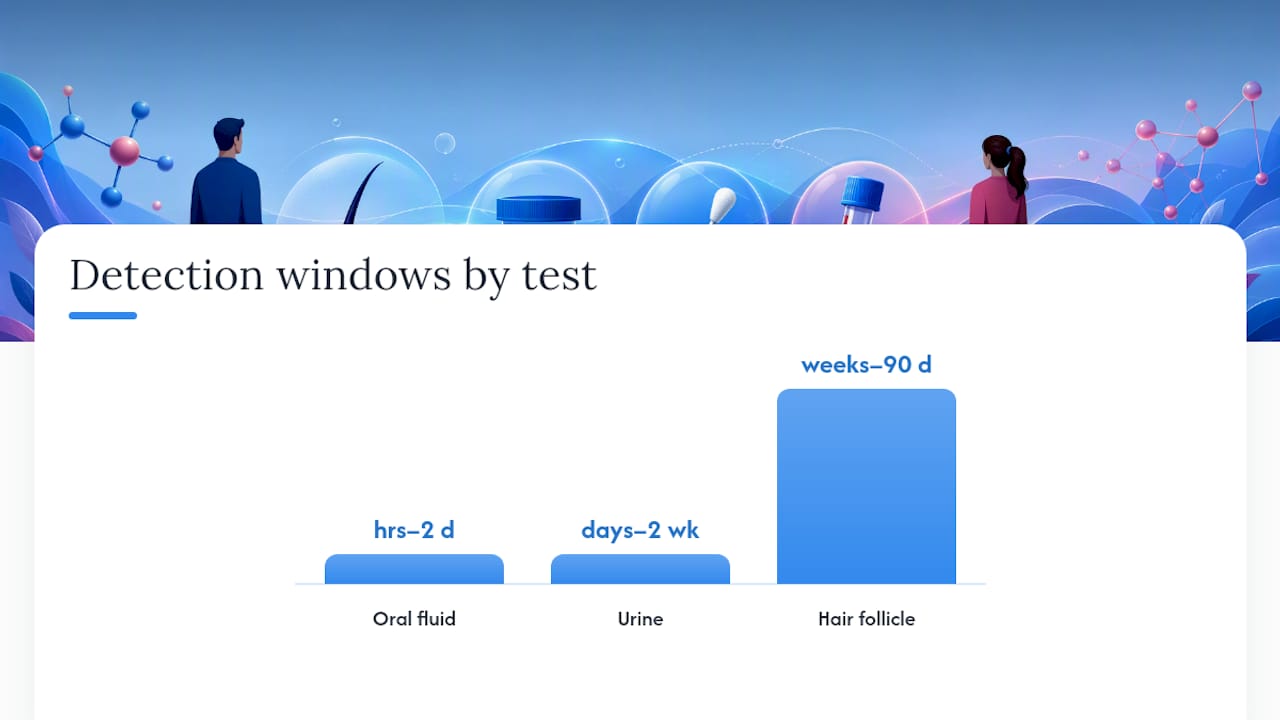
Oral fluid testing covers the shortest window, generally hours up to a couple of days. Employers increasingly like it for rapid, on-site screening because it’s harder to adulterate than urine and doesn’t require a private collection area.
Hair follicle testing is where things get genuinely different. Hair testing can reveal drug use going back weeks to months, since drug metabolites bind into the hair shaft as it grows and stay there. That’s precisely why more employers, especially in safety-sensitive and executive-level hiring, lean on hair tests: they paint a pattern-of-use picture that a single urine sample simply cannot.
Detection window snapshot: Oral fluid: hours to 2 days. Urine: several days to 2 weeks. Hair follicle: weeks to 90 days or more, depending on hair length and lab cutoff standards.
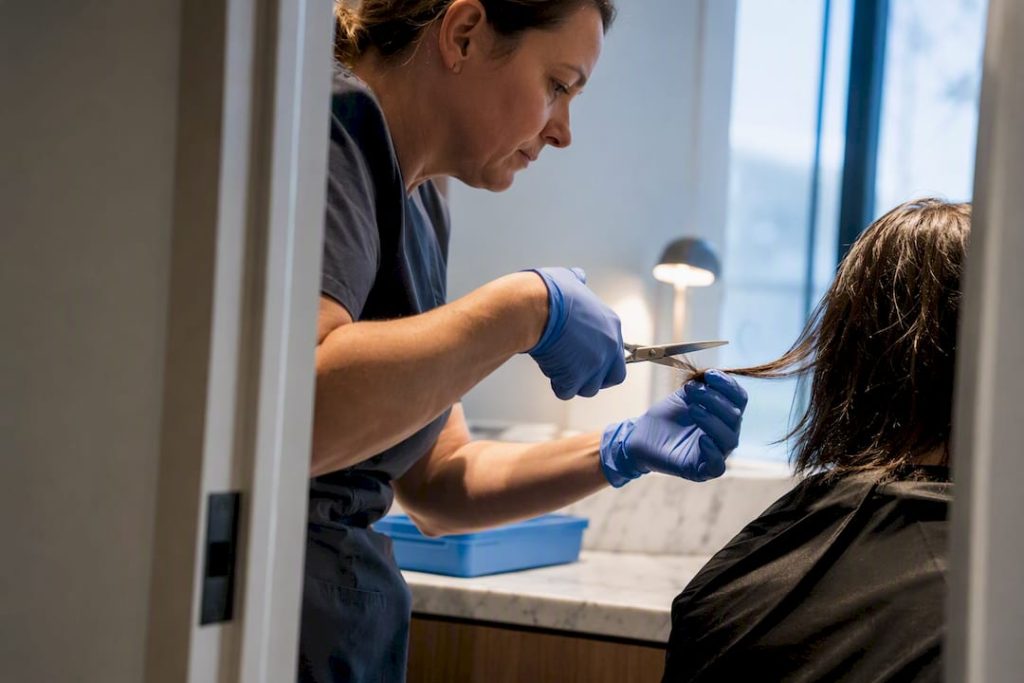
Hair testing also comes with its own set of technical wrinkles. Collection requires a length of hair cut close to the scalp, and labs apply decontamination washes before testing specifically to rule out external contamination versus actual ingestion. Confirmatory lab testing and specific cutoff thresholds still apply here, the same way they do with urine and oral fluid screens, which is part of why hair results can hold up so well when challenged. If you want to understand exactly how hair follicle drug testing works before you’re ever notified, it’s worth reading up before you’re standing in a collection room.
What Happens If You’re Selected? Collection, Confirmation, and Your Rights
Getting the tap on the shoulder for a random test follows a predictable sequence, even if it never feels that way in the moment.
- Notification. You’re told you’ve been selected, usually with little advance warning, and given a specific timeframe (often that same day) to report for collection.
- Identity verification. The collector checks a photo ID to confirm you’re the person listed in the testing pool.
- Specimen collection. Depending on the test type, this happens under chain-of-custody protocols, meaning every hand that touches your sample gets logged.
- Presumptive screening. The initial test flags a “negative” or “non-negative” result, usually within a day or two.
- Confirmatory testing. Any non-negative result automatically goes to more sensitive lab confirmation, such as gas chromatography-mass spectrometry, before it’s reported as positive. This step exists precisely because workplace testing carries employment consequences, unlike many informal or clinical screening scenarios.
- Medical Review Officer review. A licensed MRO reviews any confirmed positive and contacts you directly to ask about prescription medications or other legitimate explanations before the result gets reported to your employer.
If a result comes back confirmed positive after MRO review, your options usually include requesting a retest of the split specimen, appealing through your employer’s stated policy, or accepting referral to a Substance Abuse Professional (SAP) if your position falls under DOT rules. None of this happens on the spot. You have time to respond, and the process is built around a chain of custody exactly so employers can defend it. If you want a fuller sense of what those safeguards look like in practice, it’s useful reading before test day, not after.
Building a Defensible Random Testing Program
Employers who get sued over random testing almost never lose because testing itself was illegal. They lose because the selection process wasn’t actually random, or the policy wasn’t documented and applied consistently.
A defensible program needs a few non-negotiable elements:
- A written policy distributed to every employee before testing begins, spelling out pool criteria, frequency, and consequences.
- A genuinely neutral selection method, ideally a validated RNG system run by a third-party administrator rather than in-house software nobody can audit.
- Consistent enforcement across every department and pay grade, not just entry-level staff.
- Confidentiality protocols limiting who sees results.
- Clear escalation paths, including EAP or SAP referrals, so a positive result doesn’t automatically mean termination.
Rotating selection windows across shifts and locations, and avoiding predictable patterns like same-day-every-week testing, strengthens the defense against claims that certain workers were targeted.
Pro Tip: If you’re an employer, keep a dated log of every RNG output and pool change. That paper trail is often the single piece of evidence that ends a discrimination complaint before it goes anywhere near a courtroom.
What You Can Actually Do Before and After a Random Test
Once you know you’re on the list for testing, panic doesn’t help you but preparation and honesty do.
- Comply and document. Ask for a copy of the collection protocol if one is offered, and note the time, location, and collector’s name.
- Request written confirmation of any instructions given, especially around retesting or appeal deadlines.
- Disclose medications to the collector or MRO immediately, including anything prescription or over-the-counter that could affect results.
- Understand hair-specific prep realities. Home pre-test kits exist to give you an honest read on where you currently stand, and a hair pre-wash regimen (like the Macujo Method) is designed to work on the hair shaft itself, targeting the outer cuticle layer where residue accumulates. Decontamination chemistry, not a single miracle rinse, is what actually matters here, and results can vary by hair type, product history, and how consistently a regimen is followed.
- For urine or saliva, avoid any form of tampering or substitution. It’s illegal in most states and easily flagged by modern collection protocols. Focus instead on understanding your detection window and being upfront about anything in your system.
Pro Tip: If a hair test is a real possibility for you, an at-home hair follicle drug test kit can tell you where you stand days before your actual workplace test, giving you time to plan rather than guess.
Reading up on how hair testing actually works before you’re facing a deadline gives you a much clearer picture of what’s realistic and what isn’t.
How Do Prescriptions and OTC Medications Affect Test Results?
Prescription and over-the-counter medications can trigger a non-negative screen, but they rarely end the story there. Certain prescribed opioids, ADHD medications like amphetamine-based stimulants, and even some antidepressants can cross-react on an initial screen. Common OTC products, including some cold medicines containing pseudoephedrine or certain NSAIDs, have also been known to produce false positives on presumptive tests.
This is exactly why the confirmatory testing and MRO review steps exist. A confirmed positive on an initial screen doesn’t get reported to your employer as-is. Instead, the Medical Review Officer contacts you directly, asks about current prescriptions and recent OTC use, and reviews documentation like a pharmacy receipt or a doctor’s note. If the MRO determines a legitimate medical explanation accounts for the result, the report to your employer comes back negative, or it’s annotated to reflect the legitimate use.
The practical takeaway for employees: disclose medications proactively, before a test if your workplace allows it, or immediately to the collector and MRO if not. Waiting until after a positive result puts you in a weaker position, even though the review process is designed to protect legitimate medical use. Keep a simple list of current prescriptions and dosages so you’re never scrambling to remember names under pressure.
Does Random Drug Testing Actually Improve Workplace Safety?
The logic behind random testing is straightforward: if employees never know when they’ll be tested, the incentive to use on a workday, or show up impaired, drops. Industries with genuine safety stakes, aviation, trucking, heavy machinery, and rail, built entire regulatory frameworks around this exact deterrent effect, and employer guidance consistently frames random testing as a safety-driven measure rather than a punitive one.
Productivity ties into this more directly than most people assume. Impairment on the job doesn’t just risk injury, it slows output, increases error rates, and raises absenteeism tied to accidents or their aftermath. Employers running consistent, well-documented random programs tend to report fewer workplace incidents over time, which is part of why insurance carriers sometimes offer reduced premiums to companies with active testing policies.
The safety case has limits worth acknowledging. Random testing catches presence, not necessarily current impairment, especially with hair testing’s long detection window. A worker could test positive for something used weeks earlier with zero connection to on-the-job performance that day. That’s a real tension in the system: it deters long-term patterns of use effectively, but it’s a blunt instrument for measuring same-day fitness for duty. Most employers address that gap by pairing testing programs with observation-based reasonable-suspicion protocols, so testing and behavioral judgment work together rather than testing standing alone.
How Is Your Privacy Protected During a Random Test?
Confidentiality safeguards run through nearly every step of the testing process, and they exist because a drug test result is sensitive medical information, not something meant for casual office conversation.
Collection itself typically happens in a private space, with observed collections (where someone watches specimen collection directly) reserved for specific circumstances like suspected tampering, rather than standard practice. Results flow through a controlled chain: the lab reports to the MRO, not directly to your supervisor, and the MRO only forwards a final negative or positive determination, not the underlying medical details behind an explained result.
Your employer generally only learns whether you passed or failed, not the specifics of what showed up or what medications you disclosed. Access to results is typically restricted to HR or a compliance officer, and file storage requirements often mandate separate, secured records apart from general personnel files. That separation matters if a legal dispute ever arises, since it limits who could have improperly accessed or shared sensitive results.
Where privacy protections get tested is with hair samples, since collection is visible and can’t be hidden the way a urine sample can. Reputable collectors still follow the same confidentiality chain afterward, and the visible nature of collection doesn’t change who has access to your actual result.
Can You Fight a Positive Result? Consequences and the Appeals Process
A confirmed positive doesn’t have to be the end of the conversation, even though the consequences can be serious. Common employer responses include immediate suspension pending review, mandatory referral to a Substance Abuse Professional for DOT-covered roles, or termination, depending on company policy and whether it’s a first offense.
Before any of that becomes final, you generally have real options. Requesting a test of the split specimen, the second portion collected specifically for this purpose, is often your strongest procedural right, since it lets an independent lab retest the same sample. You can also present documentation of a legitimate prescription directly to the MRO if that wasn’t already resolved, or file an internal grievance if your workplace has a formal appeals process, which unionized workplaces almost always do.
Timing matters here more than people expect. Appeal windows are often short, sometimes just a matter of days, so acting immediately after notification of a positive result protects your options. Keep every piece of paperwork, every date, and every name involved in your collection and review. If your case eventually needs outside review, that documentation is what makes the difference between a credible challenge and a complaint nobody can verify.
Detox Experts’ Take: Fairness, Safety, and Where Preparation Actually Fits
Random testing exists to protect real safety interests, and Some detox experts have spent over 20 years focused specifically on hair testing because it’s the modality most employees misunderstand and most underprepared for. Our position has never changed: follow your employer’s policy, disclose medications honestly, and treat testing preparation as informed self-knowledge, not a shortcut around the rules. A pre-test tells you where you stand. It doesn’t guarantee an outcome, and nobody selling you that promise is being straight with you.
— Detox Experts
Prepare for Hair Testing With Products Built for the Job
There are options built specifically for people who need to know where they stand before a hair, urine, or saliva screening, not guesswork, not forum advice, an actual regimen with long-term experience behind it. Our flagship approach centers on a hair pre-wash treatment based on the Macujo Method, engineered to work through the cuticle layer where residue builds up over time, followed by a deep-cleansing shampoo step to help prepare hair before a follicle test.
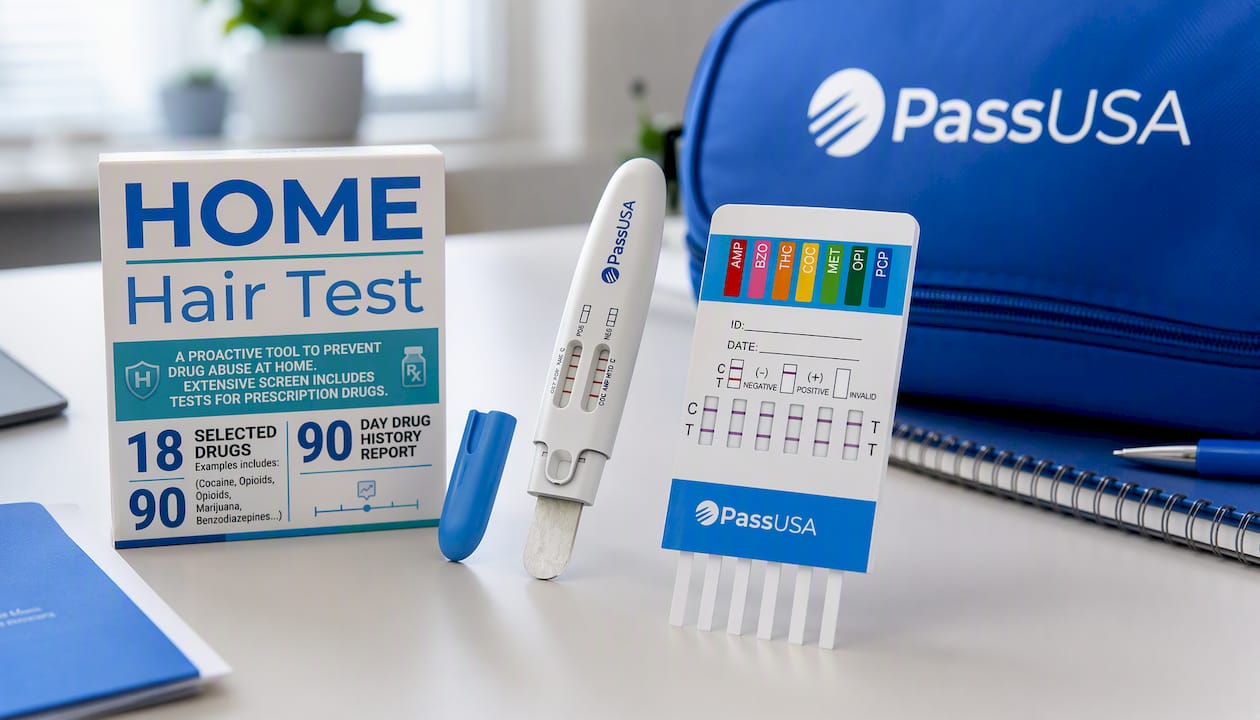
For readers facing different test types, our catalog covers all three major screening methods. The 12-Panel Multi-Drug Oral Fluid Saliva Test gives you a rapid pen-style pre-check before an on-site saliva screen. The At-Home Hair Follicle Drug Test Kit lets you test privately and confidentially days ahead of a workplace collection. The 13-Panel Urine Drug Test Dip Card, which includes fentanyl screening, gives you clinical-grade insight into where a urine sample would land.
If your situation is complicated, multiple substances, a tight testing deadline, unusual hair type, a private consultation with Mike Macujo gets you direct, personalized guidance instead of generic instructions. Always follow your employer’s testing policy and applicable law. Browse the full product catalog to find the right starting point for your specific test date.
Sources
- Employer FAQs | U.S. Department of Transportation Office of Drug & Alcohol Policy and Compliance
- Employer resources: Federal laws | SAMHSA
- Drug Testing – StatPearls – NCBI Bookshelf
FAQ
Can You Get Randomly Drug Tested at Work?
Yes. Private employers generally have the right to implement random testing, and DOT-regulated safety-sensitive roles are federally required to participate in programs with mandated annual selection rates. State laws vary on notice and procedure requirements, so specifics depend on where you work.
Can You Get Fired for Failing a Random Drug Test?
Yes, termination is a possible consequence, but only after a confirmed positive goes through confirmatory lab testing and MRO review. Many employers offer alternatives first, like SAP referral or a last-chance agreement, especially for a first offense in a non-safety-critical role.
What Should I Avoid Before a 10-Panel Drug Test?
Avoid any product marketed as a guaranteed same-day fix, since most workplace panels include confirmatory testing that catches obvious tampering. Disclose any prescription medications ahead of time, and if a hair test is involved, understand that detection reflects weeks to months of history, not just recent use.
What Is the Best Way to Prepare Before a Drug Test?
The right approach depends entirely on the test type: hair, urine, or saliva each have different preparation realities. For hair specifically, a pre-wash detox regimen that targets the hair shaft is the most researched approach, while urine and saliva preparation is mostly about understanding your personal detection window and never attempting tampering, which is illegal and easily flagged.