

If you’re staring down a hair follicle test, your best move is a Macujo-based cleansing routine built around Aloe Rid shampoo, run in daily cycles for one to two weeks before the appointment, then confirmed with an at-home hair test. No product guarantees a negative result because labs specifically hunt for the metabolite THCA and run wash steps to catch tampering. If it’s urine or saliva instead, you’re working with a shorter window and different tools entirely.
TL;DR:
- Using the Macujo method with Aloe Rid shampoo daily for one to two weeks can lower THC levels in hair, but no product guarantees a clean result due to lab detection methods.
- Hair testing detects drug use over approximately 90 days, with the most recent 1.5-inch segment reflecting recent history, complicating attempts at masking.
- Labs target the metabolite THCA, which is incorporated into hair from bloodstream during growth, making external washing largely ineffective at removing it.
- Shorter detection windows for urine and saliva require different detox strategies, such as timing tests carefully and avoiding products that trigger false positives.
- A private consultation is advisable for immediate tests or complicated hair profiles, while at-home tests and proper cleansing can improve chances when there is sufficient lead time.
Table of Contents
- What Is a DOT Drug Test for Marijuana, and Why Does the Method Matter?
- How Do You Run a Macujo-Style Hair Cleansing Protocol?
- Why Is Hair Testing So Hard to Beat With Shampoo Alone?
- What Can You Do for a Last-Minute Urine or Saliva Test?
- What Lab Red Flags Should You Know About Before Testing?
- When Should You Handle This Yourself vs. Get a Consultation?
- Get Verified Before You’re Tested, Not After
- Sources
- FAQ
What Is a DOT Drug Test for Marijuana, and Why Does the Method Matter?
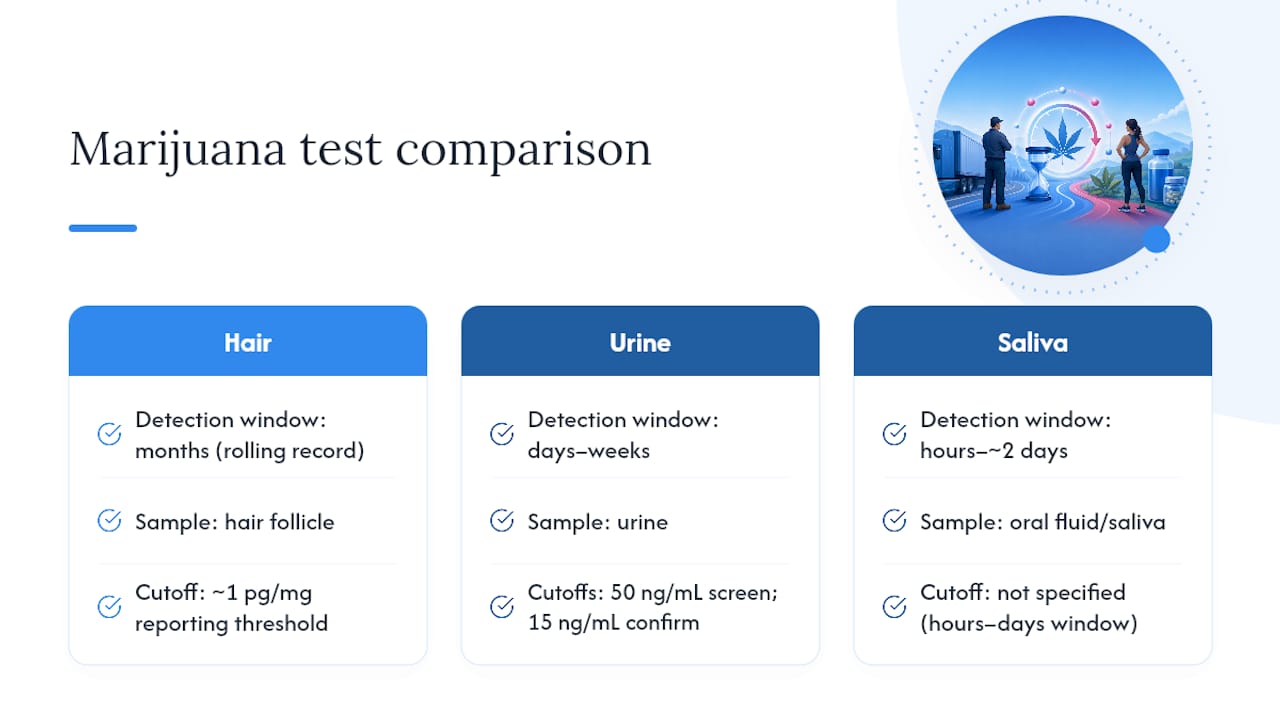
A DOT drug test marijuana screening checks for THC metabolites using federally regulated cutoff levels, and the method used, hair, urine, or saliva, determines both your detection window and your realistic options. Urine cutoffs under the mandatory federal guidelines sit at 50 ng/mL for the initial immunoassay screen, with confirmation testing at 15 ng/mL. Hair testing has no federally standardized DOT cutoff in the same way, but most commercial labs use 1 pg/mg as their reporting threshold for THCA.
The confusion most people run into is treating all three test types like the same problem. They’re not. Urine THC can clear in days to weeks depending on use frequency. Saliva clears in hours to about two days. Hair is the outlier: it holds a rolling record of drug history for months, and that’s exactly why it demands the most disciplined approach. If your test is a hair follicle screen, everything below centers on that. If you’re facing urine or saliva instead, skip to the shorter protocols later in this guide.
How Do You Run a Macujo-Style Hair Cleansing Protocol?
The Macujo Method isn’t a single shampoo, it’s a sequence: an acidic pre-treatment that opens the hair shaft, followed by a heavy-duty detox shampoo, followed by a clarifying step that seals things back up. Aloe Rid is the workhorse shampoo in that sequence because of its thick, deep-cleaning formula designed for repeated daily use.
Shopping list before you start:
- Macujo Aloe Rid shampoo (the core cleansing product)
- An acidic, non-labeled cleanser used as the pre-treatment step in the Macujo method
- A clarifying conditioner to close the cuticle after treatment
- A fine-tooth nail brush or scalp comb for scrubbing
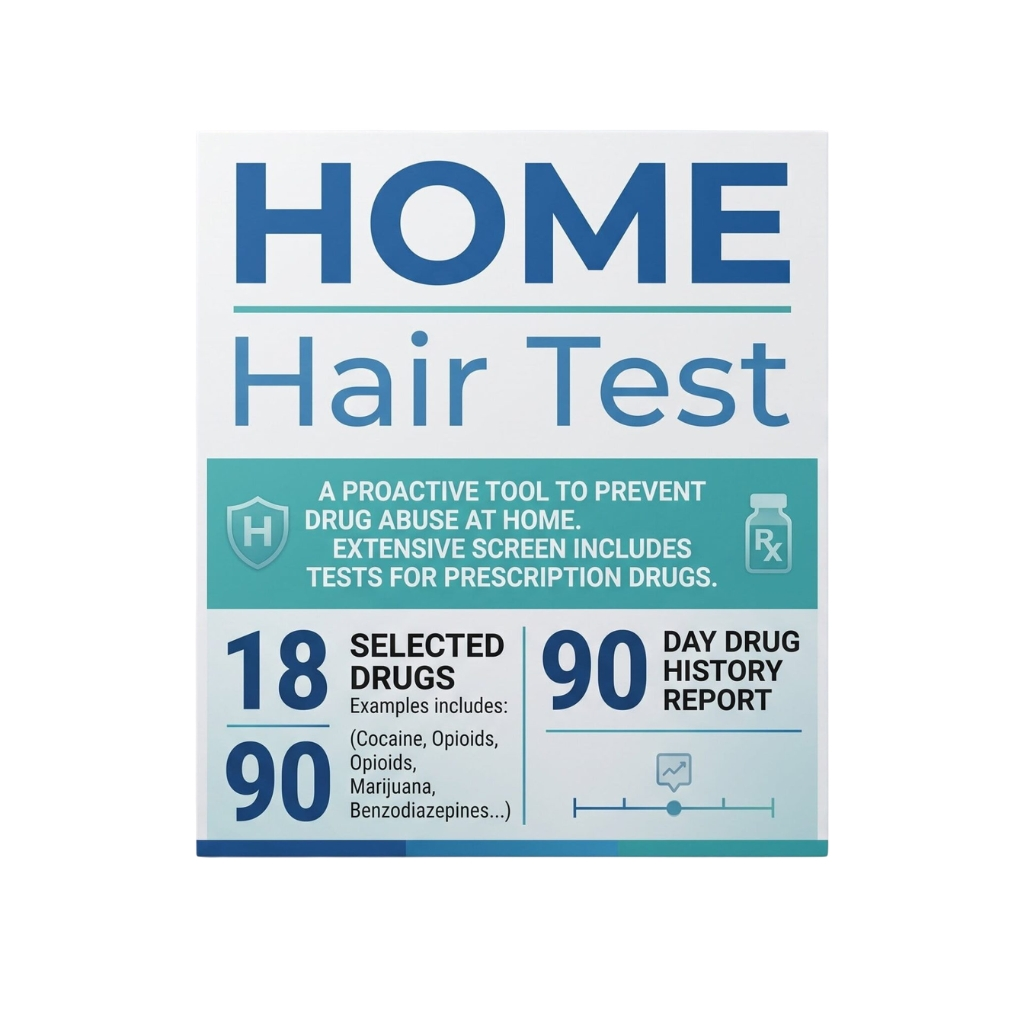
- An At-Home Hair Follicle Drug Test Kit to check your progress
The sequence, roughly:
- Apply the acidic pre-treatment to dry, unwashed hair and scalp, working it in with the nail brush for several minutes to open the cuticle.
- Rinse, then apply Aloe Rid shampoo, massaging it into the scalp (where oil and metabolites concentrate) for a full contact period, not a quick lather-and-rinse.
- Rinse thoroughly and follow with the clarifying conditioner to reseal the hair shaft and reduce visible damage.
- Repeat this full cycle once daily for 7 to 14 days leading up to your test, depending on how much lead time you have.
- In the final 24 to 48 hours, some people run the cycle twice a day, but pushing frequency too hard risks visible hair damage.
Testing labs collect from the posterior vertex (the back of the crown) because growth there is the most consistent, and a 1.5 inch segment represents roughly 90 days of history, since head hair grows about 0.6 inches per month. If your hair is shorter than 1.5 inches, collectors may take what’s available, which can actually narrow your detection window, but it can also mean body hair collection, which grows slower and unpredictably, making the window harder to estimate.
Pro Tip: Use the At-Home Hair Follicle Drug Test Kit two to three days before your official test, not the morning of. That gives you time to run one more cleansing cycle if the result comes back concerning.
If you notice brittleness, unusual dryness, or scalp irritation, that’s your body flagging you’re overdoing it. Back off-frequency rather than pushing through, since aggressive protocols can lower concentrations unpredictably without guaranteeing a clean result. For more on how sampling location and hair length affect your test, Pass USA’s hair follicle testing guide breaks down the collection process in detail.
Why Is Hair Testing So Hard to Beat With Shampoo Alone?
Hair isn’t contaminated from the outside the way people assume, it’s built from the inside. THC metabolites enter hair through the bloodstream during growth, which is why forensic reviews note that hair is fundamentally harder to alter than urine: you’re not washing off a surface stain, you’re trying to strip something incorporated into the hair’s structure.
Labs specifically target THCA (carboxy-THC), a metabolite that only shows up after your body has processed THC systemically. That’s a deliberate choice. THCA can’t easily be explained away as secondhand smoke exposure or environmental contact, which is exactly why SAMHSA guidance treats it as the marker of actual use rather than surface exposure.
Here’s what the research actually shows about cleansing effectiveness:
- A controlled study found certain products reduced measured THC in hair by a mean of about 52% to 65%, depending on the specific product and sample.
- Results varied significantly between products and individuals, meaning no outcome is predictable or guaranteed.
- Labs run confirmatory GC-MS/MS testing specifically to weed out false negatives caused by external contamination.
- Wash-step analysis lets labs distinguish externally applied THC from internally incorporated metabolites.
A 52 to 65 percent reduction sounds impressive until you consider what it means in practice: if your starting concentration is high enough, a 65% cut can still leave you above the lab’s cutoff. This is why timing and consistency matter more than any single product claim, and why nobody honest in this space will promise a guaranteed pass.
Some labs are also getting better at spotting manipulation itself. Reviews of forensic methods show researchers developing biomarkers like PTCA to flag oxidative treatments such as bleaching, and multi-step wash protocols to catch cosmetic tampering that older testing missed.
What Can You Do for a Last-Minute Urine or Saliva Test?
Hair testing gives you weeks of lead time to work with. Urine and saliva screenings often don’t, so the tactics look completely different.
For urine tests:
- Detection windows for occasional use typically run a few days; frequent or heavy use can extend detection to several weeks.
- Same-day detox drinks temporarily dilute urine but carry real limitations, including the risk of a “dilute” flag if creatinine and specific gravity fall outside normal range.
- Timing your sample, avoiding a first-morning void when concentration is highest, matters more than most people realize.
- Synthetic urine carries real risk in a DOT context: labs check temperature strips within seconds of collection and test for expected biological markers, and getting caught substituting a sample is treated as a refusal to test, not just a failure.
For saliva tests:
- Detection windows are short, generally hours up to about 48 hours after use.
- A detox mouthwash used shortly before collection targets oral residue directly, which is where saliva screens concentrate their sampling.
Before either official test, verify where you stand with a 13-Panel Urine Drug Test Dip Card or a 12-Panel Oral Fluid Saliva Test. Both give you a private read on your actual status instead of a guess.
What Lab Red Flags Should You Know About Before Testing?
Labs aren’t naive about people trying to beat a hair test, and certain signs will draw scrutiny.
- Visible bleaching, unusual brittleness, or chemical odor can prompt a lab to flag the sample for manipulation.
- Hair that’s suspiciously short or recently shaved close to a scheduled test raises questions, especially in workplace settings where testing history exists.
- Inconsistent samples, like hair from multiple body areas submitted as one, can trigger a retest request.
- A positive initial screen doesn’t end things immediately. A Medical Review Officer (MRO) reviews confirmatory results and may contact you about prescriptions or other legitimate explanations before anything gets reported to an employer.
Pro Tip: Don’t wait until test day to find out where you stand. Running an at-home hair test kit three days out gives you a real data point and, if needed, time to adjust your routine or reach out for a private consultation before it’s too late to act.
When Should You Handle This Yourself vs. Get a Consultation?
If your test is more than a week out and your hair history is straightforward, the shampoo protocol above is a solid starting point.
But if your test is within 48 to 72 hours, you’ve failed a test before, or your hair has heavy chemical treatment history (bleach, frequent dye, keratin), the math changes. A private consultation costs time and money upfront, but a failed DOT test can cost a job. When the stakes are that lopsided, personalized guidance beats guessing.
— Detox Experts
Get Verified Before You’re Tested, Not After
A strong approach is not to walk into a DOT drug test marijuana screening blind. Unlimited support until you pass is more than a slogan in this area, and it starts with matching the right product to your specific test type.
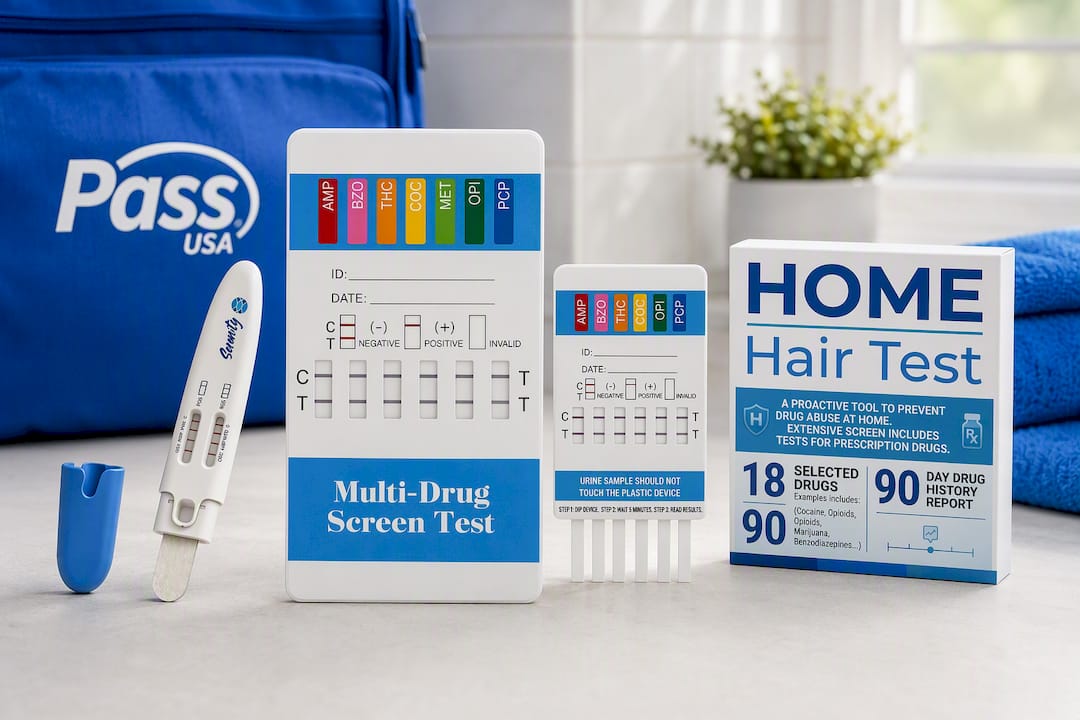
If a hair test is coming, Macujo Aloe Rid shampoo is the cleansing core of the protocol above, and Step-by-step video instructions walk you through the exact sequence and timing. Facing urine or saliva instead? The 13-Panel Urine Drug Test Dip Card and 12-Panel Oral Fluid Saliva Test let you check your status privately before the real thing. And if your situation is complicated, a tight deadline, a failed test in your past, unusual hair chemistry, book a private consultation with Mike Macujo for a plan built around your exact circumstances. Browse the full range of hair, urine, and saliva test products to find what matches your timeline today.
Sources
- Testing
- Drug metabolites and hair testing — SAMHSA
- Advances in testing for sample manipulation in clinical and forensic toxicology—part B: hair samples — PMC
FAQ
How Long Does Marijuana Stay Detectable in Hair?
A standard 1.5 inch hair sample reflects roughly 90 days of history since head hair grows about 0.6 inches per month. Longer samples can reflect an even longer history if the lab tests additional segments.
Can Aloe Rid Shampoo Guarantee I’ll Pass a Hair Test?
No product can guarantee a passed test because labs run confirmatory testing specifically designed to catch manipulation. Aloe Rid works as the core cleansing step in the Macujo Method, and studies on similar products show meaningful THC reductions, but results vary by person and usage history.
What’s the Difference Between DOT Urine Cutoffs and Hair Test Cutoffs?
Federal urine testing uses a 50 ng/mL initial screening cutoff with 15 ng/mL for confirmation, while hair testing commonly uses a 1 pg/mg threshold for THCA at most commercial labs. The two methods also cover very different timeframes, days for urine versus months for hair.
Is Synthetic Urine Safe to Use for a DOT Test?
Synthetic urine carries significant risk in monitored DOT collections because collectors check temperature immediately and labs test for expected biological markers. Getting caught substituting a sample is typically treated as a refusal to test, which often carries the same consequences as a confirmed positive.
Should I Get a Private Consultation Instead of Just Buying Products?
A private consultation makes sense if your test is within a few days, you’ve failed a test before, or your hair has heavy chemical treatment history. Passusa’s private consultation with Mike Macujo builds a plan around your specific hair type, usage history, and timeline instead of a generic routine.