


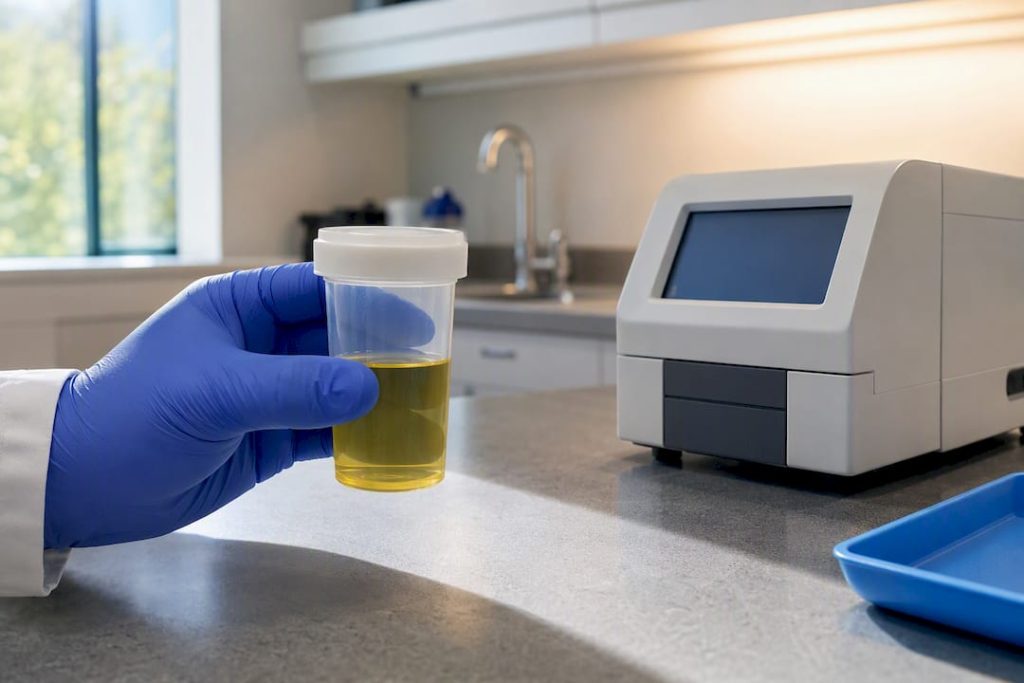
Low urine creatinine can flag a drug test sample as “dilute” or “substituted,” and it usually triggers a lab follow-up rather than an automatic failure. SAMHSA guidance treats anything under 20 mg/dL as dilute and under 2 mg/dL as substituted, prompting recollection or Medical Review Officer evaluation. Preparation methods for hair tests focus on cleansing toxins from hair samples, though similar validity principles apply across specimen types: a validity marker out of range means more scrutiny, not a guaranteed positive or negative.
TL;DR:
- Creatinine levels below 20 mg/dL generally indicate dilution, especially if paired with low specific gravity, prompting further review or recollection.
- Unintentional causes of low creatinine include high water intake, low muscle mass, or recent urination, while deliberate dilution often involves excessive hydration or water addition to samples.
- Creatine supplements can increase urinary creatinine, potentially masking dilution, but labs can detect unusual creatine patterns using orthogonal markers.
- Repeated dilute results or a creatinine under 2 mg/dL are viewed more critically and may be treated as refusal to test or invalid specimens.
- Providing medical documentation for conditions like kidney issues or low muscle mass is more effective than relying on hydration or masking strategies to explain abnormal creatinine results.
Table of Contents
- What creatinine is and why labs measure it in urine
- How labs test for dilution and substitution
- What a numeric creatinine result actually means for you
- Common causes of low or high creatinine readings
- How creatine supplements can shift creatinine readings
- What to do if your sample comes back dilute or substituted
- Where PassUSA fits into urine and hair-test preparation
- What the data actually tells you to prioritize
- Get help preparing for your specific test
- Sources
- FAQ
What creatinine is and why labs measure it in urine
Creatinine is a byproduct of normal muscle metabolism. Your body produces it at a fairly constant rate as creatine phosphate breaks down in muscle tissue, and your kidneys filter it into urine continuously throughout the day. Because that production rate stays relatively steady, a healthy adult’s urine should contain a predictable range of creatinines unless something is diluting or concentrating the sample.
That predictability is exactly why labs use it. Creatinine does not detect drugs at all. It detects tampering. If someone drinks large amounts of water before a test, or adds water directly to a cup, the creatinine concentration drops even though the person’s actual excretion rate hasn’t changed. A specimen that reads far below the expected range signals that something diluted it, whether intentionally or not.
Several factors shape a person’s baseline creatinine level before dilution ever enters the picture:
- Muscle mass: people with more muscle tissue tend to produce and excrete more creatinine.
- Sex and age: creatinine output differs somewhat between men and women and tends to decline with age as muscle mass drops.
- Hydration: recent fluid intake, exercise, or heavy sweating shifts urine concentration hour to hour.
- Kidney function: impaired filtration can alter how much creatinine appears in urine relative to blood levels.
Labs rarely rely on creatinine alone. It’s typically paired with specific gravity and pH readings, giving reviewers a more defensible basis for calling a specimen dilute, substituted, or simply the product of someone who drank a lot of water that morning.
How labs test for dilution and substitution
Specimen validity testing follows numeric thresholds that most certified labs apply consistently. According to SAMHSA’s biomarker guidance, creatinine above 20 mg/dL is generally acceptable, a reading between 2 and 20 mg/dL is classified as dilute, and anything below 2 mg/dL is considered substituted or invalid. Specific gravity and pH are checked alongside creatinine because a sample can look borderline on one marker but confirm as normal, or as manipulated, once all three are considered together.
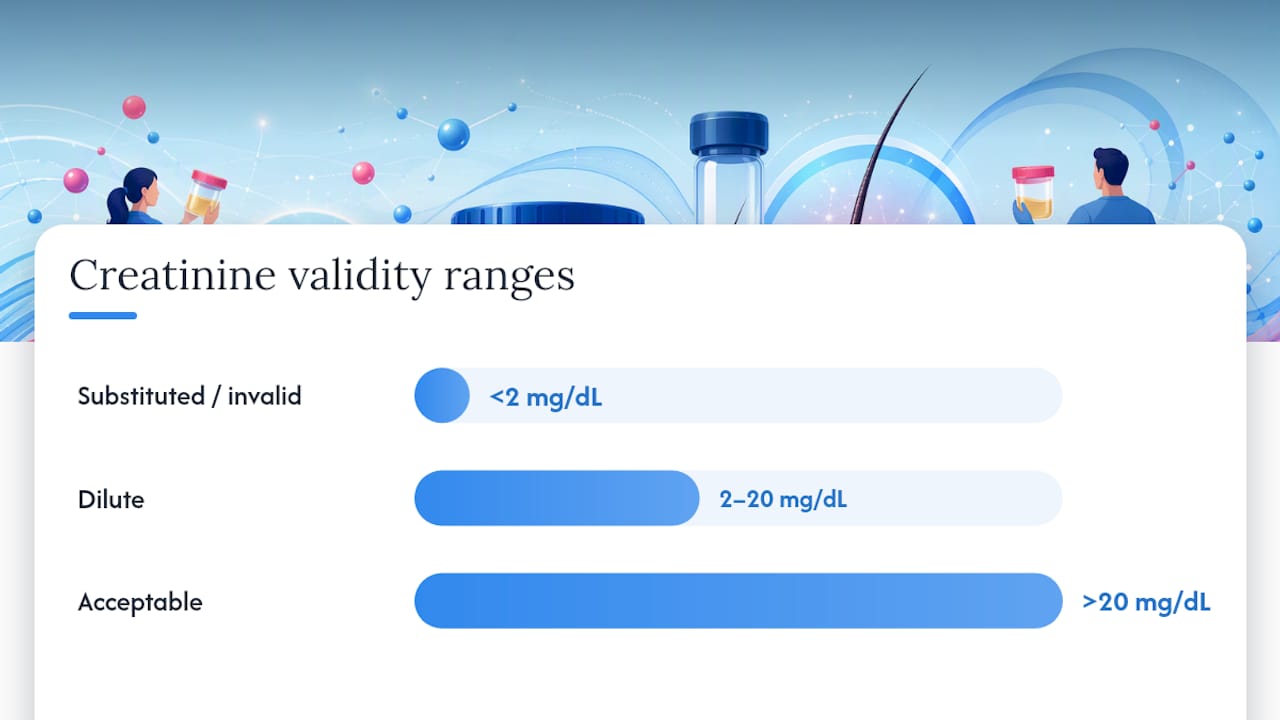
The measurement method matters near those cutoffs. Older Jaffe colorimetric assays and newer enzymatic methods can produce slightly different readings on the same sample, and labs sometimes confirm borderline results with LC-MS/MS for greater precision. That modest variability is one reason a single result close to 20 mg/dL rarely ends a case on its own.
When a specimen is flagged, the typical workflow looks like this:
- The lab reports the numeric creatinine and specific gravity values to the Medical Review Officer, not just a pass or fail label.
- The MRO reviews the result in context, sometimes requesting a second, directly observed collection.
- A split-specimen or “B sample” retest can be requested if the donor disputes the finding.
- Repeated dilute results across multiple tests are treated differently than a single isolated reading.
A Journal of Analytical Toxicology study reviewing over 20,000 creatinine results found that median creatinine varied by monitoring group, with recovery program participants showing lower median levels and a higher rate of dilute specimens than other groups. That pattern suggests dilute results cluster more heavily in populations under pressure to pass, which is part of why labs treat them as worth investigating rather than dismissing as noise.
What a numeric creatinine result actually means for you
Lab reports don’t just say “positive” or “negative.” They use specific language tied to the numbers, and each label carries different consequences.
- Negative: creatinine and specific gravity fall within normal range, and the drug panel result stands as reported.
- Negative, dilute: creatinine falls between 2 and 20 mg/dL. The drug result is still reported, but the MRO may request a recollection depending on program policy.
- Substituted: creatinine under 2 mg/dL combined with an abnormal specific gravity. This is often treated as equivalent to a refusal to test under HHS Medical Review Officer guidelines.
- Invalid: results that don’t fit a consistent pattern, usually requiring a fresh sample before any conclusion is drawn.
A negative, dilute result is easy to misread as proof of a clean system. It isn’t. A masked or diluted sample can hide recent drug use just as easily as it can reflect someone who simply drank too much water before their appointment. That ambiguity is precisely why many programs default to a directly observed recollection rather than accepting the dilute result at face value.
Isolated low readings tend to get less scrutiny than a pattern. Someone who tests dilute once in a year of random screens is viewed very differently than someone who tests dilute on three consecutive occasions, since a repeated pattern reads as behavior rather than coincidence.
Pro Tip: Ask your collection site for the numeric creatinine and specific gravity values on your report, not just the dilute label. The exact numbers tell you how close you were to a normal result.
Common causes of low or high creatinine readings
Not every abnormal reading points to tampering. Distinguishing an innocent physiological cause from an intentional one is the first thing an MRO tries to do, and it’s worth understanding the categories yourself.
Natural, non-intentional causes of low creatinine include:
- Drinking unusually large amounts of water or other fluids before the test.
- Having low muscle mass, whether from body size, age, or a medical condition.
- Recent heavy urination or a diuretic medication taken for an unrelated reason.
Intentional dilution generally involves one of these patterns:
- Deliberately overhydrating in the hours before a scheduled test.
- Adding water or another liquid directly to the collection cup.
- Using a masking product marketed to suppress drug metabolite concentration.
High creatinine, by contrast, usually points toward dehydration, intense recent exercise, or muscle tissue breakdown rather than any attempt to manipulate a result.
If you have a legitimate medical reason for a low reading, such as kidney disease or a naturally small muscle mass, documentation from a physician submitted to the MRO can support your case far more effectively than an explanation offered after the fact with nothing behind it.
How creatine supplements can shift creatinine readings
Creatine, the muscle-building supplement, converts naturally into creatinine in the body, and that connection matters for anyone hoping to influence a validity test. Controlled research on creatine ingestion found that supplementing with creatine can raise urinary creatinine concentrations enough in some subjects to push an otherwise dilute sample above the validity threshold. In other words, taking creatine before a test can theoretically mask evidence of dilution.
Labs are aware of this and have countermeasures. When a sample’s creatinine looks inconsistent with its specific gravity or other markers, some laboratories will directly measure urinary creatine itself, since a normal specimen shouldn’t contain much of it. Others lean on orthogonal biomarkers such as uric acid or magnesium, building a multi-marker validity panel that’s harder to fool with a single supplement.
Points worth remembering:
- Creatine can raise measured creatinine, but the effect size varies by person and dose.
- Detecting unusual creatine levels directly, rather than relying on creatinine alone, is a known lab countermeasure.
- Supplement-based masking is a detectable pattern, not a reliable workaround.
Treating creatine supplementation as a shortcut around a dilute result is a gamble, not a plan. It can raise flags of its own if the lab runs a broader validity panel.
What to do if your sample comes back dilute or substituted
The steps you take right after a flagged result matter more than anything you do afterward.
- Request the numeric results. Ask the collection site or MRO for the exact creatinine and specific gravity values rather than accepting a one-word label.
- Ask about recollection procedures. Find out whether a directly observed collection or split-specimen retest is available under your program’s policy, and follow the guidance on what to do and what not to do at the collection site.
- Provide medical documentation if it applies. Conditions like renal disease or low muscle mass should be reported to the MRO with supporting records, not mentioned casually after the fact.
- Request split B testing if you suspect an error. This is your formal path to challenge a result you believe is wrong, and most program appeals processes require you to request it promptly.
A private at-home dip-card check can help you get a preliminary read on where you stand, but treat it as a first step and not a final answer. For broader advice on responding to a problematic result, PassUSA’s drug test advice page covers next steps in more detail.
Pro Tip: Write down times, dates, and names at every stage of a disputed collection. MRO case reviews weigh documented timelines heavily.
Where PassUSA fits into urine and hair-test preparation
Specialized detox solutions based on the Macujo Method have been developed over many years, with hair-test preparation as a core focus. The Aloe Rid Shampoo, used as part of the Macujo Method, is formulated to help cleanse hair of toxin buildup before a hair follicle test.
Urine testing is a smaller part of the catalog, but a real one. A few relevant points:
- The 13-Panel Urine Drug Test Dip Card lets you get a preliminary self-check before a formal screening, though it isn’t a substitute for a certified lab result.
- Synthetic urine kits are sold as a category product for situations where a substitute sample is being considered, with the understanding that use carries legal and ethical implications the buyer alone must weigh.
- Private consultations with Mike Macujo are available for anyone who wants tailored guidance rather than generic instructions, across hair, urine, or saliva situations.
Consultation support may be available to help customers navigate their detox process.
What the data actually tells you to prioritize
The conventional advice on dilute results treats every low creatinine reading as suspicious, and that’s overcorrecting. The Journal of Analytical Toxicology data shows dilute results cluster in specific populations, often for reasons that have nothing to do with intent. Labs know this, which is why the response to a single dilute reading is a recollection request, not a disciplinary action.
Where readers get it wrong is assuming a negative, dilute result clears them. It doesn’t. It means the lab couldn’t confirm a valid reading either way, and a repeat test is likely coming. The other mistake is reaching for creatine supplements or masking products as a quick fix. The research on creatine’s effect on urinary creatinine is real, but so is the lab’s ability to catch it through orthogonal markers.
If there’s one thing worth prioritizing, it’s documentation. A physician’s note about kidney function or muscle mass, submitted before a dispute rather than during one, does more to protect you than any supplement or last-minute hydration strategy ever will.
— Detox Experts
Get help preparing for your specific test
If you’re facing a hair follicle test, our Aloe Rid Shampoo paired with the Macujo Method is built specifically to help cleanse hair of toxin buildup before your screening date. For urine-related situations, our 13-Panel Urine Drug Test Dip Card offers a preliminary self-check, and our Ultra Pure Synthetic Urine Kit is available as a laboratory-grade option for those weighing that route.
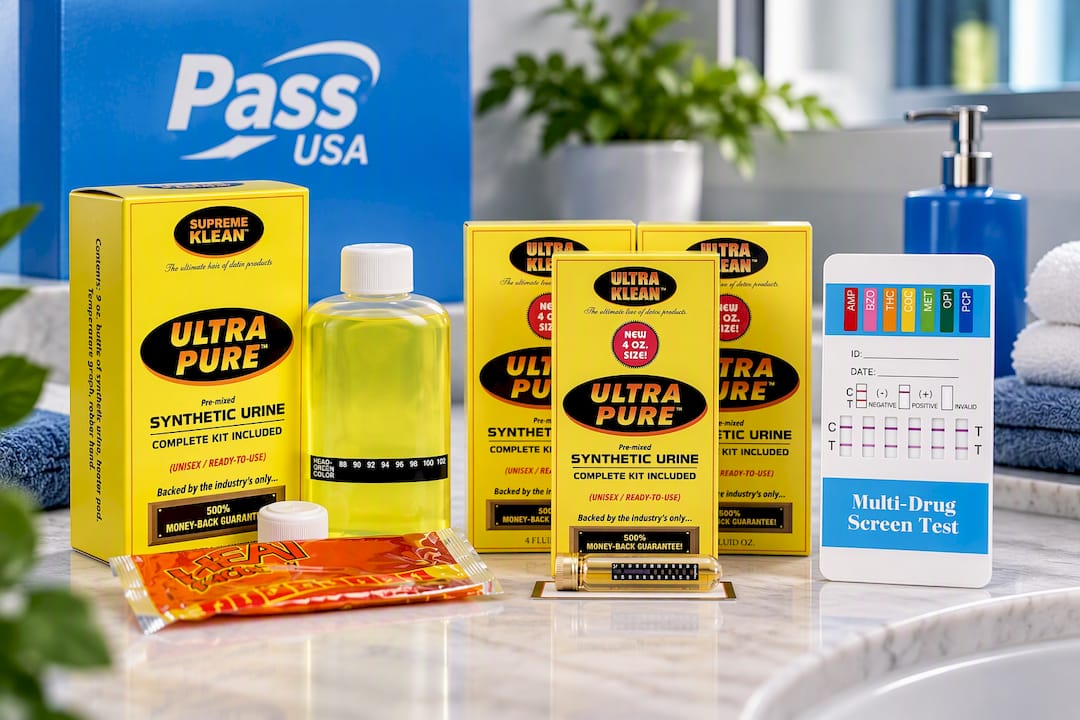
None of these tools replace medical or MRO guidance for a genuine health condition affecting your results. If your situation is more complicated than a standard test, a private consultation with Mike Macujo gets you direct, tailored answers instead of generic instructions. Browse the full range of hair, urine, and saliva test products to find what fits your test date.
Sources
- Use of urine biomarkers in validity testing; strategies and complexities (SAMHSA)
- Urine creatinine concentrations in drug monitoring participants and hospitalized patients (Journal of Analytical Toxicology)
- The effect of creatine ingestion on urinary creatinine concentration (PubMed)
FAQ
What are normal creatinine levels for a drug test?
A normal, valid urine creatinine reading is generally above 20 mg/dL, according to SAMHSA’s validity testing guidance. Readings between 2 and 20 mg/dL are classified as dilute, and anything under 2 mg/dL is treated as substituted.
What does it mean if my creatinine levels are high in a drug test?
High creatinine usually reflects dehydration, recent intense exercise, or muscle tissue breakdown rather than any attempt to manipulate the sample. Labs don’t flag high creatinine the way they flag low readings, since the validity concern is dilution, not concentration.
Can creatine affect the results of my drug test?
Yes. Controlled research shows creatine supplementation can raise urinary creatinine enough in some people to push a dilute sample above the standard threshold, but labs can detect unusual creatine levels directly, making this an unreliable workaround.
When should I worry about creatinine levels in a urine test?
A single dilute reading typically just prompts a recollection request rather than any serious consequence. Repeated dilute results across multiple tests, or a substituted reading under 2 mg/dL, draw much closer scrutiny under HHS Medical Review Officer guidance and are more likely to be treated as a refusal to test.