


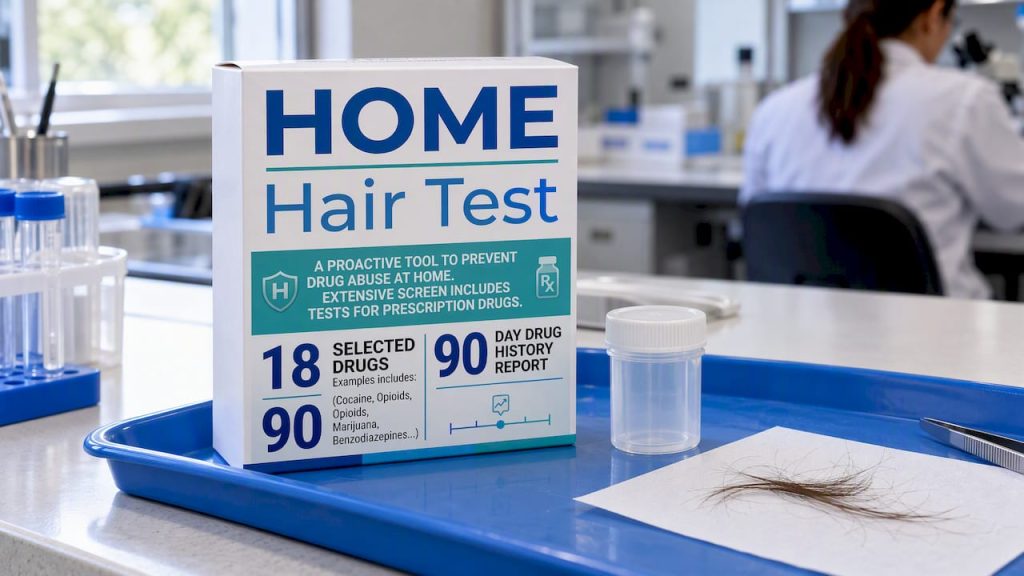
Vaping THC can and often does trigger a positive on standard drug tests, and the window depends entirely on which specimen gets tested. Urine detects metabolites for days to weeks, oral fluid and blood catch recent use within hours to a few days, and hair can record exposure for roughly 90 days. Federal cutoffs, not just your habits, decide whether a given test comes back positive.
TL;DR:
- Nearly half of vaporized THC sessions can produce urine test positives exceeding federal thresholds even in infrequent users, with detection potentially lasting one to two weeks for regular users.
- Vaping THC raises urinary THCCOOH levels comparable to or higher than smoking at the same dose, offering no inherent detection savings.
- Hair follicle testing can detect cannabis use up to 90 days after exposure, but external contamination and timing can impact accuracy.
- Saliva tests detect recent vaping use within a few hours to 48 hours, with concentrations peaking immediately and declining rapidly.
- Blood tests reveal recent use within hours after vaping, but are rarely used for employment screening due to their short detection window.
Table of Contents
- How THC From Vaping Becomes a Detectable Analyte
- Urine Detection Windows After Vaping and Why Cutoffs Matter
- How Fast Vaping THC Shows Up and Clears From Saliva
- Why Blood Testing Catches Only Recent THC Exposure
- Hair Follicle Testing: The Longest Detection Window
- What Changes Your Personal Detection Window
- Does Vaping Change Detection Compared to Smoking or Dabbing?
- How to Prepare Before a Vape THC Drug Test
- A Realistic Take on Quick Fixes and Test Prep
- Matching the Right Product to Your Test Type
- FAQ
- Sources
How THC From Vaping Becomes a Detectable Analyte
When you inhale vaporized THC, it crosses into your bloodstream through the lungs almost immediately, producing a rapid spike in Δ9THC, the active compound responsible for the high. Your liver then converts some of that Δ9THC into 11-hydroxy-THC, a psychoactive metabolite, and further breaks it down into THCCOOH, which carries no psychoactive effect but sticks around in your system far longer. Each drug test targets a different piece of this chain, which is why results vary so much by specimen type.
- Blood and oral fluid mostly measure parent Δ9THC, which reflects recent exposure.
- Urine tests almost exclusively for THCCOOH, the inactive metabolite that lingers for days or weeks.
- Hair captures a mix of parent compound and metabolites that get incorporated into the hair shaft over time.
Labs typically run an initial immunoassay screen first because it is cheap and fast, then confirm any positive with gas chromatography-mass spectrometry or liquid chromatography-tandem mass spectrometry (GC-MS or LC-MS/MS), methods that identify the exact molecule rather than relying on antibody cross-reactivity. Immunoassays can misfire in both directions, flagging compounds that merely resemble THC or missing low-level positives, which is why confirmatory testing remains the standard for any result that matters.
The federal urine cutoffs that decide most workplace positives are 50 ng/mL for the initial screen and 15 ng/mL for GC-MS confirmation, according to the SAMHSA mandatory guidelines that govern federally regulated workplace testing programs. Anything above those thresholds counts as a confirmed positive, regardless of how the THC was consumed.
Urine Detection Windows After Vaping and Why Cutoffs Matter
Urine is the specimen most workplaces rely on, and it is also the one where vaping THC causes the most confusion. People assume vaping is gentler on the body than smoking, so they expect a shorter detection window, but the metabolite your urine test measures does not care how you inhaled it.
A controlled study of infrequent cannabis users who vaporized cannabis found that 47% of active vaporized sessions produced a urine specimen that met both the federal immunoassay cutoff (50 ng/mL) and the confirmatory GC-MS cutoff (15 ng/mL). That means nearly half of all vaporizing sessions in the study generated a result that would count as a confirmed positive on a standard federal urine panel, even among people who do not use cannabis regularly. The same research found that in some controlled doses, vaporized cannabis produced higher urinary THCCOOH concentrations than smoked cannabis at an equivalent dose, which undercuts the common belief that vaping is a safer route for passing a urine screen.
Typical detection ranges, drawn from published pharmacokinetic and excretion data, break down roughly like this by frequency of use:
- Single or occasional use (once or a few times): metabolites can clear within a few days, though the vaporization study above shows a single session can still trigger a positive at federal cutoffs.
- Moderate, regular use (several times a week): detection commonly extends to one to two weeks.
- Heavy, chronic use (daily or near-daily): THCCOOH can accumulate in fat tissue and remain detectable for several weeks after the last session.
The gap between a 50 ng/mL screening cutoff and a 15 ng/mL confirmatory cutoff matters because a specimen can clear the lower confirmatory threshold even after it drops below the screening level, which is one reason labs sometimes see a positive screen followed by a negative confirmation, or vice versa depending on timing. If you want to check your own status before a scheduled test, a 13-panel urine drug test dip card gives you a same-day read using the same cutoff logic labs apply, and reviewing how assay cutoffs affect urine results can help you interpret what you see.
How Fast Vaping THC Shows Up and Clears From Saliva
Oral fluid testing behaves differently from urine because it is measuring what is sitting in your mouth, not what your liver has processed. When you vape, THC coats your oral mucosa directly, producing a concentration spike that has little to do with how much reached your bloodstream.
Pharmacokinetic research on oral fluid shows THC concentrations peak at or immediately after inhalation because of this mucosal contamination, then fall off quickly as saliva production dilutes and clears the drug. Some controlled studies have reported an oral fluid THC half-life around 1.4 hours, which explains why saliva tests are generally framed as a recent-use indicator rather than a long-window screen.
- Detection after a single vaping session typically runs from a few hours up to roughly 24 to 48 hours, depending on dose and individual metabolism.
- Frequent users tend to show higher peak concentrations and longer detection windows than occasional users, with the pharmacokinetic data pointing to frequency and dose mattering more than the specific method of inhalation.
- Some research panels add minor cannabinoids beyond parent THC to extend the practical detection window for recent inhalation.
For workplace oral fluid programs, the HHS Federal Register notice lists an initial cutoff of 4 ng/mL and a confirmatory cutoff of 2 ng/mL for Δ9THC in neat oral fluid. A 12-panel oral fluid screening pen applies the same logic if you want a quick self-check before a scheduled saliva collection.
Why Blood Testing Catches Only Recent THC Exposure
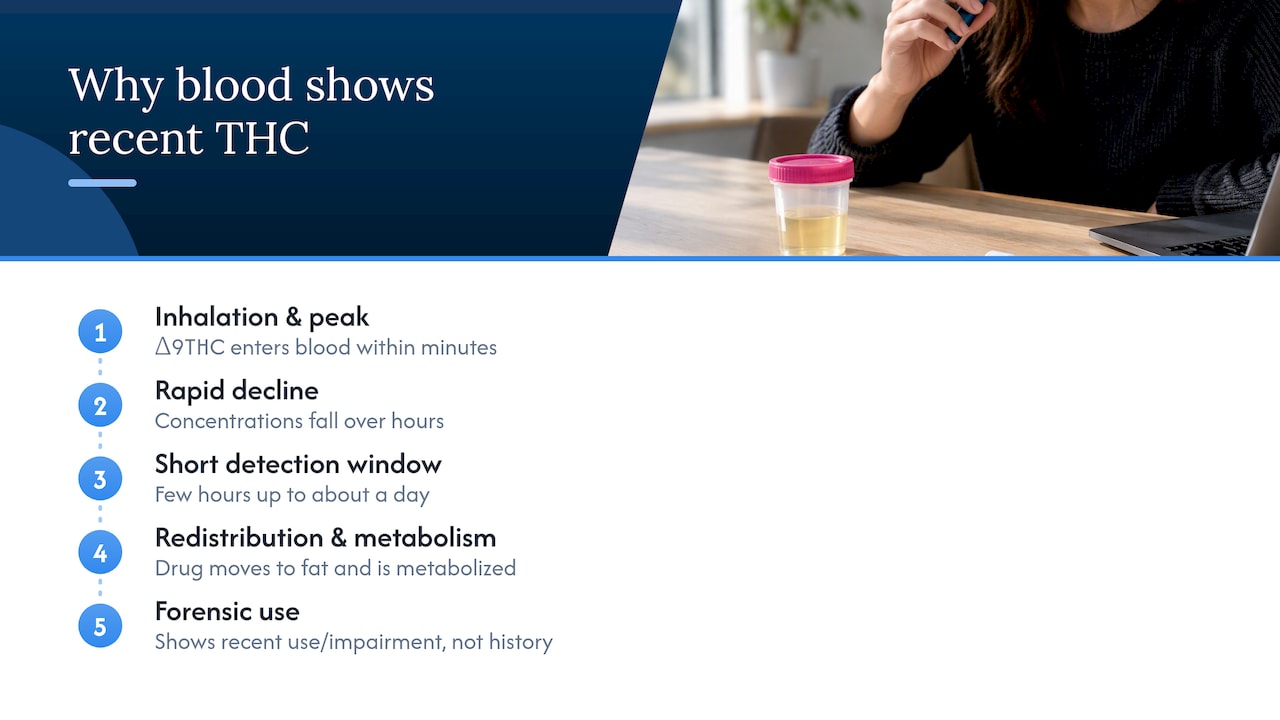
Blood tests measure parent Δ9THC directly, and because inhaled THC reaches the bloodstream almost instantly, concentrations peak within minutes of a vaping session and decline over the following hours. This makes blood the specimen of choice when someone needs to demonstrate recent use or impairment rather than a history of exposure, which is why it shows up most often in forensic and legal settings rather than routine workplace screening.
Detectable Δ9THC in blood generally runs from a few hours up to about a day after a single vaping session, though that window narrows quickly as the drug redistributes into fat tissue and gets metabolized. Blood is rarely used for standard employment screening because of its short window and the logistics of drawing a sample, but it remains the clearest marker of whether someone used cannabis within the last several hours. A blood positive says nothing about use last week or last month, only about now.
Hair Follicle Testing: The Longest Detection Window
Hair testing works on a completely different principle than the other three specimens. Instead of measuring what is actively circulating or clearing from your body, it analyzes what got deposited into the hair shaft as it grew, which is why labs describe it as a retrospective test rather than a recent-use one.
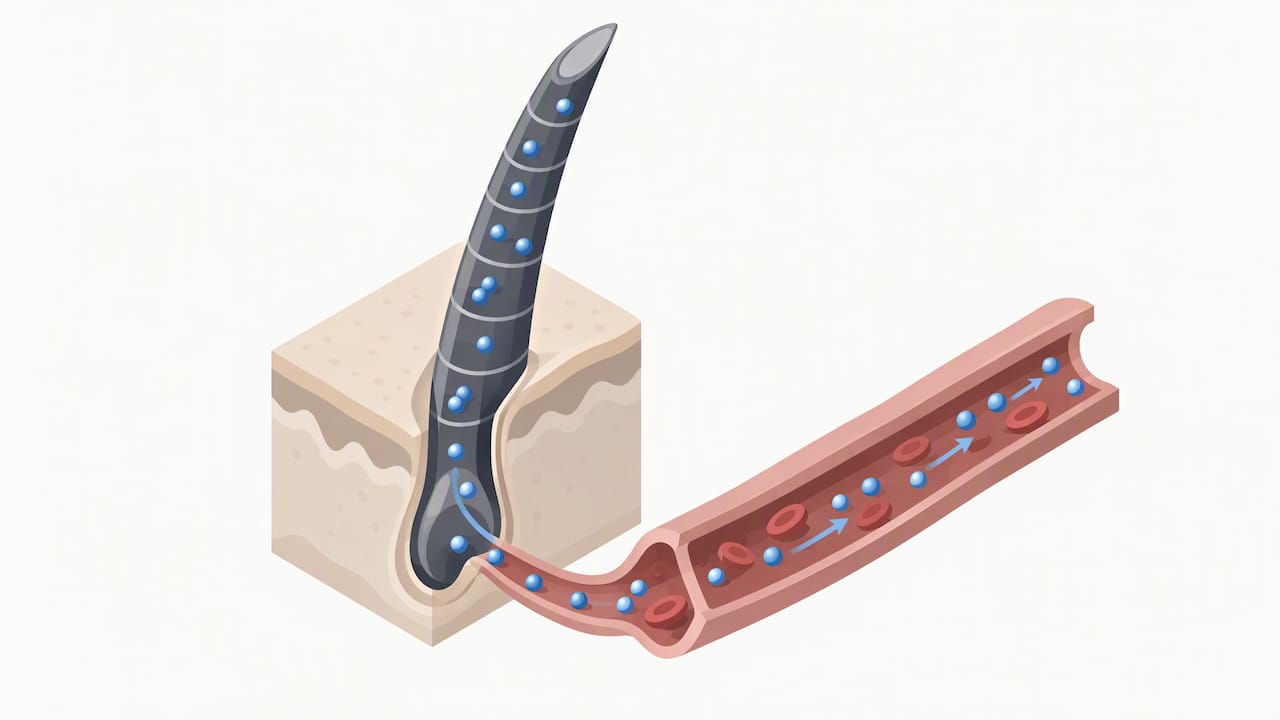
Standard hair panels typically cover a 90-day window, based on research into hair incorporation and interpretation, because that span corresponds to roughly the last one and a half inches of hair closest to the scalp. One important nuance: THC metabolites do not appear instantly in new hair. Research on incorporation timing notes that a hair sample taken too soon after use, often within about two weeks, may miss that exposure entirely because the hair carrying it has not yet grown past the scalp surface.
Hair testing comes with real interpretive complications that the published literature takes seriously:
- External contamination from secondhand smoke or vapor, or from sebum transfer when handling cannabis products, can deposit THC or THCCOOH on the hair shaft without any ingestion at all.
- Labs try to account for this by targeting THCCOOH specifically, since its presence is considered stronger evidence of actual use rather than surface contact, and by applying wash protocols before analysis.
- Accurate quantification at these low concentrations requires sensitive GC-MS or LC-MS/MS instrumentation, which is part of why hair testing costs more and takes longer than urine screening.
Pro Tip: If you have an upcoming hair test and want a realistic read on where you stand, check your own hair with an at-home hair follicle drug test kit before relying on guesswork.
Because hair testing carries the longest window and the most scrutiny, it is also where preparation matters most, and where a structured hair-cleansing approach makes the biggest practical difference compared to urine or saliva prep.
What Changes Your Personal Detection Window
Detection windows are ranges, not guarantees, because several variables shift them in either direction for any individual.
- Frequency and dose: more sessions and higher-potency vape oil or concentrate mean more THCCOOH accumulates, extending urine and hair windows.
- Body fat percentage: THC is fat-soluble, so people with higher body fat tend to store and slowly release metabolites over a longer period.
- Metabolic rate and hydration: faster metabolism and adequate hydration support quicker clearance in urine, though extreme water-loading mainly dilutes a sample rather than removing the drug.
- Genetics and liver enzyme activity: individual variation in how quickly your liver converts Δ9THC to THCCOOH affects both urine and blood timelines.
- Assay cutoff and method: a lab using a lower cutoff, or running confirmatory LC-MS/MS instead of immunoassay, will catch lower concentrations that a less sensitive screen would miss.
- Timing relative to use: testing too soon after vaping can catch a spike that would have cleared by the next day in blood or saliva, while testing hair too soon after use can miss it entirely.
Does Vaping Change Detection Compared to Smoking or Dabbing?
Controlled studies generally find few consistent differences between vaping, smoking, and dabbing when it comes to triggering a positive test. What matters more is dose and frequency than the delivery method itself. The vaporization excretion study found that vaporized cannabis produced urinary THCCOOH levels that, at some doses, were higher than smoked cannabis at an equivalent amount, meaning vaping offers no inherent advantage for avoiding detection.
Concentrates and wax pens complicate this further because they deliver far more THC per session than flower, so even infrequent dabbing can push someone into the same detection range as a regular smoker. The practical takeaway is simple: focus on how much and how often you are using, not on which method you assume is safer.
How to Prepare Before a Vape THC Drug Test
If a hair follicle test is on your calendar, start by confirming where you actually stand rather than guessing. An at-home hair follicle drug test kit gives you a baseline reading before you commit time to a cleansing routine, since hair testing’s 90-day window means recent vaping sessions may not even be detectable yet.
- Test your baseline first. Use a hair follicle self-test to see where you stand before investing in a cleansing regimen.
- Follow a structured hair-cleansing routine. The Macujo Method approach, built around our Aloe Rid Shampoo, combines a penetrating cleansing step with a detoxifying shampoo wash to strip residue and metabolite buildup from the hair shaft rather than relying on surface rinsing alone.
- Give the process enough time. Because of delayed incorporation, a cleansing routine needs to run on a realistic schedule ahead of your test date rather than the night before.
- For urine tests, a short period of abstinence combined with normal hydration (not extreme water-loading, which mainly signals a diluted sample) supports natural clearance, and a 13-panel urine dip card lets you confirm your status before the real test.
- For saliva tests, avoiding use for at least 24 to 48 hours ahead of a scheduled collection reduces mucosal contamination risk, and a 12-panel oral fluid screening pen offers a same-day check.
Pro Tip: When the stakes are high or your timeline is tight, a one-on-one consultation gets you a plan built around your actual hair type, usage history, and test date instead of a generic schedule.
A Realistic Take on Quick Fixes and Test Prep
No shampoo, drink, or detox kit rewrites your usage history, and anyone promising a guaranteed pass regardless of your situation is overselling it. What actually helps is understanding your real detection window, testing your baseline honestly, and following a cleansing routine with enough lead time to matter. Drug testing carries legal and employment consequences, so treat preparation as risk management, not a shortcut, and when the stakes are high, a tailored consultation beats guesswork every time.
— Detox Experts
Matching the Right Product to Your Test Type
Different tests call for different prep, and we built our product lineup around that reality. For a hair follicle test, our Aloe Rid Shampoo and Macujo Method approach targets the buildup inside the hair shaft that a standard wash never touches, which is the core reason we lead with hair preparation over any other category.
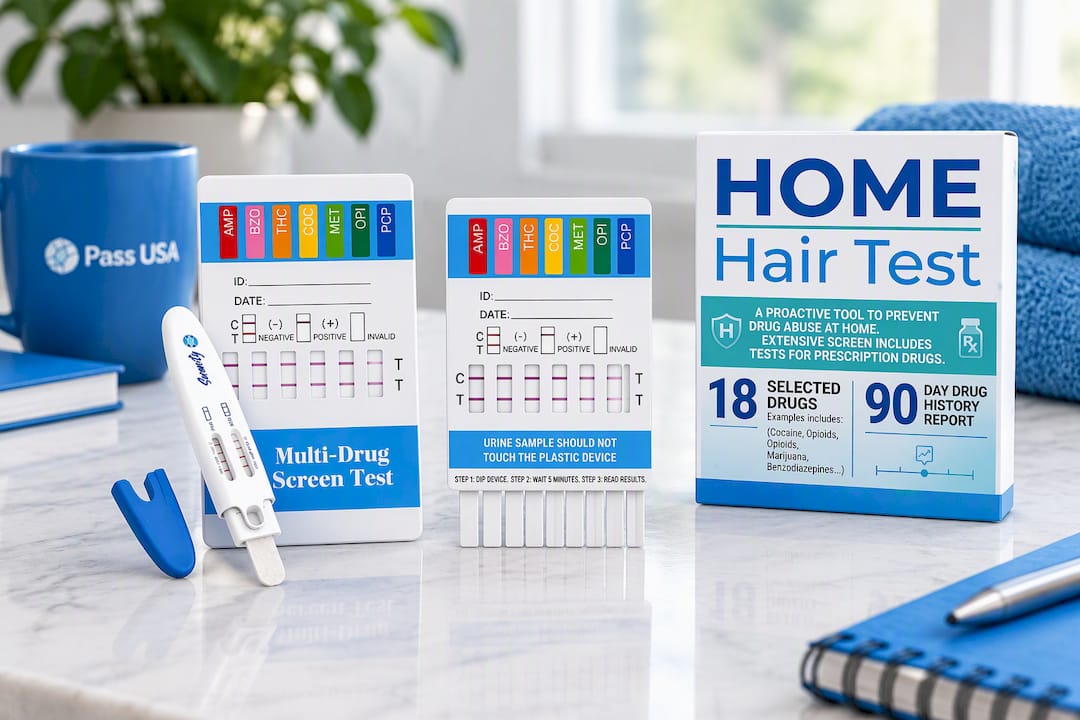
If you need to confirm where you stand before committing to a routine, we carry a 13-panel urine drug test dip card for a same-day urine check, a 12-panel oral fluid screening pen for a quick saliva read, and an at-home hair follicle drug test kit for a realistic baseline ahead of a hair screening.
- Hair follicle prep: an Aloe Rid Shampoo and Macujo Method routine for deep hair-shaft cleansing.
- Urine self-check: the 13-panel dip card for a fast, private result before your actual test.
- Saliva self-check: the 12-panel oral fluid pen for a quick read before a scheduled collection.
For time-sensitive or high-stakes situations, our private consultation with Mike Macujo builds a plan around your hair type, usage history, and test date, with support that continues until you pass. Browse our full hair, urine, and saliva test product lineup to get started.
FAQ
How long does vape THC detect in urine?
A single vaping session can produce a urine positive at federal cutoffs in close to 47% of cases among infrequent users, while regular use commonly extends detection to one to two weeks and chronic use to several weeks. The exact window depends on dose, frequency, and body fat.
Will THC vape fail a drug test?
Yes, vaping THC can cause a failed drug test on urine, saliva, blood, or hair screening, since vaporized cannabis delivers THC and its metabolites into your system much like smoking does. Controlled research on vaporized cannabis found it can produce urinary THCCOOH levels comparable to or higher than smoked cannabis at the same dose, so switching to a vape pen offers no built-in protection.
Why did I test positive for THC if I don’t smoke?
Vaping, dabbing, or edibles can all produce the same THCCOOH metabolite that standard urine tests detect, so any form of cannabis intake, not just smoking, can trigger a positive. Secondhand vapor exposure or external contamination on hair are less common but documented explanations worth ruling out.
Will a vape show up in a urine test?
Yes, vaping THC produces the same metabolite, THCCOOH, that urine immunoassays and confirmatory GC-MS tests are built to detect, and the delivery method does not change what your liver produces. Detection depends mainly on how much and how often you used, not whether you vaped versus smoked.
Sources
- Urinary excretion profile of 11-nor-9-carboxy-Δ9-tetrahydrocannabinol following smoked and vaporized cannabis administration in infrequent cannabis users – PMC
- Federal Register: Mandatory Guidelines for Federal Workplace Drug Testing Programs – HHS (2026-03-13)