

Most drugs show up in a saliva test for a window of a few hours up to roughly 48 hours, depending on the substance, the collection device, and the cutoff level used. Cannabis is the exception that trips people up: occasional users often clear within 12 to 24 hours, but frequent smokers can test positive well beyond that, sometimes past 30 hours. The device and cutoff a lab chooses can shift these numbers more than people expect.
TL;DR:
- Collection devices and cutoff levels can produce different results from the same sample, so detection estimates are not guarantees for a specific test.
- Avoid eating, drinking, smoking, or using oral care products for at least 10 minutes before collection to reduce contamination and false readings.
- Rapid cassette results are presumptive; laboratory confirmation commonly takes 24 to 48 hours and can overturn either a positive or negative screen.
- A positive saliva result shows detectable exposure, not impairment, so legal assessments often weigh it alongside observed behavior or field sobriety evidence.
- In workplace settings, confirmed positives typically go to a Medical Review Officer, and disputed results may be checked using the split specimen.
Table of Contents
- What a saliva drug test actually measures
- How long different drugs stay detectable in saliva
- Factors that change saliva detection windows
- How long saliva test results take
- Where PassUSA fits into a saliva-test preparation plan
- Detection window versus how long a drug stays active
- Common myths about saliva test detection times
- Interpreting results in workplace and legal settings
- What to actually do if a saliva test is coming up
- Get ready for your saliva test with PassUSA
- FAQ
- Sources
What a saliva drug test actually measures
A saliva (or oral fluid) drug test looks for recent drug use, not long-term exposure. That’s the core difference between this matrix and urine, blood, or hair testing. Employers, probation officers, and roadside officers investigating driving under the influence of drugs often prefer oral fluid specifically because it reflects what happened in the last day or two, not what happened last month.
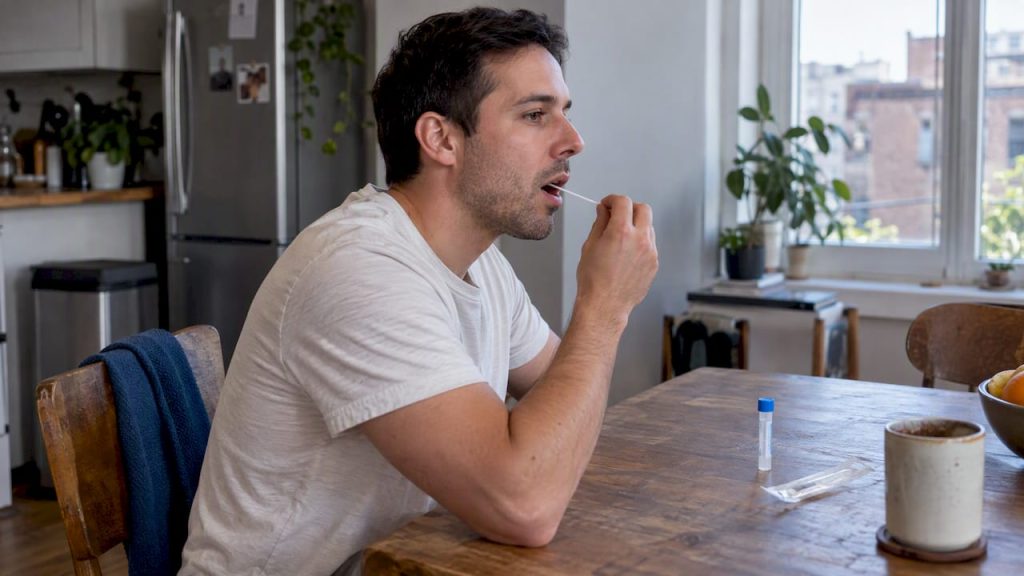
Collection typically uses an absorbent pad or swab placed in the mouth for one to five minutes, depending on the device. SAMHSA guidance outlines standard procedures, including a rule that donors avoid eating, drinking, smoking, or using oral care products for at least 10 minutes before collection. Skipping that step can contaminate the sample and trigger a false reading.
Two testing stages matter here:
- On-site screening cassettes use immunoassay strips that produce a presumptive result in minutes.
- Laboratory confirmation relies on GC-MS or LC-MS/MS instruments that can detect much lower concentrations and confirm or overturn the initial screen.
Both stages exist because rapid screening is convenient but not conclusive. A negative or positive cassette result on-site can still be reversed once a lab runs a confirmatory test, which is one reason test timelines matter as much as detection windows.
How long different drugs stay detectable in saliva
Detection windows vary by drug class, dose, frequency of use, and the specific device and cutoff a testing program applies. The ranges below reflect typical patterns reported in controlled research and SAMHSA program guidance, not fixed guarantees.
| Substance | Typical saliva detection window | Notes on variability |
|---|---|---|
| THC (occasional use) | Roughly 12 to 24 hours | Shorter window tied to lower cumulative dose |
| THC (frequent/chronic use) | Up to 24 to 30+ hours | Controlled studies found a median last-detection time of 21 hours in frequent smokers versus 12 hours in occasional smokers using the DrugTest 5000 device |
| Cocaine / benzoylecgonine | Up to roughly 48 hours | Faster clearance than metabolites in urine |
| Amphetamines / methamphetamine | Up to roughly 48 hours | Dose and redosing patterns shift the upper end |
| Heroin / morphine | Several hours up to around 24 hours | Short half-life in oral fluid |
| Prescription opioids (oxycodone, fentanyl) | Up to roughly 48 hours | Dosing schedule and formulation affect clearance |
| Benzodiazepines | Can extend beyond 30 hours | Varies widely by specific drug in the class |
| Alcohol | Several hours, generally under 24 hours | Tied closely to metabolism rate, not long-term use |
A few things explain why these ranges aren’t single numbers:
- Higher or more frequent dosing extends the detectable window, especially for cannabis.
- Device cutoff levels determine how low a concentration has to drop before a result reads negative.
- Individual metabolism, hydration, and saliva production all shift the timeline slightly.
Cannabis deserves the closest attention because its oral fluid kinetics differ sharply by user pattern. Research comparing device and cutoff combinations found that the same sample could test positive on one collection device and negative on another at the identical time point. That’s a meaningful gap between what a consumer guide promises and what actually happens in a lab.
Factors that change saliva detection windows
Detection time estimates are averages, not promises. Several variables push the real-world window earlier or later than the textbook range.
- Use frequency and dose: Frequent cannabis use raises cumulative THC and THCCOOH levels, extending detection well past what a single-use estimate suggests.
- Collection device: Comparative device research found that StatSure, Oral-Eze, and DrugTest 5000 devices produced different last-detection times for the same drug and dose, driven by dilution and cutoff differences.
- Oral contamination: Eating, drinking, smoking, or using mouthwash shortly before a test can introduce residual drug deposits in the mouth that skew results.
- Individual physiology: Saliva flow rate, pH, metabolism, and body composition all affect how quickly a drug clears from oral fluid.
- Insufficient sample volume: Dry mouth or inadequate collection time can produce a sample too small to test, requiring a recollection.
Pro Tip: If a saliva test is scheduled, avoid any food, drink, gum, or oral hygiene product for at least the 10 minutes before collection, since that window exists specifically to prevent contamination from skewing your result.
How long saliva test results take
On-site screening cassettes deliver a presumptive result in a matter of minutes, which is part of why oral fluid testing is popular for roadside and workplace checks. A presumptive positive isn’t final, though.
Laboratory confirmation, using GC-MS or LC-MS/MS, commonly takes 24 to 48 hours once the sample arrives at the lab. This step catches both false positives from the rapid screen and low concentrations the cassette missed.
A few practical notes on what happens next:
- A confirmed positive typically goes to a Medical Review Officer for review before any final reporting.
- Split-specimen procedures allow a second portion of the same sample to be retested if a result is disputed.
- A positive or inconclusive saliva result sometimes prompts a follow-up test using urine or hair, especially in workplace or legal settings where a longer exposure history matters.
Where PassUSA fits into a saliva-test preparation plan
Our saliva test products are built around the Macujo Method and more than 20 years of focus on drug test preparation, with personalized support included through consultations. We stand behind every plan with help until you pass your test.
A smart first move is testing yourself before the real thing. Our 12-Panel Multi-Drug Oral Fluid Saliva Test gives a rapid, pen-style self-screen so you know where you stand before a formal test catches you off guard.
- Our Macujo Saliva Detox Mouthwash works as an immediate oral cleanse step right before collection.
- A private consultation with Mike Macujo helps when a test is imminent and you want a tailored last-minute strategy.
- Self-testing early gives you time to adjust your plan instead of guessing on test day.
If you’re also facing a urine screen, more on that below.
Detection window versus how long a drug stays active
These are two different clocks, and mixing them up leads to bad decisions. A drug’s detection window is how long a testing method can find traces of it or its metabolites in oral fluid. Pharmacological activity is how long the drug is actually affecting your brain or body, meaning impairment, intoxication, or therapeutic effect.
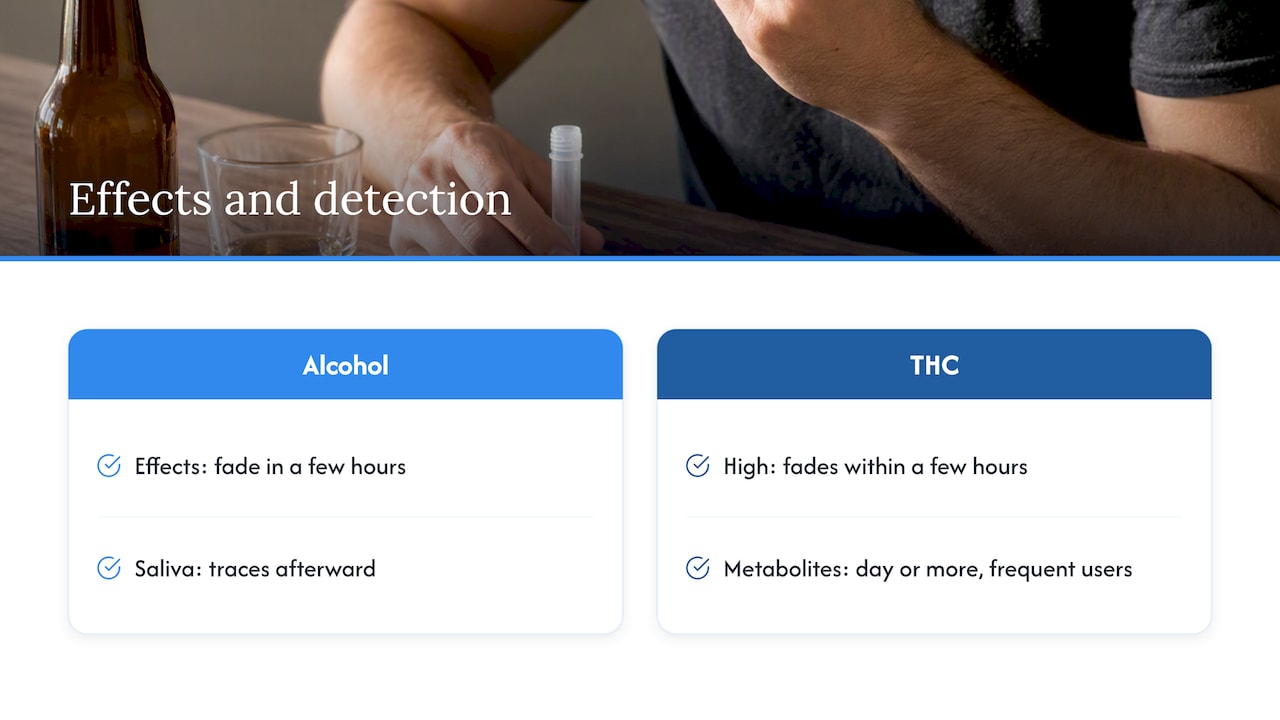
For most substances, the detectable window in saliva lasts considerably longer than the active effects. Alcohol’s intoxicating effects fade in a few hours, but trace detection can still register afterward. THC’s psychoactive high typically fades within a few hours of smoking, yet metabolites can remain detectable for a day or more in frequent users, long after any impairment has passed.
This distinction matters most in legal and workplace contexts. A positive saliva test doesn’t prove someone was impaired at the moment of testing, only that a detectable trace was present. Roadside DUID testing in particular tries to narrow this gap by focusing on oral fluid specifically because its detection window tracks closer to recent use than urine or hair, but even saliva isn’t a precise impairment clock. Treat a positive result as evidence of recent exposure, not as a measurement of how impaired someone was at that exact minute.
Common myths about saliva test detection times
A few persistent myths lead people to miscalculate their risk.
Myth: Saliva tests have one fixed detection time for every drug. Reality: windows vary by drug class, device, and cutoff, and two devices tested on the same sample can disagree at the same time point.
Myth: Rinsing with mouthwash right before a test clears everything. Reality: aggressive rinsing close to collection can actually introduce contamination issues, which is part of why 10-minute pre-collection rules exist in the first place.
Myth: If you pass the on-site screen, you’re fully clear. Reality: a presumptive negative at the cassette stage can still be overturned once the lab runs a more sensitive confirmatory test.
Myth: Occasional and frequent users clear drugs on the same timeline. Reality: for cannabis specifically, frequent users show median detection times nearly double those of occasional users on the same device.
Myth: Saliva testing can tell how long ago someone used a drug long-term. Reality: oral fluid is a recent-use matrix. For longer exposure history, hair testing is the relevant comparison, not saliva.
Interpreting results in workplace and legal settings
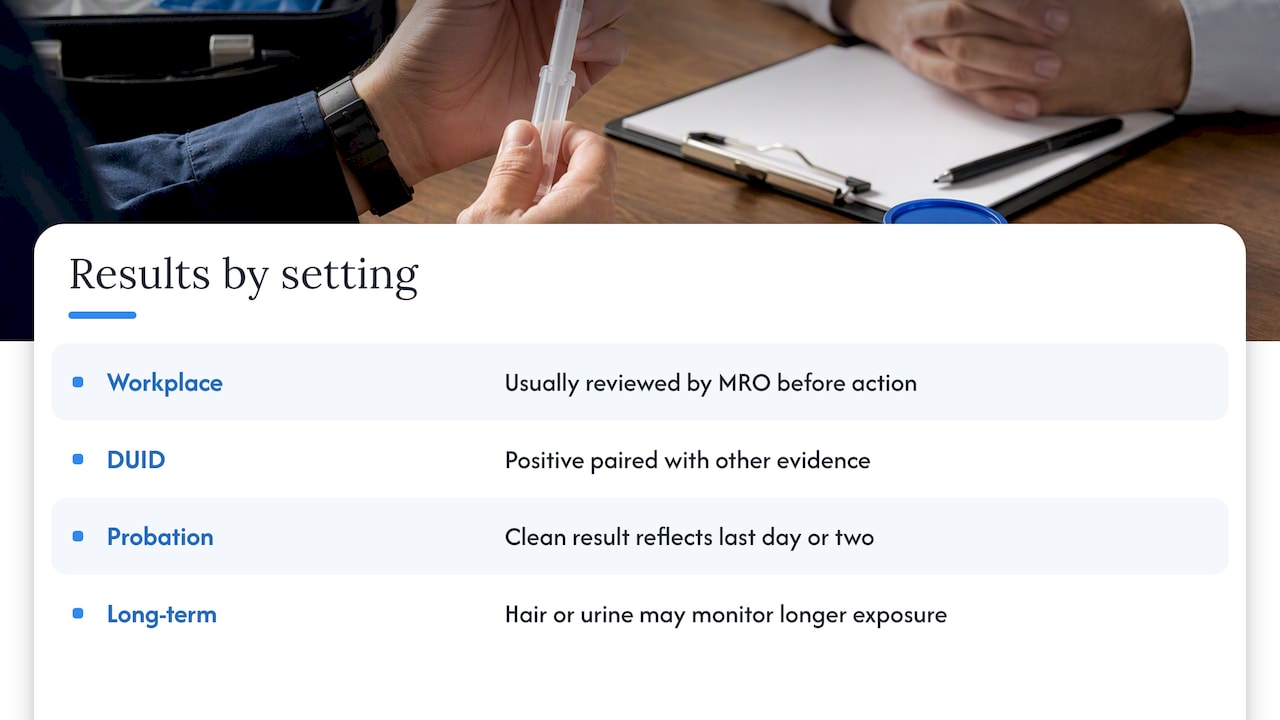
Context changes what a saliva test result actually means for you. In a pre-employment or random workplace screen, a confirmed positive usually goes through review by a Medical Review Officer before an employer takes action, and policies vary on what happens next, from a retest to disqualification.
In DUID or legal contexts, a positive oral fluid result is often used alongside other evidence, such as observed behavior or field sobriety testing, because detection doesn’t equal impairment. A prosecutor or officer relying solely on a saliva positive to prove impairment is on shakier ground than one combining it with other findings.
For probation or court-ordered testing, the shorter detection window of saliva compared to hair or urine means a clean saliva result reflects only the last day or two, not a longer compliance history. If longer-term monitoring is the goal, expect hair or urine to come into play alongside or instead of oral fluid.
Whatever the setting, a split-specimen option and MRO review exist precisely because on-site results aren’t the final word. Understanding that process can change how you respond to an unexpected positive.
What to actually do if a saliva test is coming up
Three steps cover most situations. First, self-test ahead of time so you’re not guessing about where you stand. Second, follow the pre-collection rules: nothing to eat, drink, or rinse with for at least 10 minutes before the real test. Third, if the test is imminent or you use frequently, get a tailored plan rather than relying on general advice.
Waiting it out works for occasional use within a day or two, but it’s an unreliable bet for frequent users given how variable and extended their detection windows get. A consultation and a product plan built around your actual use pattern beats guesswork every time.
— Detox Experts
Get ready for your saliva test with PassUSA
Our approach is based on extensive experience helping people prepare for hair, urine, and saliva screenings, with personalized support through consultations until you pass your test.
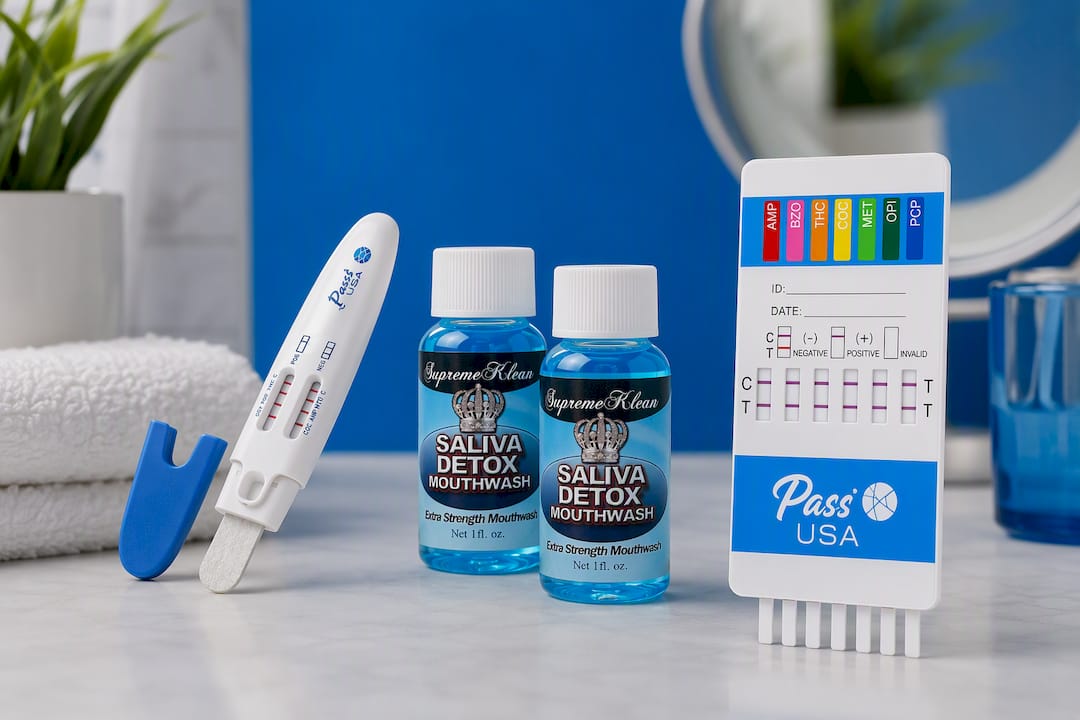
Start by checking where you stand with our 12-Panel Multi-Drug Oral Fluid Saliva Test, a rapid pen-style screen you can use at home before the real thing. If your test is close and you need an immediate oral-cleanse step, our Macujo Saliva Detox Mouthwash handles that final preparation window.
- Self-screen first with the 12-panel oral fluid test to know your status before a formal screening.
- Use the Macujo Saliva Detox Mouthwash as a same-day oral cleanse step before collection.
- If you’re also worried about a urine screen, our 13-Panel Urine Drug Test Dip Card covers that angle too, including fentanyl.
- Book a private consultation with Mike Macujo for a plan built around your specific use pattern and test timeline.
Browse our full range of testing and detox products to put together the right plan before test day arrives.
FAQ
How long will drugs show on a saliva test?
Most drugs remain detectable in saliva for several hours up to about 48 hours, though this depends heavily on the substance, dose, and collection device. Cannabis is the main exception for frequent users, who can show detectable THC beyond 24 hours.
How far back can a saliva test detect?
Saliva testing is designed to catch recent use, generally within the last one to two days, rather than longer-term exposure. For history reaching back weeks or months, hair testing covers a much longer window than saliva ever will.
How long until I pass a mouth swab drug test?
Timing depends on your use frequency and the drug involved. Occasional cannabis users often clear within 12 to 24 hours, while frequent users may need closer to 24 to 30 hours or more before testing negative, and other drug classes generally clear within one to two days.
How long do saliva test results take?
On-site screening cassettes produce a presumptive result in minutes, but that result isn’t final. Laboratory confirmation using GC-MS or LC-MS/MS typically takes 24 to 48 hours once the sample reaches the lab.