

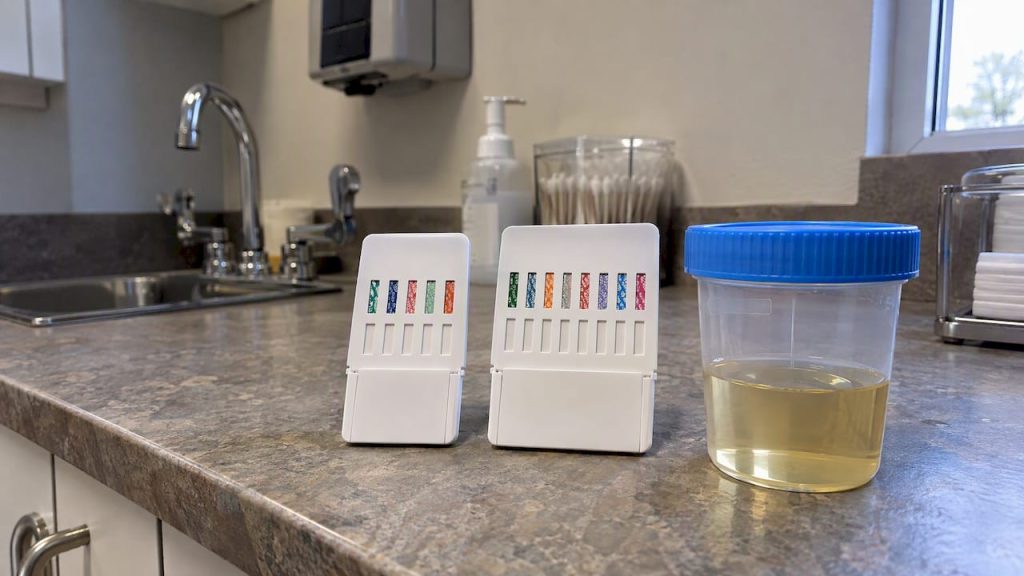
A 5 panel drug test looks for five substance groups. A 10 panel looks for those same five plus five more, mostly prescription medications. The difference matters because the extra five are where a legal prescription, not illegal drug use, can trigger a flag. It also matters because the panel is only half the picture: the sample type (urine, hair or saliva) decides how far back the test can see.
Below we break down what each panel covers, who orders which, and what to do if you have a test coming up. We spend extra time on hair follicle testing, since it is the format people underestimate most.
TL;DR
- A 5 panel covers THC (marijuana), cocaine, amphetamines, opiates and PCP. A 10 panel adds benzodiazepines, barbiturates, methadone and others that vary by lab.
- The 5 panel is the federal standard. The 10 panel has no single standard list in the private sector, so ask the employer or lab what is on yours.
- Panel and sample type are separate questions. A hair test usually looks back about 90 days, far longer than urine or saliva.
- A positive screen is not a final result. It goes to confirmation testing, and a valid prescription can be reviewed by a Medical Review Officer.
- Urine-oriented tricks do not work on hair. Hair needs its own preparation plan, started well ahead of the test.
Table of Contents
- What a 5 panel drug test screens for
- What a 10 panel drug test screens for
- 5 panel vs 10 panel at a glance
- Why employers choose one over the other
- The sample matters as much as the panel
- Hair follicle testing: where the panel debate becomes personal
- Urine and saliva preparation, briefly
- What happens after a positive screen
- How to prepare for your test
- Our perspective
- FAQ
- Sources
What a 5 panel drug test screens for
The 5 panel is the classic workplace test. Under the federal workplace program, the five groups are marijuana (THC), cocaine, amphetamines, opiates and phencyclidine (PCP). Some agencies are also authorized to test for additional drugs, including fentanyl, hydrocodone, hydromorphone, oxycodone and oxymorphone.
The word “panel” refers to a substance group, not a single drug. Amphetamines, for example, is one panel that can include several related compounds.
For most people the practical takeaway is simple: if you are a regular cannabis user, THC is on the 5 panel, and it is the substance most likely to cause a problem. Our guide to federal cutoff levels explains how the 50 and 15 ng/mL thresholds work.
What a 10 panel drug test screens for
If you searched for what a 10 panel tests for, the short version is this: the core five plus five more categories, most commonly benzodiazepines, barbiturates and methadone. The remaining slots vary by laboratory and are often chosen from propoxyphene, oxycodone or MDMA.
That last point catches people out. Unlike federal DOT tests, there is no standardized list for 10 panel tests in the private sector. Two employers can both say “10 panel” and test for slightly different things. Before your appointment, ask the employer or collection site for the exact drug list.
Benzodiazepines are the prescription class most people have heard of. Brand names such as Valium, Xanax and Ativan fall in this group. Barbiturates are older sedatives. Methadone is used in pain management and opioid treatment.
5 panel vs 10 panel at a glance
| 5 panel | 10 panel | |
|---|---|---|
| Core substances | THC, cocaine, amphetamines, opiates, PCP | The same five |
| Added substances | None | Benzodiazepines, barbiturates, methadone and others that vary by lab |
| Standard list | Yes, in federal programs | No standard list in the private sector |
| Typical use | Federally regulated and general pre-employment screening | Safety-sensitive, healthcare and some other employers |
| Prescription drug exposure | Limited (opiates) | Broader |
| THC covered | Yes | Yes |
Notice the last row. Moving from a 5 panel to a 10 panel does not make the THC part stricter. The marijuana test is the same. What changes is the number of other substances that could show up.
Why employers choose one over the other
It is rarely about budget alone. According to Medical Review Officer guidance, employers in safety-sensitive or healthcare roles often need broader screening to catch misuse of prescription drugs like benzodiazepines or opioids, which a standard 5 panel would miss. That makes the 10 panel a common choice in those industries.
A general office, retail or warehouse employer may use a 5 panel because it covers the most commonly cited substances at a lower cost. A hospital, clinic, trucking contractor or manufacturer may go wider.
If you are facing unannounced testing, it helps to understand the rules around it. We cover that in how random drug testing at work affects employees.
The sample matters as much as the panel
Panel tells you what is tested. Sample type tells you the time window. Most 10 panel tests are urine tests, and the 10 panel is typically run on a urine sample. But a 5 panel can be run on urine, saliva or hair.
Urine
Urine is the most common employment sample. It detects metabolites, which are byproducts your body produces. Urine tests do not measure current impairment: metabolites can remain long after the effect wears off.
Saliva (oral fluid)
Oral fluid tests are quick, observed and harder to tamper with, and they tend to catch more recent use. In one workplace comparison, substances were found in 3.7% of urine samples but only 0.5% of oral fluid samples, which suggests oral fluid has a shorter reach.
Hair
Hair is the one most people dread. It creates a lasting record of use over a long period, commonly 90 days. The same research note that applies to urine applies here in reverse: hair offers a drastically longer window than urine or saliva. That is why the “hardest test to pass” is usually the hair follicle test, not the one with the most panels.
If a body hair sample is requested because you do not have enough head hair, read our page on body hair drug tests and the 12 month window.
Hair follicle testing: where the panel debate becomes personal
People often ask whether a 10 panel is “harder” than a 5 panel. For a THC user facing a hair test, the better question is how long your hair has been exposed and what preparation you do before collection.
Two points shape everything:
- Hair testing is a different problem from urine testing. Drinks and quick fixes aimed at urine do nothing for a hair sample. Preparing for a hair test calls for a fundamentally different approach, one that focuses on the hair shaft rather than only surface cleansing.
- Timing matters. Because hair keeps a long record, starting early gives you the most room to follow a complete routine and repeat it as directed.
This is the problem the Macujo Method was built around. It combines specific products with step-by-step instructions, and our wash calculator helps work out the routine for your situation.
How Macujo Aloe Rid Shampoo fits in
Macujo Aloe Rid Shampoo is the hair-preparation product at the center of our approach. It is designed to help cleanse your hair of toxins before a hair follicle test, and it is used as part of the wider Macujo Method rather than on its own as a one-time rinse. We provide video instructions so you can follow the routine properly.
No product can promise a result in every case, because hair type, history of use, test lab and timing all differ. That is why we pair the shampoo with support: if you need a plan tailored to your date, a private consultation with Mike Macujo lets you talk it through. We offer unlimited consultations until you pass your test.
Want to see the full range? Browse the hair, urine and saliva products on our store.
Urine and saliva preparation, briefly
Hair is our focus, but many readers face a urine or oral fluid test, and the right choice depends on the format.
- Urine, 5 panel or 10 panel: Urine detox drinks, teas and similar products are designed for this sample. Timing, hydration habits and the specific product instructions matter. If you have a short deadline, read our page on rapid detoxification and short notice tests.
- Saliva: A detox mouthwash is designed for oral fluid. Oral tests are most sensitive to recent use, so the timing of your last use is what counts most.
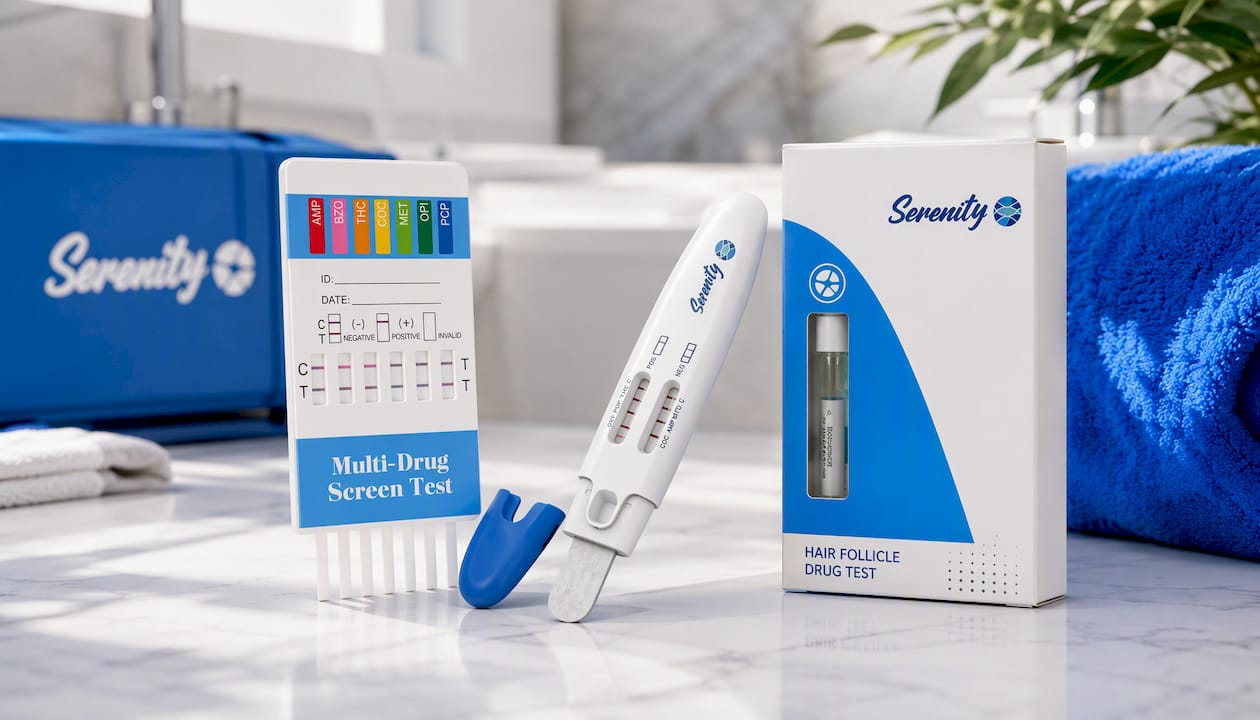
- Checking yourself first: At-home kits let you see roughly where you stand before the official test. Our store carries a 13-panel urine dip card that includes fentanyl, a 12-panel oral fluid pen-style test and an at-home hair follicle test kit.
A home screen is not a lab result, but it can help you decide whether to act now or whether you are likely fine.
What happens after a positive screen
A positive on the first screen is not the end of the process. Employment testing typically uses two steps: an initial immunoassay screen, then a mandatory confirmatory test (GC-MS or LC-MS/MS) on the same sample if the first result is positive. Split-specimen rules allow an employee to ask for the remaining portion of the sample to be tested at a different certified lab after a verified positive.
We walk through each stage in our GC/MS drug test guide.
False positives and prescriptions
False positives are a known issue. Foods, over-the-counter medicines or prescription drugs can react with the initial screen, which is why confirmation testing exists. More on this in our pages on a drug test false positive and false positive screening.
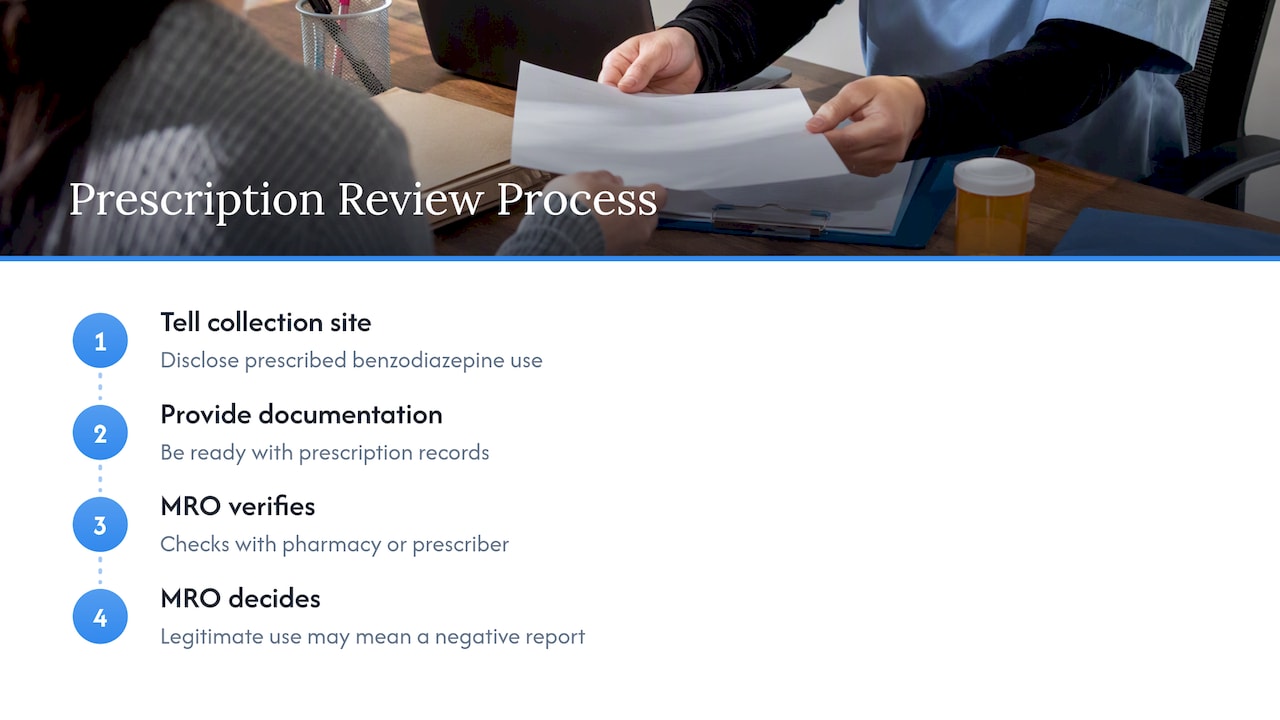
The 10 panel raises one more scenario. If you take a prescribed benzodiazepine, tell the collection site and be ready to provide documentation. Results go to a Medical Review Officer, who is required to verify the prescription with the pharmacy or prescriber and decide whether it is a legitimate medical explanation. That can turn a “positive” into a “negative” report to the employer. Speak with the MRO or your prescribing physician about your specific medication and the specific test before the day, not after.
How to prepare for your test
- Find out the panel and the sample type. Ask the employer or collection site: is it urine, hair or oral fluid, and which drugs are on the list?
- Count your days. Hair has the longest look-back, so it needs the most lead time.
- List your medications. Include prescriptions and over-the-counter products, and gather documentation for any that appear on the panel.
- Match the product to the sample. Urine products for urine, mouthwash for oral fluid, hair-specific preparation for hair.
- Follow instructions exactly. Partial routines are the most common reason people feel let down by a product.
- Get help with the plan. Our consultations are there for exactly this.
Our perspective
We have spent more than 20 years helping people through drug tests, and one pattern repeats: people worry about the panel count when they should worry about the sample. A 10 panel urine test and a 5 panel hair test are different challenges, and the hair test is almost always the harder one for anyone with a history of THC use.
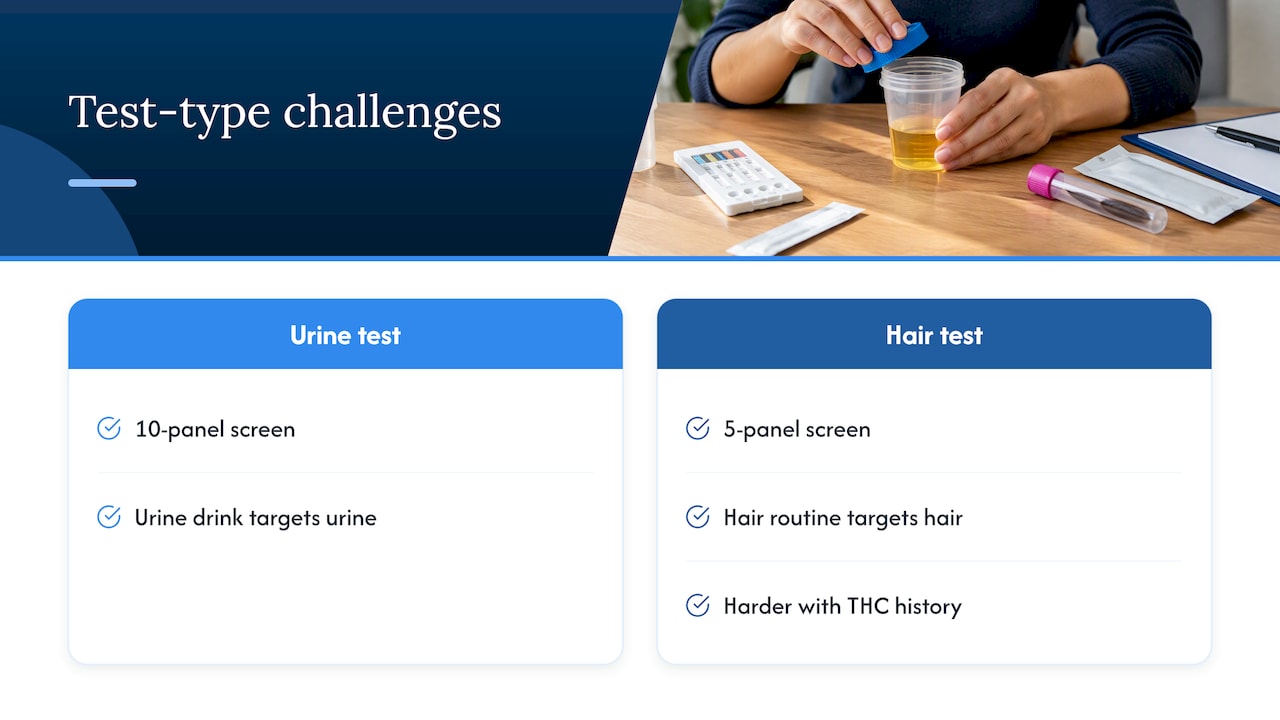
The second pattern is that people reach for the wrong tool. A drink made for urine does not do the job of a hair routine. That is why the Macujo Method separates products by test type, and why we built a calculator and video instructions around it instead of selling one bottle and hoping.
Third, nobody should face this alone. Our commitment is personalized support, including consultations until you pass your test, because your hair, your timeline and your lab are not the same as anyone else’s.
— Detox Experts
FAQ
Is a 10 panel drug test harder to pass than a 5 panel?
It covers more substances, but the THC portion is the same on both. The 10 panel mainly adds prescription-type drugs such as benzodiazepines. For a THC user, the sample type (hair versus urine) usually matters far more than the panel count.
Does a 5 panel test for marijuana?
Yes. THC is one of the five groups, alongside cocaine, amphetamines, opiates and PCP, in the federal 5 panel. Private employers using a 5 panel generally follow the same core list.
Can prescription medication cause a failed 10 panel?
It can cause a positive screen, but the result goes through a Medical Review Officer first. With valid documentation, the MRO can verify the prescription and may report the result as negative. Bring paperwork and tell the collection site up front.
How far back does a hair follicle test look?
Typically about 90 days. That long window is why hair requires a different preparation approach from urine or saliva, and why starting early is important.
What should I do if my test is in a few days?
Confirm the sample type first, then match your approach to it. Our page on short notice tests covers what is realistic, and a private consultation can help you plan around your date.
Sources
- Model Plan for a Comprehensive Federal Drug-Free Workplace Program (SAMHSA)
- 10 Panel Drug Test: What It Screens For and Results (Testing.com)
- Understanding Drug Testing Panels (Curis Diagnostic Solutions)
- ‘Back to Basics’ for Medical Review Officers (U.S. DOT)
- Comparison of Urine and Oral Fluid for Workplace Drug Testing (PMC)
- 49 CFR 40.187, Part 40 (U.S. DOT)
- Drug Testing (MedlinePlus)