


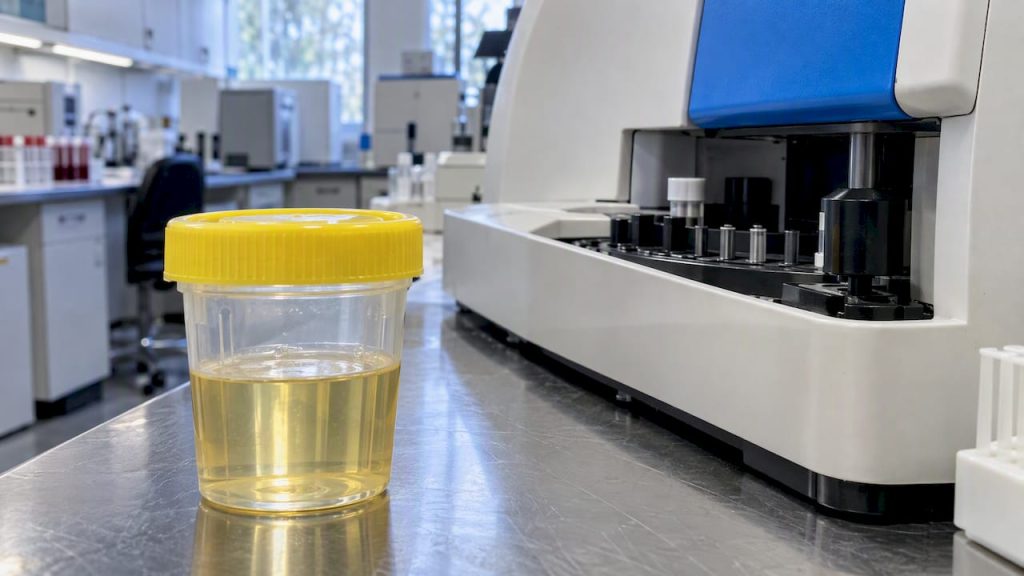
Most common opiates, including codeine, morphine and hydrocodone, can be detected in urine for roughly 1 to 3 days after use. Heroin’s own marker disappears much faster, within hours, while methadone can linger for more than a week. Your dose, how often you use, your metabolism and the type of test all move those numbers.
Below you will find the window for each drug, the factors that stretch or shorten it, the poppy seed question, and what happens at a real collection site. We also cover what changes if the test is hair or saliva, because that is where preparation matters most.
TL;DR
- Codeine, morphine and hydrocodone usually show in urine for about 1 to 3 days. Heroin’s unique marker, 6-MAM, is gone in roughly 6 to 8 hours, but its morphine metabolite lasts longer.
- Methadone has a longer window, about 2 to 11 days according to Mayo Clinic Laboratories.
- Dose, frequency of use, hydration, body mass, urine pH and kidney function all change how long a result stays positive.
- Poppy seeds can trigger a positive screen. A lab confirmation and a Medical Review Officer (MRO) interview exist to sort that out.
- Urine clears fast, hair does not. If a hair follicle test is coming, that is where our Macujo Aloe Rid Shampoo routine fits.
Table of Contents
- How long opiates stay in urine, drug by drug
- What makes your window longer or shorter
- What a positive result does and does not mean
- What to expect at a real collection
- Our perspective on opiate testing
- If your test is hair, not urine
- Saliva tests and home test kits
- Get a plan for your specific test
- Practical steps if a test is coming
- FAQ
- Sources
How long opiates stay in urine, drug by drug
A “window of detection” is the time between when a drug becomes measurable in urine and when it drops below the test’s cutoff. It starts within hours. Oxycodone typically appears within 1 to 3 hours and heroin within 2 to 6 hours, which is why a test taken too soon after use can come back negative.
Here is a working summary built from the Mayo Clinic Laboratories drug guide and the NCBI window-of-detection table. Treat the ranges as typical, not guaranteed.
| Substance | Typical urine window | Notes |
|---|---|---|
| Heroin (6-MAM marker) | About 6 to 8 hours | 6-MAM is unique to heroin, so labs use it to tell heroin from morphine |
| Morphine | About 1 to 3 days | Heroin also breaks down into morphine, so a morphine-positive result can outlast the 6-MAM window |
| Codeine | About 1 to 3 days | Some codeine converts to morphine in the body |
| Hydrocodone | About 1 to 3 days | Common in prescription pain medication |
| Methadone | About 2 to 11 days | Longer than the others, and the EDDP metabolite can be found for more than 6 days after high, long-term doses |
One caution matters here. Standard opiate screens are built to find natural opiates like morphine and codeine, so they often miss oxycodone, fentanyl and methadone. A negative on a basic screen does not rule those out, and a specific assay may be ordered. If you have been prescribed oxycodone, our page on oxycodone drug testing goes into that gap.
What makes your window longer or shorter
The numbers above are averages. Clinical sources agree that hydration, dose, metabolism, body mass, urine pH and the duration of use all affect how long a drug can be found. In plain terms:
- Dose and frequency. One tablet taken once is a different story from daily use for months. Heavier, longer use pushes the window toward the top of the range, and methadone is the clearest example.
- Metabolism and body size. Liver and kidney function change how quickly the drug and its metabolites leave your system.
- Hydration and urine concentration. Very dilute urine can lower concentrations, but labs check for dilution. A dilute sample often leads to a recollection, not a pass.
- Time of collection. Testing a few hours after use can miss the drug entirely. Testing days later may find only metabolites.
No one can tell you your exact number from a chart. If a test is days away, count back honestly from your last use and treat the chart as a rough guide, not a promise.
What a positive result does and does not mean
A urine screen is a snapshot, not a timeline. According to the American College of Medical Toxicology position statement, a positive result shows an agent from the class is present, but it does not identify the dose, route, source or exact timing, and it does not measure impairment.
Most screens use an immunoassay, which gives a yes or no. Chromatography-based confirmation (GC/MS or LC/MS/MS) is what gives a precise, quantitative answer, and confirmation is almost always used when a screen is positive. We explain what happens in that lab step in our guide to the GC/MS drug test.
Poppy seeds and other false positives
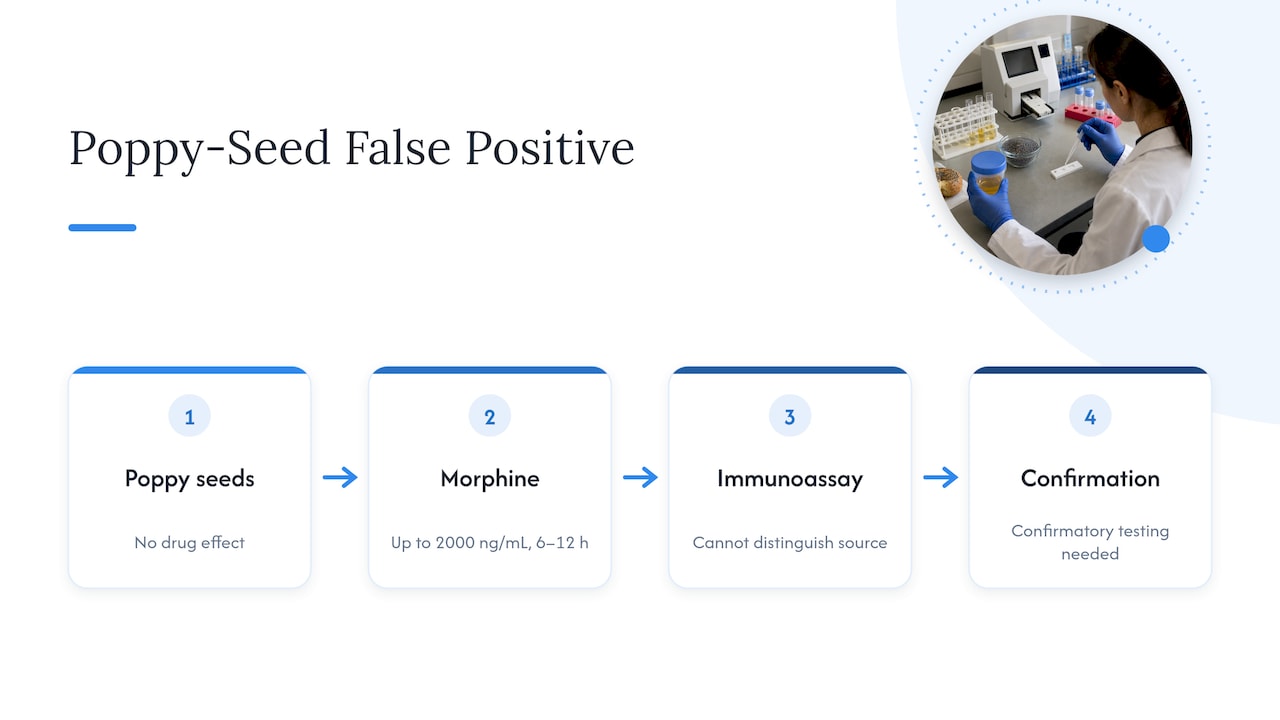
Poppy seeds are the classic example. Mayo Clinic Laboratories reports that eating them can produce morphine concentrations up to 2000 ng/mL for 6 to 12 hours, without any drug effect. A basic immunoassay cannot tell that morphine from the therapeutic or illicit kind, so confirmatory testing is needed.
The practical lesson is disclosure. Clinicians advise that people tell the reviewer about all recent medications, including over-the-counter ones, because that lets a Medical Review Officer interpret the result correctly. If you hold a valid prescription for codeine or hydrocodone, say so at the MRO interview and keep the pharmacy record handy.
What to expect at a real collection
Many job seekers worry less about the chemistry than about the cup. Federal workplace and DOT-regulated collections follow strict steps, and other employers often copy them.
- Volume. The collector checks that the specimen holds at least 45 mL.
- Temperature. It is measured within 4 minutes, and the only acceptable range is 32 to 38 °C (90 to 100 °F). Outside that range, a new collection under direct observation starts immediately.
- Shy bladder. Collectors cannot combine separate voids to reach the minimum. If you cannot provide 45 mL within 3 hours, the collection stops, the employer is told, and it may be treated as a refusal to test.
- Sealing and paperwork. The cup is sealed in your presence and you initial the label.
The takeaway is simple. Collection sites are built to catch tampering and substitution, so the reliable variable you control is time and honest preparation, not tricks at the cup. Probation programs add specimen validity checks on top, which we cover in our probation drug test guide.
Our perspective on opiate testing
We have spent more than 20 years helping people through drug tests, and one pattern repeats. People ask us for a number of days, then discover their test was never urine at all. They were scheduled for a hair follicle test, and the days-based chart did not apply.
For opiates in urine, time is the honest answer. The windows are short compared with hair, the lab confirms what the screen finds, and an MRO can resolve legitimate prescriptions. We will not tell you a product can erase a drug from your urine overnight, and you should be wary of anyone who does.
Where preparation does help is hair, and where guidance helps is knowing which test you face. That is why our approach, built on the Macujo Method, starts with the type of test and your timeline, then matches products and steps to it. Our customers get step-by-step video instructions and the Macujo calculator, and the private consultation lets you ask about your own situation.
— Detox Experts
If your test is hair, not urine
Urine tells an employer about the last few days. Hair looks back much further, commonly described as around 90 days, although that figure can mislead, because it depends on hair length and growth. A short urine window gives you no comfort if a hair follicle test is the one on your schedule.
That is the situation our Macujo Aloe Rid Shampoo was made for. It is a hair-cleansing product used as part of the Macujo Method to prepare hair before a follicle test, by washing away external contaminants and residue and supporting a thorough cleanse. It is meant for the hair stage of the method, not a urine problem, and results depend on your hair, your history and following the instructions precisely.
A few practical points for hair:
- Confirm which test you are scheduled for before you buy anything. The collection notice or the recruiter can tell you.
- Start the washing routine well ahead of the test date and follow the step-by-step videos instead of improvising.
- Use the Macujo calculator to plan the number of washes around your date.
- Keep your prescription records ready in case of a positive that needs medical review.
If you want to see the products for each test type, our hair, urine and saliva product categories are on our home page.
Saliva tests and home test kits
Saliva windows for opiates are shorter than urine. One treatment-center guide puts them at roughly 24 to 48 hours, which is why oral fluid is often used when an employer wants to know about very recent use. Our saliva range includes a detox mouthwash, and you can screen yourself first with the 12-panel oral fluid saliva test.
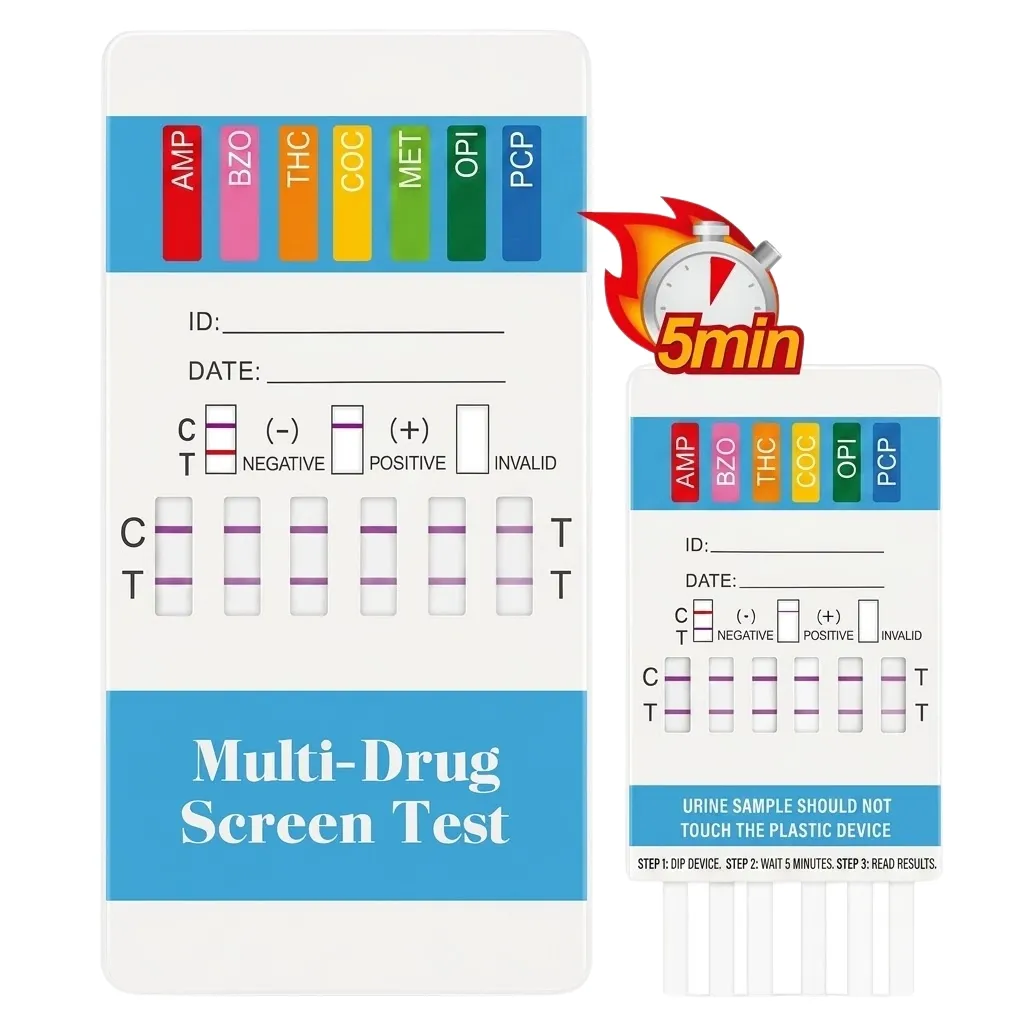
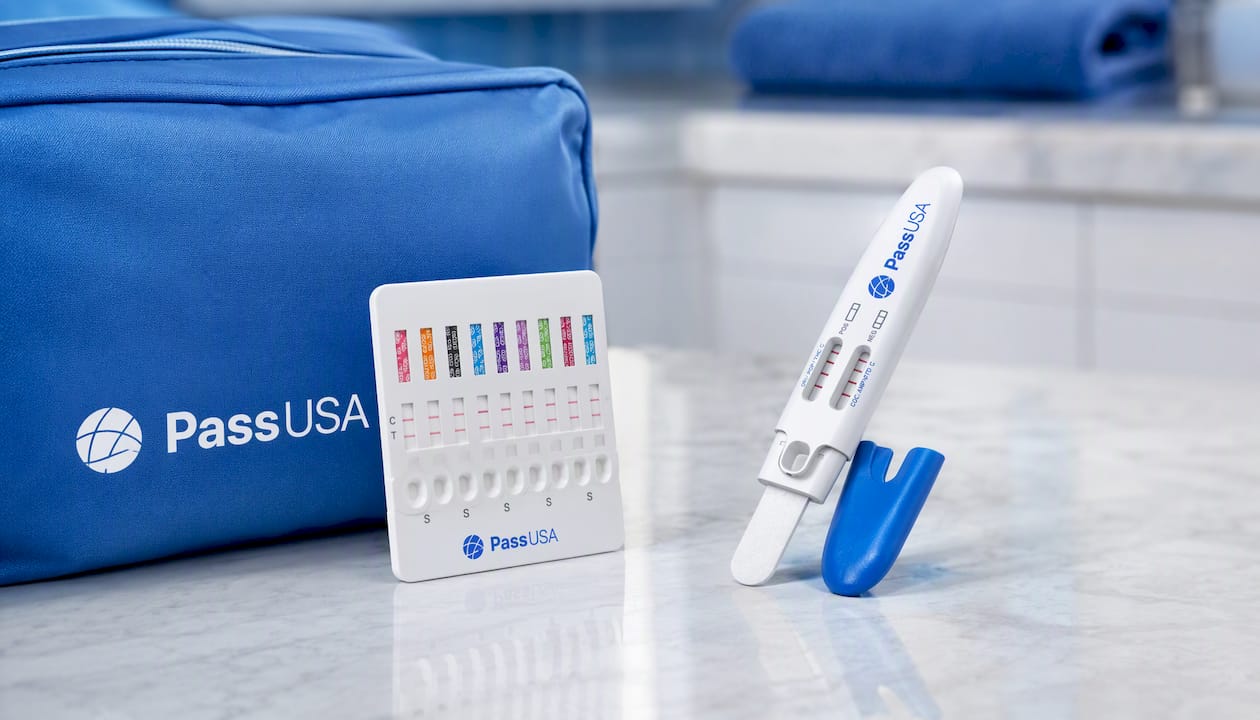
For urine, an at-home check lets you see where you stand before a formal test. The 13-panel urine dip card, which includes fentanyl, screens for several drug classes in one go. Remember that home tests are screens: they indicate whether drugs are present in urine, and a lab confirmation is the final word. Our guide to home drug tests for opiates shows how to read the results and what to do next.
Get a plan for your specific test
If your test is days away, a general chart will only take you so far. Tell us which test you face, when it is, and your history, and we will build a plan around it. Our unlimited consultations run until you have taken your test, and the private consultation with Mike Macujo is the fastest way to get one-to-one advice. If you are still choosing products, start from the PassUSA home page.
Practical steps if a test is coming
- Identify the test type. Urine, hair and saliva have very different windows and different preparation.
- Count back from your last use. Compare the number of days with the table above, and allow margin for heavy or long-term use.
- Disclose prescriptions. Bring documentation for any opioid or codeine medication, and mention poppy seeds if relevant.
- Screen yourself. Use a home test to check where you stand, knowing that a lab confirmation decides the result.
- Prepare the right way. For hair, use the Macujo Aloe Rid Shampoo routine with the calculator. For other tests, ask us before buying.
- Never delay medical care. If you or someone else has taken too much of an opioid, call 911 right away. Treatment of acute toxicity should never wait on test results.
If you want the wider picture across drugs, our overview of how long drugs stay in your system compares the main substances side by side.
FAQ
How long do opiates stay in your urine?
For codeine, morphine and hydrocodone, the usual range is about 1 to 3 days. Heroin’s 6-MAM marker is gone within hours, and methadone can be found for 2 to 11 days. Heavy or long-term use pushes results toward the longer end.
Can poppy seeds make me fail an opiate test?
They can trigger a positive screen, because morphine from poppy seeds looks the same as other morphine on a basic immunoassay. A confirmation test and an MRO interview exist for this reason. Tell the reviewer what you ate and about any medication you take.
Will a standard urine screen catch oxycodone or fentanyl?
Not always. Standard opiate screens are designed for natural opiates like morphine and codeine, so a negative does not exclude semi-synthetic or synthetic opioids. Employers who need those drugs covered request specific assays.
Does drinking water clear opiates faster?
It does not reliably change the outcome, and it carries a risk. Labs check for dilute samples and may ask for a recollection, sometimes under observation. Time since last use matters far more than how much you drink.
What if my employer uses a hair test instead?
Then the urine windows above do not apply, because hair reflects a much longer period. Preparation matters more here, and our Macujo Aloe Rid Shampoo routine is designed for that stage. Contact us for a plan matched to your test date.
Sources
- Opiates, Mayo Clinic Laboratories
- Drugs of Abuse Home Use Test, FDA
- Urine Drug Testing Window of Detection table, NCBI Bookshelf
- Urine Drug Testing Window of Detection exhibit, NCBI Bookshelf
- ACMT Position Statement: Interpretation of Urine Opiate and Opioid Tests, PMC
- Urine Drug Testing, CDC Stacks
- Urine drug testing, CAMH
- 49 CFR Part 40 Section 40.65, US Department of Transportation