

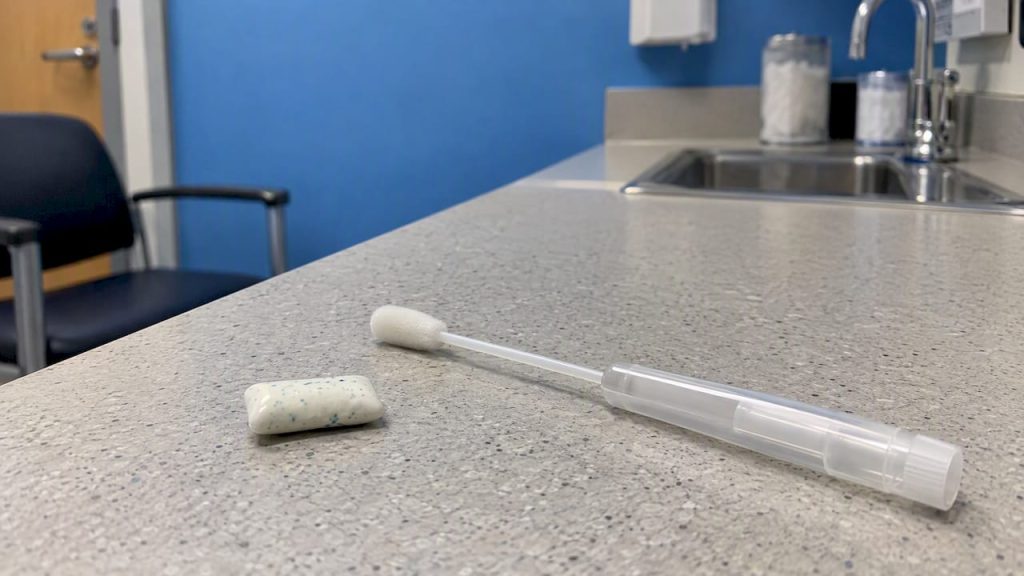
No, chewing gum is not a dependable way to pass a mouth swab drug test. Gum can change your saliva for a short time, and some lab research shows it can lower measured drug levels. But collectors are trained to watch for exactly that, a result that looks too clean can lead to a recollection, and gum does nothing for a test that reads recent use. Below we explain what gum and mints do, what collection sites expect from you, and what a prepared person does instead.
TL;DR
- Gum increases saliva flow and shifts its pH, which can lower some measured drug concentrations. That is a lab observation, not a method you can count on.
- Collection sites usually tell you not to eat, drink, chew gum or use breath mints for 15 to 30 minutes before the swab, so gum may simply be taken out of your mouth.
- Mints such as Altoids are not shown to hide a drug. Plain mouthwash cleans residue about as well as the products tested in one study.
- Oral fluid shows recent use, commonly a day or two. Time, not gum, is your biggest lever.
- Hair tests are a different problem with a different window. If one is coming, start your preparation days ahead, not minutes.
Table of Contents
- What a mouth swab test actually looks for
- Does chewing gum help with a swab test?
- What about Altoids and other mints?
- What actually moves the result
- A realistic plan for an oral-fluid test
- Check yourself before the real swab
- Our perspective
- If your real worry is a hair follicle test
- Urine and other tests in brief
- FAQ
- Sources
What a mouth swab test actually looks for
An oral drug test uses a swab to collect saliva from the inside of your cheeks and gums, then looks for specific drugs or their metabolites. Cleveland Clinic describes it this way. MedlinePlus adds that the swab may be rolled around your mouth or held under your tongue for about two minutes, then read on a handheld device or sent to a laboratory.
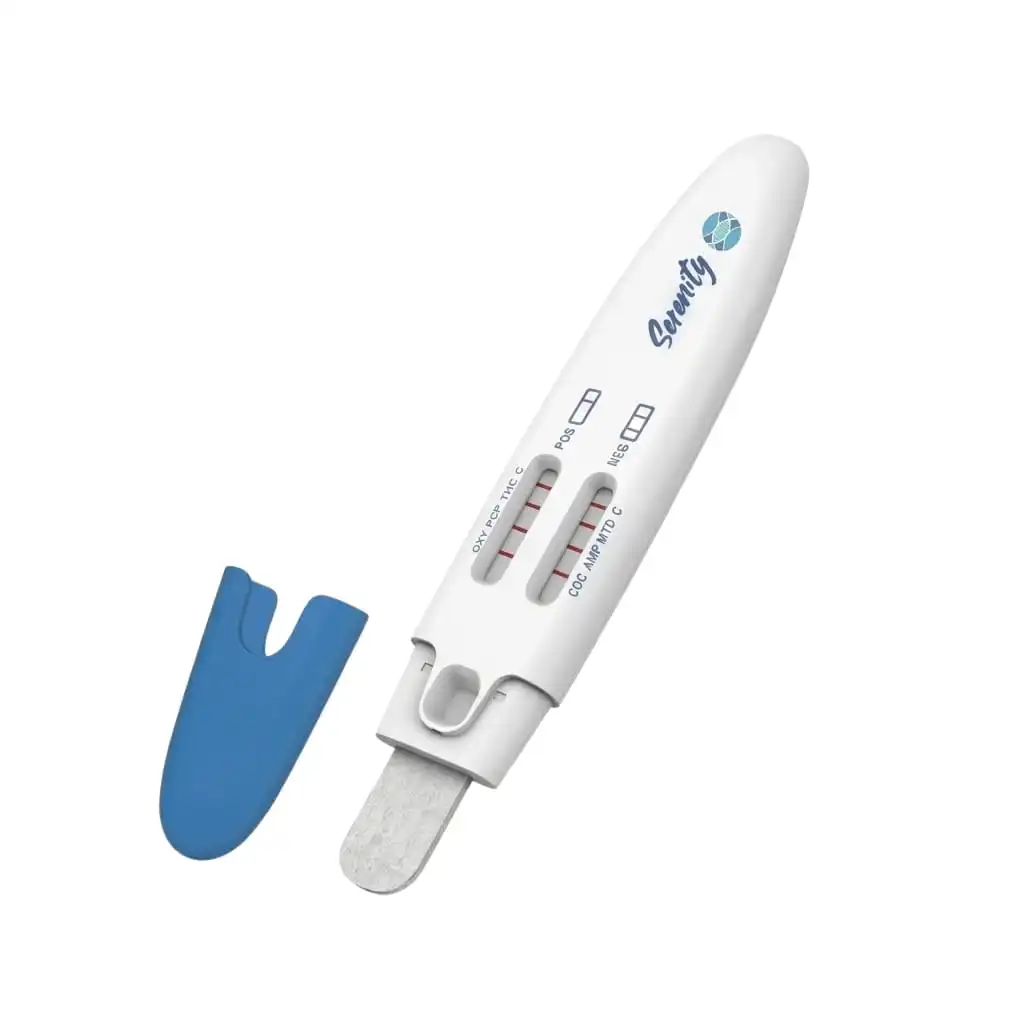
That design matters for the gum question. The test is not looking at your breath or the surface of your tongue. It samples oral fluid, and the drug in it comes from two places: the drug that moved from your blood into saliva, and any residue left in the mouth if you used the substance by smoking, vaping, or oral products. A peer-reviewed review notes that oral-fluid concentrations reflect blood concentrations but can also include residual drug in the mouth.
What it can detect
Cleveland Clinic lists alcohol, amphetamines, cocaine, ecstasy, cannabis (THC), methamphetamine, opioids and Rohypnol among detectable substances. Laboratory panels differ: Quest Diagnostics says its lab-based oral-fluid testing covers amphetamine, methamphetamine, cocaine, marijuana/THC, opiates and PCP. If a notice says “5-panel” or “12-panel,” the panel, not the swab, decides what is checked.
How long drugs stay in saliva
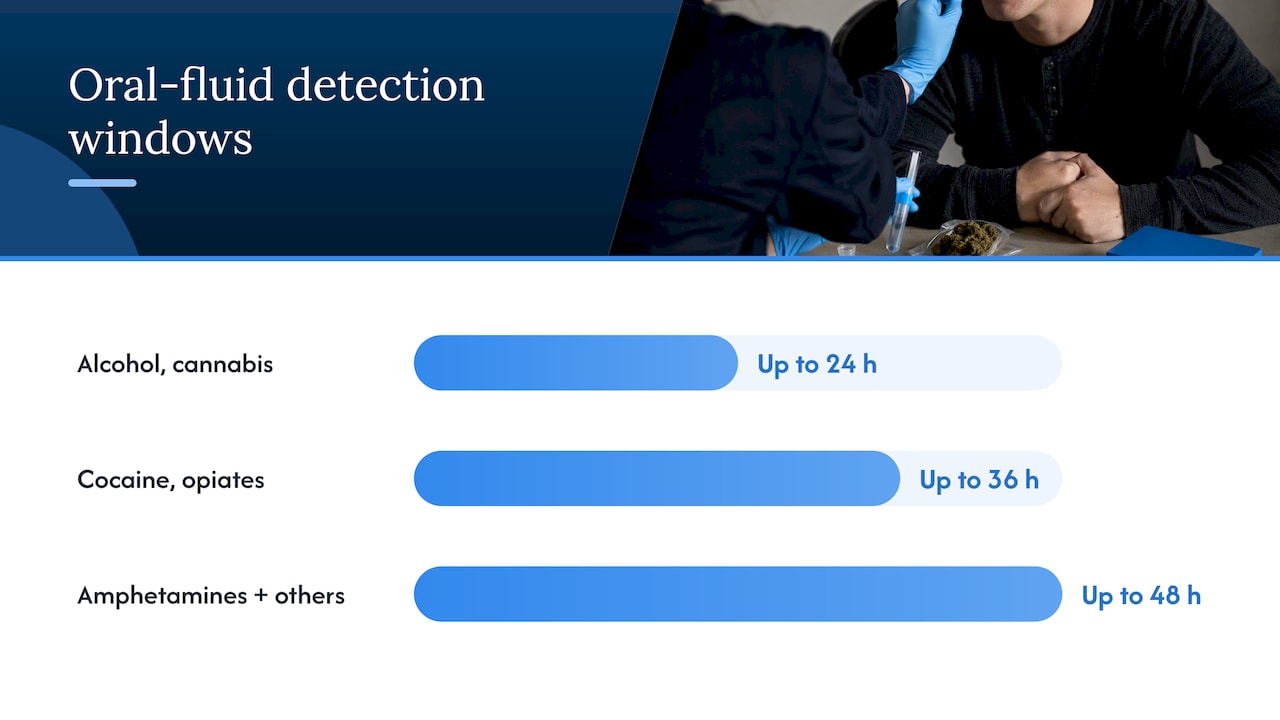
Cleveland Clinic’s estimates are up to 24 hours for alcohol and cannabis, 36 hours for cocaine and opiates, and 48 hours for amphetamines, benzodiazepines, methamphetamine and some opioids. These are estimates. Quest says most drugs are detectable soon after use and generally for 24 to 48 hours, and that oral fluid may show use within 1 to 2 hours of ingestion, where urine commonly needs 2 to 6 hours.
The National Safety Council says detection can range from the last few hours to a day or more, depending on the drug, route, dose, frequency, test sensitivity and metabolism. In other words, there is no fixed 48-hour rule. We cover that in more detail in our guide to saliva test detection time.
Does chewing gum help with a swab test?
It can change the sample, but it is not a reliable fix. Here is what the evidence shows.
The lab view. Peer-reviewed research indexed by PubMed Central reports that stimulating saliva with chewing gum changes oral-fluid pH and lowers measured concentrations by roughly two- to six-fold for codeine, two- to four-fold for methamphetamine and about five-fold for cocaine. The size of the effect varies by drug. Aegis Sciences says gum raises salivary flow and alters pH, which can reduce some drug levels and potentially cause false negatives, and for that reason it does not recommend gum before collection.
Notice what that means in practice. Laboratories treat gum as something that interferes with a sample. Interference is the reason sites ask you not to do it.
The collection view. A pre-test instruction from a background-screening provider tells donors to avoid eating, drinking, chewing gum and breath mints for at least 15 to 30 minutes before collection. Aegis advises rinsing with water 10 minutes before and avoiding food and drink until the swab, and specifically warns against using gum or sour candy to stimulate saliva.
So the usual sequence is: you arrive, the collector asks whether you have anything in your mouth, and you wait. Whatever the gum did in the hour before is partly undone by the wait, and chewing during it is a visible red flag.
The gap in the logic. Many how-to pages tell you to chew sugarless gum for an hour or two before a test. The idea is that fresh saliva “flushes” the mouth. That can help only with one source, leftover residue in the mouth. It does not change what comes into saliva from your blood, and it does not touch a metabolite that is already circulating. If you used recently, gum is a weak tool against a strong signal.
A study that tested gum directly
A 2005 study used the Oratect device. Volunteers self-tested 30 minutes after chewing one stick of Wrigley gum, and no false positives were reported. That finding is about gum not causing a wrong positive. It says nothing in favor of gum hiding a true one. The same study found that the adulterants it evaluated worked mainly by cleansing and partly diluting oral fluid, and were no more effective than ordinary mouthwash at lowering drug levels.
What about Altoids and other mints?
Short answer: there is no good evidence that a mint hides a drug. The 2005 study above found that food, beverages and the hygiene products it tested did not produce false positives on its device. That is the closest research we found to the “Altoids” question, and it says foods do not trigger a result. It does not show mints suppress one.
What a mint does is stimulate saliva and leave sugar or flavor in your mouth. Collection sites treat that the same way they treat gum: wait, then swab. If you are caught with a mint in your mouth, the likely outcome is a delay, not a pass.
What actually moves the result
Three things matter far more than gum.
- Time since last use. Oral fluid reflects recent use. Quest and Cleveland Clinic both put most windows at roughly one to two days, with cannabis estimated by Cleveland Clinic at up to 24 hours. Longer gaps are the single largest factor. See our drug detection times chart and the longer explainer on how long drugs stay in your system.
- How often and how much you used. The peer-reviewed review cited earlier says detection windows may be underestimated after repeated or chronic use.
- The cutoff and the panel. A negative result means the tested drugs were not present above the test’s cutoff. The National Safety Council is clear that this does not prove no use occurred, and that a positive alone does not establish impairment.
Why “brush your teeth” and “rinse” come up
People also ask whether brushing helps. Brushing and rinsing with water remove residue, and sites typically want you to rinse and then wait. That is consistent with the research: cleansing and dilution are what the products in the 2005 study did, and they performed about like plain mouthwash. Brushing right before the swab, though, can leave foam and flavor in your mouth, so do it earlier and rinse with water at least 10 minutes before collection, as Aegis suggests.
A realistic plan for an oral-fluid test
If a mouth swab is coming and you want the best chance at an accurate negative, work backward from the test.
- Find out the panel and test type. Ask the employer or the site what is being tested and whether it is an instant device or a lab-processed sample.
- Stop use as early as you can. Each hour counts more than any trick.
- Hydrate normally and eat a regular meal earlier in the day so you are not dry-mouthed at the site.
- Brush well hours before, then rinse with water about 10 minutes before collection.
- Arrive with an empty mouth. No gum, no mint, no candy, no tobacco. Tell the collector if you have anything in there.
- Know your rights after a non-negative. The National Institute on Drug Abuse describes initial screens as presumptive and says a non-negative screen should get more specific confirmatory testing, commonly by GC/MS or LC/MS. Cleveland Clinic says laboratory results are usually more accurate, that THC is harder to detect, and that someone who believes a result is false can ask for lab confirmation or testing of a second sample.
We go through specific saliva cases in our guides on passing a saliva drug test and on why saliva can be harder than other tests. If the swab is a workplace requirement, this walkthrough of mouth swab tests at work covers what to expect on the day.
Check yourself before the real swab
Guessing is the worst part. An at-home oral-fluid screen shows you roughly where you stand before the official one. Our 12-panel oral fluid saliva test is a pen-style rapid screen for that purpose. Keep in mind that a home screen is a screen: it tells you whether more preparation is wise, and it does not replace the employer’s own test or laboratory confirmation.
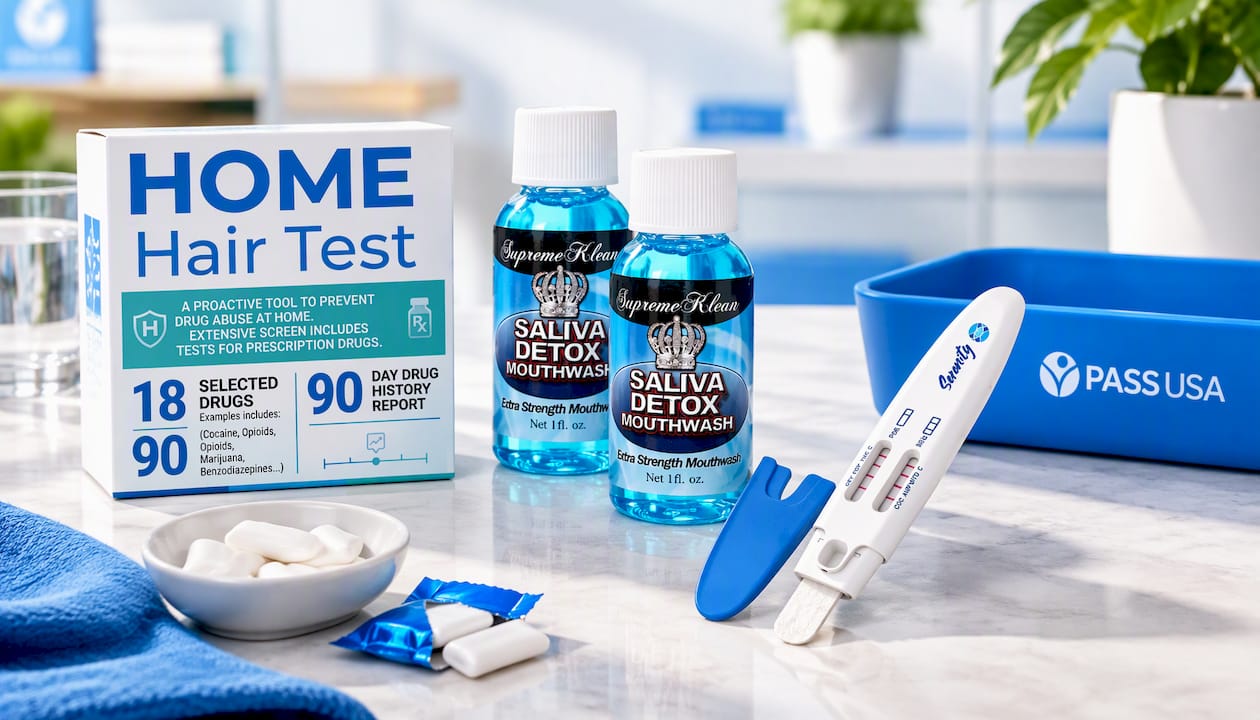
For the mouth itself, we make a Macujo Saliva Detox Mouthwash intended as an oral cleanser used before a swab. Use it the way the instructions describe, and keep to the site’s waiting rules afterward.
If your situation is more complicated, such as repeat testing, a mixed panel, or a tight schedule, you can book a private consultation with Mike Macujo. We support customers with unlimited consultations until they pass their test.
Our perspective
We have spent over 20 years helping people prepare for drug tests, and the gum question comes up constantly because it feels like something you can do in the last ten minutes. We understand the appeal. But in our experience the people who struggle with oral-fluid tests are the ones who rely on a last-minute move and skip the planning that matters: knowing the panel, counting the hours since last use, and arriving with a clean, empty mouth.
Our view is simple. Treat the swab as the shortest-window test there is. Plan the days before it, keep the final hour boring, and do not do anything that makes a collector suspicious. A tool that is meant to be used at the right moment, like a mouthwash or a home screen, is fine. A habit that sites specifically prohibit is not a strategy.
And if what is really waiting for you is a different test, do not use the swab advice for it. Each sample type has its own rules.
— Detox Experts
If your real worry is a hair follicle test
Many people who search about mouth swabs are juggling more than one possible test, and hair is the one where gum or mouthwash does nothing at all. A hair test looks back much further than saliva, and the preparation is a process measured in days, not minutes. Our piece on the hair test detection window explains why the commonly quoted 90 days can mislead.
This is where our Macujo Aloe Rid Shampoo comes in. It is part of the Macujo Method for hair, designed to be used in a wash routine ahead of a follicle test to help cleanse the hair of toxins. Because results depend on your hair, your history and your timeline, we pair the shampoo with the Macujo wash calculator and step-by-step video instructions, and we are available for consultation if you need help planning the routine. If you want to confirm where you stand first, there is an at-home hair follicle drug test kit. People on supervised testing can also read about probation drug tests and Macujo hair prep.
The key point: start early. Hair prep done the night before gives you very little to work with, and nothing you do in a collection-site chair will change it.
Urine and other tests in brief
If the test turns out to be urine, the issues are different: specimen validity checks, temperature and dilution, and a longer window than saliva. Quest notes urine commonly needs 2 to 6 hours after ingestion before it shows use, which is slower to start but typically reaches further back than oral fluid. Our Labcorp process guide walks through urine, hair and oral-fluid collection in one place, so you can see how each type is handled and what to prepare for.
The point is to identify the test first. Advice for one does not carry to the next, and mixing them up is how people end up doing the wrong thing at the wrong time.
FAQ
Will chewing gum help with a swab test?
Not reliably. Gum raises saliva flow and changes pH, which lab research links to lower measured drug levels for some substances. But collection sites usually ask you to avoid gum for 15 to 30 minutes before the swab, so it is more likely to cause a delay than a pass.
Can Altoids or breath mints change a saliva drug test?
There is no good evidence that mints hide a drug. One 2005 study found that foods and hygiene products did not cause false positives on its device, and the cleansing products tested worked about like plain mouthwash. Sites also ask you to skip mints before collection.
Will brushing my teeth help me pass a mouth swab test?
Brushing removes residue, but it does not remove drug that comes into saliva from your blood. Brush hours before the test and rinse with water about 10 minutes before, rather than brushing right at the site.
What does a mouth swab test for?
It depends on the panel. Common targets include THC, cocaine, amphetamines, methamphetamine, opiates and PCP, and broader panels add other drugs. Ask the employer or site which panel applies to you.
What if I get a non-negative result and think it is wrong?
Ask about confirmatory testing. NIDA describes initial screens as presumptive, and Cleveland Clinic says you can request laboratory confirmation or testing of a second sample if you believe a result is false.
Sources
- Oral Drug Test (Mouth Swab), Cleveland Clinic
- Drug Testing: MedlinePlus Medical Test
- Quest Diagnostics lab-based oral fluid testing FAQ
- Interpretation of Oral Fluid Tests for Drugs of Abuse
- Oral Fluid Drug Testing, National Safety Council
- Drug Testing in Oral Fluid, PubMed Central
- Oral Fluid Testing clinical reference guide, Aegis Sciences
- Oral fluid drug tests: effects of adulterants and foodstuffs (2005)
- How do I prepare for my oral saliva drug test?
- Drug Testing, National Institute on Drug Abuse