


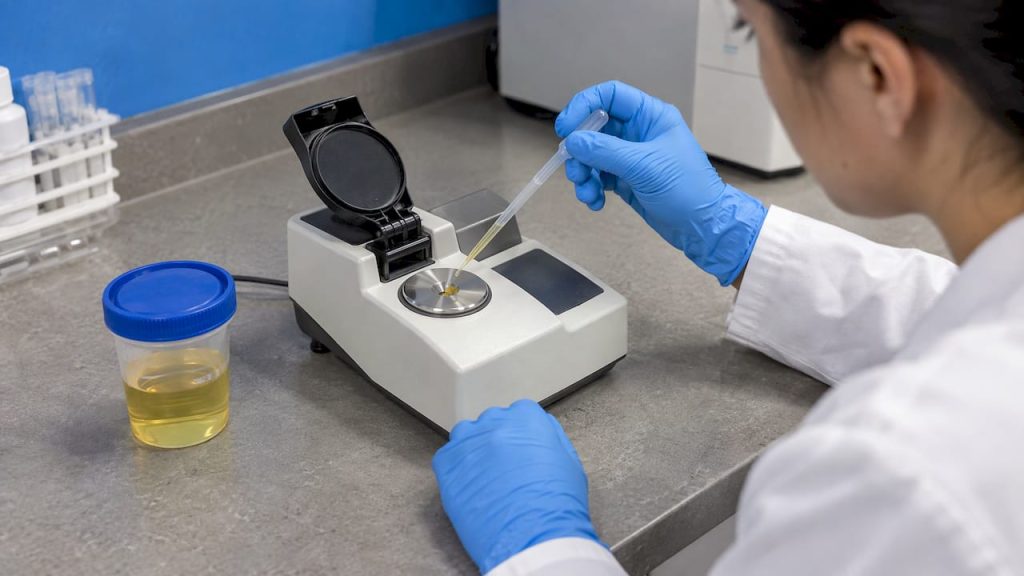
Specific gravity on a drug test is a validity check on a urine sample. It measures how concentrated the urine is compared with water, and labs use it, together with creatinine, to decide whether a sample looks like normal human urine. It does not detect any drug. A very low reading can get your sample flagged as dilute or substituted, even when the drug result itself is negative.
If your real worry is a hair follicle test, specific gravity does not apply at all. We cover that difference below, because it changes how you should prepare.
TL;DR
- Specific gravity compares the density of your urine with water (water is 1.0000). Normal human urine falls roughly between 1.003 and 1.020, depending on the lab and source.
- Labs pair it with creatinine. Under federal rules a sample is dilute when creatinine is 2 to under 20 mg/dL and specific gravity is above 1.0010 and below 1.0030.
- A reading at or below 1.0010 with creatinine under 2 mg/dL points to a substituted specimen, which is treated very seriously.
- Specific gravity is a urine-only check. Hair follicle tests look at a different kind of evidence, so hair prep is a separate job.
- We built our Macujo Method support around each test type: hair, urine and saliva.
Table of Contents
- What specific gravity means on a drug test
- How labs use specific gravity and creatinine together
- Federal cutoffs: dilute, substituted and invalid
- Why specific gravity can be high or low
- What happens after a dilute or substituted result
- Why drinking lots of water backfires
- Specific gravity does not apply to hair tests
- If you face a urine or saliva test instead
- What we think about specific gravity
- Get support for your specific test
- FAQ
- Sources
What specific gravity means on a drug test
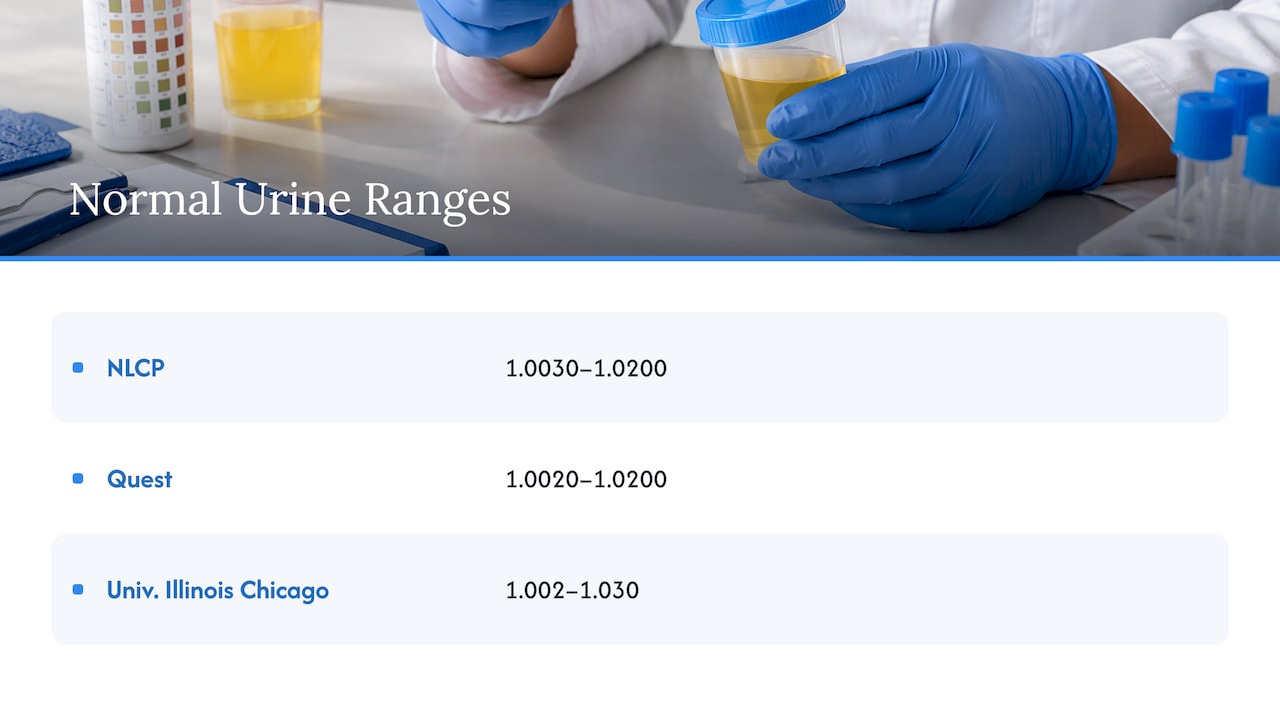
Specific gravity, also called relative density, reflects the concentration of dissolved particles in urine compared with water. Those particles include salts, glucose, protein and urea. The National Laboratory Certification Program validation guide sets water at 1.0000 and gives a normal human urine range of 1.0030 to 1.0200.
The exact range you see quoted varies by source. Quest Diagnostics describes normal values as roughly 1.0020 to 1.0200. A University of Illinois Chicago drug information resource says the value should sit between 1.002 and 1.030, and that readings outside that window raise suspicion of adulteration.
The idea is old in workplace testing. According to a National Treatment Court Resource Center handout, using specific gravity to define dilute urine goes back to the first federal workplace guidelines in 1988.
Why a lab checks it at all
A urine drug screen only works if the sample is real, undiluted urine. If someone drinks a large amount of water right before collecting, drug metabolites can fall below the test cutoff. Labcorp notes that a dilute sample can produce a false negative for that reason. Specimen validity testing exists to catch that.
How labs use specific gravity and creatinine together
Specific gravity rarely stands alone. The NLCP guide explains that creatinine and specific gravity work on different scientific principles, so using both lets a lab judge dilution and substitution more reliably. Creatinine is a breakdown product of muscle creatine phosphate that is naturally present in urine.
In practice the process often runs in steps. Labcorp says its validity panel includes creatinine at minimum, and a creatinine below 20 mg/dL triggers a specific gravity test. The ASAM Drug Testing Pocket Guide says the same thing about most sources: specific gravity needs checking only when creatinine is under 20 mg/dL.
The measurement itself
Labs use a refractometer. Per the NLCP guide, a 3-decimal-place instrument can screen when creatinine is above 5 mg/dL and under 20 mg/dL. A 4-decimal-place instrument is required when creatinine is 5 mg/dL or lower, or when the 3-decimal result is under 1.002. That is why you may see 1.003 on one report and 1.0029 on another. The NTCRC handout notes both formats are in use.
Federal cutoffs: dilute, substituted and invalid
The table below summarizes the federal workplace criteria. Always confirm the rules that apply to your own test, since DOT-regulated tests and other employer programs can differ.
| Result | Creatinine | Specific gravity | Source |
|---|---|---|---|
| Dilute | 2 mg/dL or more, under 20 mg/dL | Above 1.0010, below 1.0030 | 49 CFR 40.88 |
| Substituted | Under 2 mg/dL | 1.0010 or lower, or 1.0200 or higher, confirmed on separate aliquots | 49 CFR 40.88 |
| Invalid | Inconsistent creatinine and specific gravity results (among other criteria such as pH and nitrite) | n/a | 10 CFR 26.161 |
The SAMHSA 2024 Medical Review Officer Guidance Manual also describes a second dilute pathway: creatinine above 5.0 and under 20.0 mg/dL with specific gravity from 1.002 up to but not including 1.003.
Put simply, Quest describes a dilute specimen as one with values lower than expected for human urine, and a substituted one as values so far off that they are not consistent with normal human urine.
Is a specific gravity of 1.000 normal?
No. The ASAM pocket guide says 1.000 is essentially water and suggests dilution, while normal human urine runs from about 1.003 to 1.030 by that guide’s reckoning.
Why specific gravity can be high or low
Not every odd reading means someone tampered with a sample. The NLCP guide lists in-body causes of low readings, including excessive fluid intake, kidney problems and diabetes insipidus. High readings can come from dehydration, diarrhea, heavy sweating, glucose in the urine or restricted water intake.
The Department of the Interior’s drug testing branch makes the same point in its quarterly newsletter: a dilute result does not necessarily mean the donor is trying to cheat.
If you have a kidney condition, diabetes insipidus or take medication that affects fluid balance, tell the Medical Review Officer (MRO) during the review call. The MRO is the physician who talks with you after the lab reports. Your own doctor can document the condition.
What happens after a dilute or substituted result
The consequences depend on the type of result and the type of test.
- Negative dilute. Under 49 CFR 40.197, if creatinine is above 5 mg/dL the employer may, but need not, order another test right away. If the second test is also negative and dilute, the employer cannot require a third because of the dilution.
- Positive dilute. The same rule says the employer treats it as a verified positive and may not order a retest just because it was dilute.
- Substituted or adulterated. Under 49 CFR 40.145, the MRO treats the report like a confirmed positive, and the burden is on the employee to show a legitimate medical explanation.
- Invalid. Under 49 CFR 40.159, the MRO asks whether you have a medical explanation. If you have none and deny adulteration, a second collection under direct observation is directed.
Our guide to avoiding a mandatory retest after a negative dilute walks through the practical side of that first scenario.
Why drinking lots of water backfires
The instinct before a urine test is to drink as much water as possible. Because labs check creatinine and specific gravity, that approach is exactly what pushes both numbers toward the dilute range. We explain the mechanics in why labs flag dilution, and the wider set of checks, such as temperature, in how labs judge urine validity. Our page on creatinine and SAMHSA rules covers the other half of the pair.
A more sensible plan for a urine test is to stay normally hydrated in the day or two before, avoid a sudden flood of fluids right before collection, and follow the collection site’s instructions. Read the SAMHSA cutoff levels so you know what the lab is measuring against.
Specific gravity does not apply to hair tests
This is the point many searchers miss. Specific gravity, creatinine and pH are urine validity checks. A hair follicle test samples a small cut of hair, and none of those measures exist for it. A hair test reflects a much longer window than urine, which is why people with an upcoming hair screening need a different plan from people facing urine.
For hair, the practical question is what is on and in the strands you hand over. That is where our hair-focused products come in.
Preparing for a hair follicle test with Macujo Aloe Rid Shampoo
Our Macujo Aloe Rid Shampoo is part of the Macujo Method, our system for people preparing for hair follicle testing. It is designed to be used as a cleansing wash as part of a routine, so that your hair is prepared to be cleansed of toxins before the sample is taken. We pair it with the Mike Macujo wash calculator and step-by-step video instructions so your schedule matches your hair length and your test date.
Some practical points for anyone preparing:
- Start early. Build the routine around your test date rather than the night before.
- Follow the instructions exactly. The Macujo Method works as a sequence, and the video instructions show each step.
- Use the calculator. It helps set the number of washes for your situation.
- Ask us. If your case is unusual, such as a probation requirement, our probation drug test guide covers specimen validity and hair prep together.
If you face a urine or saliva test instead
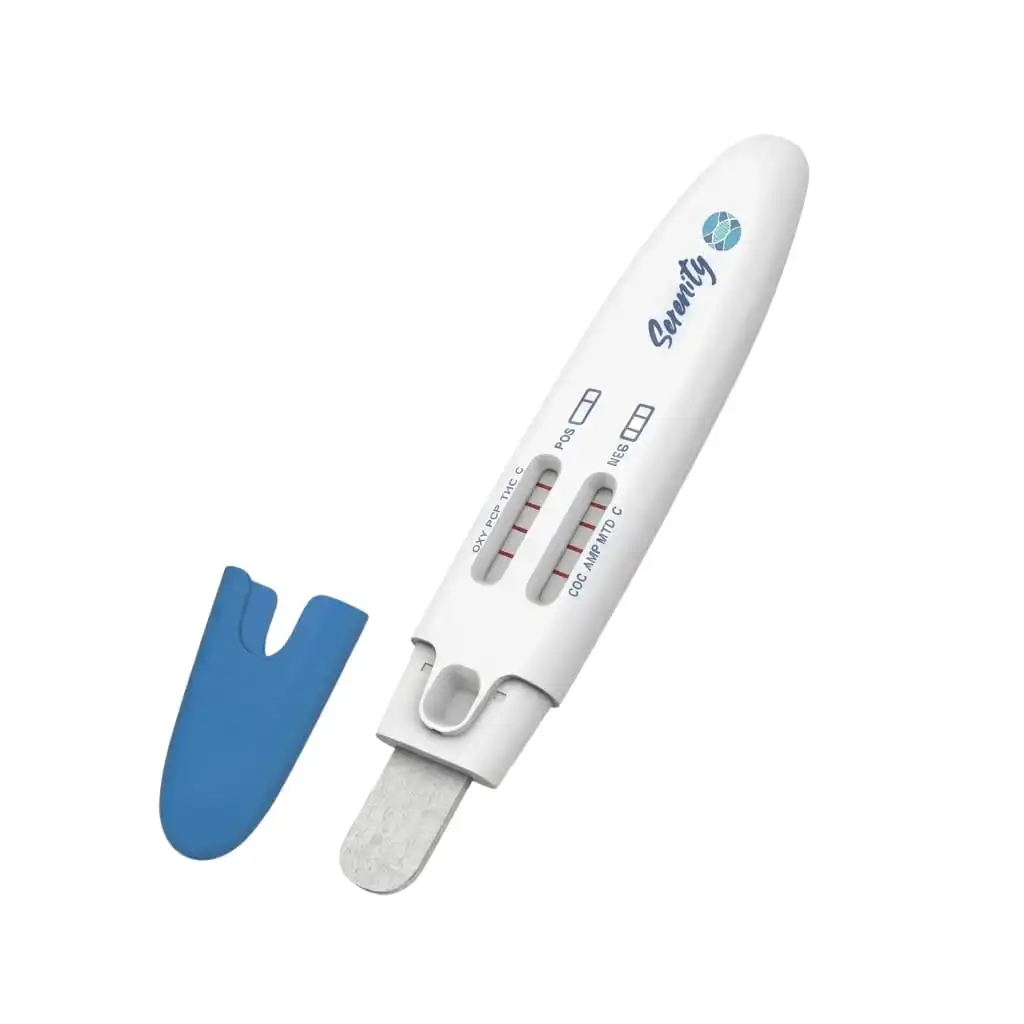
Our urine and saliva lines are built around the same principle: match the product to the test. Our overview of passing urinalysis tests and our urine drug testing guide explain how urine screening works and what to expect. For saliva, we carry a 12-panel oral fluid saliva test, a rapid pen-style screen that lets you check where you stand ahead of an oral fluid screening.
Whatever the format, check your employer’s policy and the laws in your state before using any product, since rules differ by state and by workplace.
What we think about specific gravity
Most people who search for specific gravity are worried about a flag on a urine test, and the right response is understanding, not panic. Labs read specific gravity and creatinine together, and a low pair of numbers is the thing that gets noticed. Knowing that is half the battle.
The other half is picking the preparation that fits your exact test. Hair, urine and saliva are different problems, and a one-size-fits-all answer does not serve anyone. That is why the Macujo Method is organized by test type, with a calculator and video steps, and why we offer unlimited consultations until you pass your test.
With more than 20 years of experience, we have seen how much stress a drug test creates for job seekers and people on random testing programs. Our aim is to give you a clear plan, discreet service and a person to talk to.
Detox Experts
Get support for your specific test
If you have a hair follicle test coming, start with our Macujo Aloe Rid Shampoo and the Macujo Method instructions on our hair, urine and saliva product pages. If your situation is more complicated, a private consultation with Mike Macujo lets you talk through your test type, timeline and questions one on one.
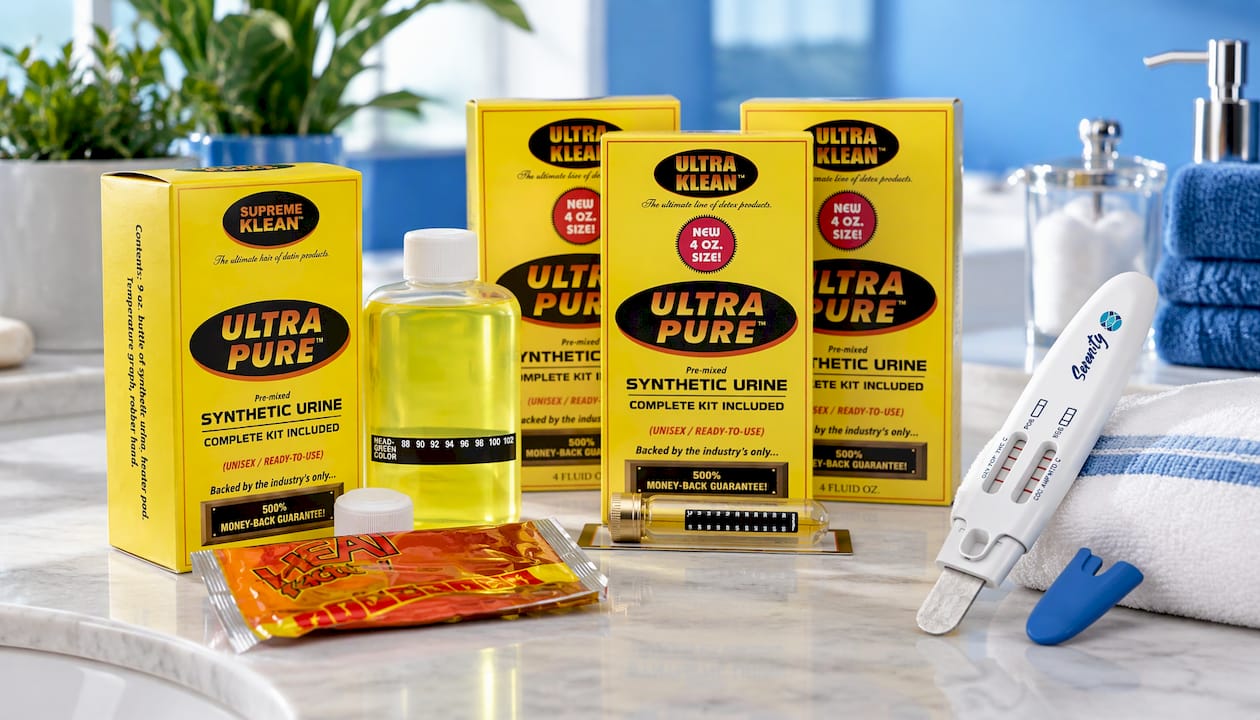
For urine-specific needs, our Ultra Pure Synthetic Urine Kit is also available, with a multi-pack bundle for repeat needs. Check the rules in your state and your testing program before you decide.
FAQ
What does specific gravity mean on a drug test?
It is a measure of how concentrated your urine is compared with water. Labs use it with creatinine to judge whether a sample is dilute, substituted or normal. It does not look for drugs.
Is a specific gravity of 1.000 normal?
No. A reading of 1.000 is essentially water and suggests dilution, according to the ASAM pocket guide. Normal human urine sits above about 1.003.
How do you fix a high specific gravity in urine?
High readings often come from dehydration, heavy sweating or diarrhea, per the NLCP guide. Staying normally hydrated usually helps. If readings stay abnormal, see your doctor, since kidney and metabolic conditions can also be involved.
Does a dilute result count as a failed test?
Not by itself. A negative dilute may lead to a recollection depending on the employer and creatinine level, as 49 CFR 40.197 describes. A positive dilute is treated as a verified positive.
Does specific gravity matter for a hair follicle test?
No. It is a urine validity check. For hair, preparation focuses on the hair itself, which is where the Macujo Aloe Rid Shampoo and Macujo Method come in.
Sources
- NLCP validation of specimen validity testing (2023)
- Quest Diagnostics specimen validity testing
- NTCRC drug testing handout on specific gravity
- 49 CFR 40.88
- SAMHSA 2024 MRO Guidance Manual
- 10 CFR 26.161
- University of Illinois Chicago drug information group
- ASAM Drug Testing Pocket Guide
- Labcorp specimen validity testing FAQ
- IBC drug and alcohol testing newsletter
- 49 CFR 40.197
- 49 CFR 40.145
- 49 CFR 40.159