


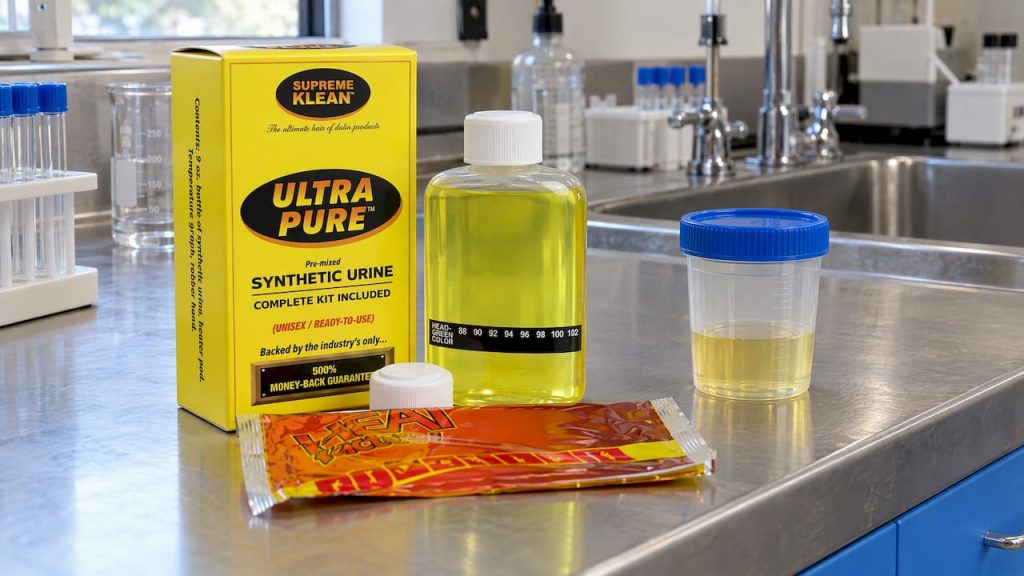
Yes, real human urine contains uric acid, and some laboratories look for it when they judge whether a specimen is genuine. A synthetic urine product therefore needs a complete, lab-style formula, not just the right color and temperature. Uric acid is one marker among several (creatinine, specific gravity, pH and oxidants are the others), so the formula, the freshness of the kit and the way it is handled all count. Our Ultra Pure Synthetic Urine Kit is a premixed laboratory formula built for that reality. If your real worry is a hair follicle test, the plan is different, and we cover it further down.
TL;DR
- Normal human urine contains uric acid, a nitrogen waste product, and labs can use it as one clue to whether a sample is real.
- Uric acid is not creatinine. They are separate markers, and labs read them together with specific gravity, pH and oxidants.
- No single validity measure decides a result on its own, so a kit has to be a full formula, fresh, and handled correctly.
- Hair follicle tests work on a different principle. Urine products do nothing for them, and preparation starts weeks ahead with a shampoo routine such as our Macujo Aloe Rid Shampoo.
- Unlimited consultations with Mike Macujo are available if you want a plan matched to your test type.
Table of Contents
- What uric acid is and why urine has it
- Why a lab cares whether urine contains uric acid
- Uric acid is not creatinine
- How labs actually use uric acid
- Freshness and handling matter as much as the formula
- Urine is not the only test: where hair follicle screens differ
- Saliva and other situations
- Where our approach helps
- Ready to prepare?
- Our perspective
- FAQ
- Sources
What uric acid is and why urine has it
Uric acid is a normal waste product. MedlinePlus explains that the body makes it when it breaks down chemicals called purines, and that it can be measured in blood or urine. Purines come from your own cells and from foods like organ meats, some seafood and beer.
That is why it shows up in urine. Cleveland Clinic describes healthy urine as 91% to 96% water, with the remainder made up of sodium, urea, uric acid and electrolytes such as potassium and phosphorus. Uric acid is a small slice of a complex mixture, but it is always there in a healthy person.
How much? Northwestern Medicine states that adults on a normal diet should excrete less than 600 milligrams in 24 hours, and that more than 800 mg a day is considered too much. A biochemistry teaching module from Benha University gives a typical range of 100 to 500 mg per day. Those are daily totals, which is a different thing from the concentration in one small cup, but they show why the compound is a standard part of the picture.
If you searched this keyword and landed on pages about gout, kidney stones or home meters, those are about the medical test. This article is about the other side: why the compound matters when a lab judges a urine specimen.
Why a lab cares whether urine contains uric acid
A urine drug screen does two jobs. It looks for drugs or their metabolites, and it checks that the specimen is what it claims to be. The second job is called specimen validity testing.
The U.S. Department of Transportation defines it in 49 CFR Part 40, Section 40.86: an evaluation of whether a specimen is consistent with normal human urine, done to find out if adulterants or foreign substances were added, if the urine was diluted, or if the specimen was substituted. The DOT rule governs federally regulated testing, but many employers and probation programs use similar logic.
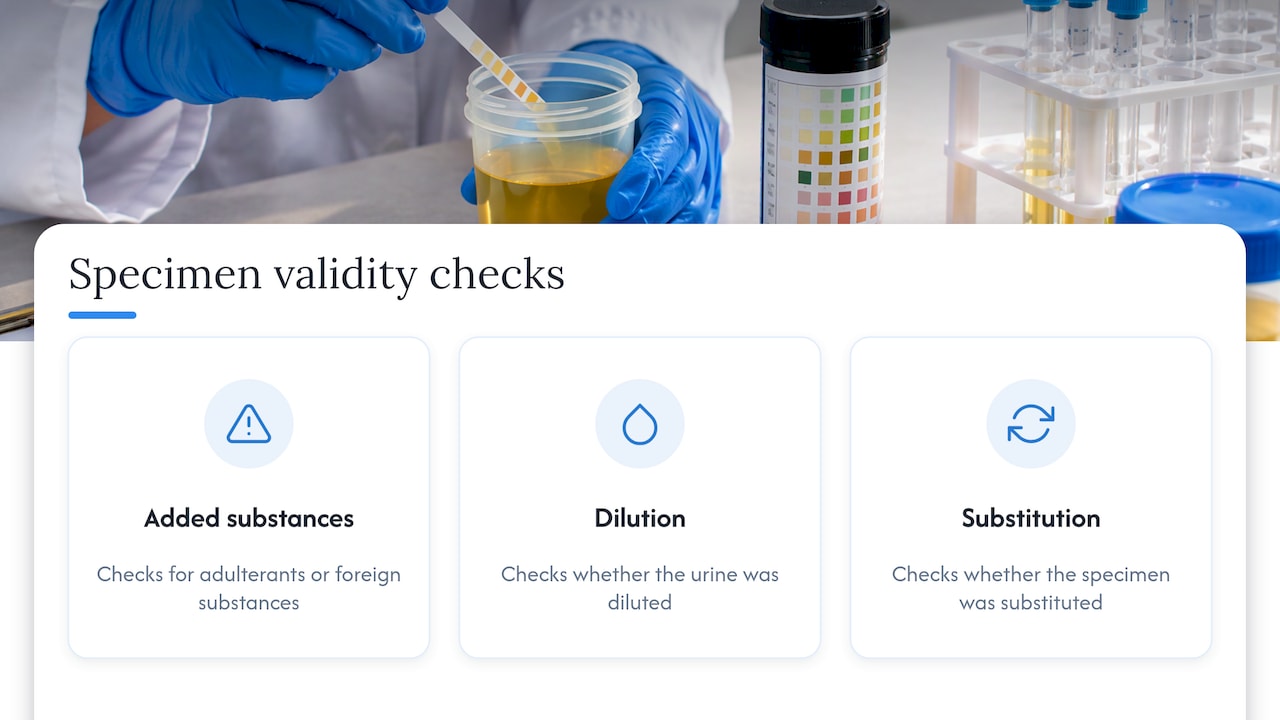
Uric acid enters here because it is a natural component. A lab report from Navis Clinical Laboratories notes that uric acid comes from the breakdown of purine nucleotides, and that a sample with no uric acid at all would point to substitution with synthetic urine or another liquid, and would be invalid.
That is the reason many people ask whether their kit contains it. A formula that leaves out a natural component gives a lab one more thing to notice. Our guide to how labs judge urine test validity walks through the full list of checks.
Uric acid is not creatinine
People often mix up the two, and a lot of forum advice does too. They are different compounds with different roles.
- Uric acid comes from purine breakdown. It is one of several nitrogen waste products in urine.
- Creatinine comes from normal muscle metabolism and is the marker labs use most to judge how concentrated a sample is.
The typical daily amounts also differ. The Benha lecture lists creatinine at roughly 1.4 g per day against 100 to 500 mg for uric acid, so creatinine is present in far larger quantities.
The lab thresholds are specific. Under 10 CFR § 26.161, a specimen is reported as substituted when creatinine is below 2 mg/dL and specific gravity is at or below 1.0010, or at or above 1.0200, on both the initial and confirmatory tests. It is reported as dilute when creatinine is at least 2 mg/dL but under 20 mg/dL and specific gravity is above 1.0010 but below 1.0030. Those are the nuclear-industry rules, and they mirror the approach used across the field.
The National Laboratory Certification Program’s validation document from forensicrti.org lays out the required urine measurands as creatinine, specific gravity, pH and one or more oxidants. It puts normal creatinine at 20 mg/dL or more, normal specific gravity between 1.0030 and 1.0200, and pH near 7.0 with a physiological range of roughly 4.5 to 9.0. Navis adds that most normal samples fall between 20 and 350 mg/dL of creatinine.
Here is the whole picture in one table.
| Marker | What it tells a lab | Normal reference |
|---|---|---|
| Creatinine | Concentration, dilution, substitution | 20 mg/dL or higher |
| Specific gravity | Density of the sample | 1.0030 to 1.0200 |
| pH | Acidity, adulterant clue | About 4.5 to 9.0 |
| Oxidants | Presence of adulterants | Not present in normal urine |
| Uric acid | Natural nitrogen waste, substitution clue | Present in normal urine |
| Temperature | Freshness of the specimen | Checked at collection |
Our creatinine and SAMHSA rules guide covers the creatinine side in more depth.
How labs actually use uric acid
Here is where reading carefully pays off. A 2026 paper in the Journal of Analytical Toxicology by Joubert, Lynch and Carter at Melbourne Pathology examined challenging cases. They found that urea and uric acid were somewhat successful at identifying synthetic urine, flagging three of seven samples, while the enzymes GGT and amylase were the most effective, since none of the synthetic samples contained them.
The same paper adds two points worth remembering:
- Uric acid readings must be interpreted with caution because of stability issues, especially if a sample has been refrigerated or time has passed since collection.
- No single validity measure is enough alone. Results should be read together, case by case.
A federal presentation from SAMHSA’s NLCP points the same way: uric acid and dip-stick checks have limited sensitivity, and a biomarker panel can be used for confirmation.
The practical conclusion is that uric acid is one signal in a larger panel. Labs also have pH, creatinine, gravity, oxidants and, in some cases, enzymes to work with, and they keep adding tests as formulations change. A product that handles one marker well and ignores the rest is not a good bet. The better question is whether the whole formula was designed to look like normal urine, and whether it reaches the cup in good condition.
Our Ultra Pure kit is sold as a premixed laboratory formula. The product page carries the ingredient list and instructions, so read it before you order.
Freshness and handling matter as much as the formula
Because markers can drift, age and storage are part of the story. We explain the timeline in our synthetic urine shelf life guide, which looks at how lab markers can shift within about 21 to 28 days. Check the date on your kit and plan your order around your test date, not months before it.
Temperature is the other handling point people forget. A specimen is judged on how it looks and reads the moment it is handed over. Our guide to using synthetic urine treats the 90 to 100°F window as nonnegotiable and explains the steps, the warming and the common mistakes in order.
A short checklist to work through before test day:
- Confirm the kit’s date and keep it stored as the instructions say.
- Read the full instructions twice, a few days ahead, not the morning of.
- Know what kind of test you face: employer, probation, DOT-regulated or private. Our pages on passing urinalysis tests and probation drug tests cover the differences.
- Check your state’s rules on substitute specimens, since they vary and your employer’s policy may add its own.
A missed step can bring a result that carries the same weight as a positive. Under 49 CFR § 40.145, a Medical Review Officer treats a lab report of adulterated or substituted the same way as a confirmed positive. So the aim is a clean, ordinary-looking specimen, handled right.
Urine is not the only test: where hair follicle screens differ
Most people who search for synthetic urine face a urine test. But if your employer ordered a hair follicle test, a urine kit does nothing for you. A hair test samples the hair itself, so the preparation is a hair routine.
This is where our Macujo Aloe Rid Shampoo comes in. It is part of the hair care line built on the Macujo Method, and it is designed to help cleanse your hair of toxins before a hair follicle test. The Method combines a set of detoxification products with a wash schedule, which is why timing and consistency matter more than any single bottle.
What a good hair preparation plan looks like:
- Start early. Hair preparation is a routine, not a last-minute fix. Begin as soon as you know a test is coming.
- Follow the wash schedule. The Macujo calculator on our site sets the routine for your situation, so you are not guessing how often to wash.
- Use the video instructions. Our step-by-step videos show the technique, which is easy to get wrong when you read it cold.
- Stay consistent up to test day. Skipped washes are the most common way a routine falls apart.
For federal THC thresholds and what they mean for you, see our guide to SAMHSA cutoff levels. The hair test products section of our shop has the shampoo and the rest of the line.
Saliva and other situations
Saliva tests have a short detection window and are used for on-the-spot or random screening, such as after an incident or a roadside stop. Preparation is different again: it centers on the mouth, and we carry a detox mouthwash for it along with other saliva products. Pick products by test type. A shampoo does nothing for a saliva swab, and a mouthwash does nothing for a hair test.
If you are not sure which test you will face, ask your employer or the testing site what kind of specimen they collect. Then match the plan to it. If you want help with that match, our consultations are built for it.
Where our approach helps
The pattern running through all of this is that every test type has its own markers and its own weak points. Reading the lab side carefully, as you just did, is the first half. The second half is acting on it with the right products and a plan that fits your test.
We organize our solutions by test type, from hair to urine to saliva, and we back them with a wash calculator and step-by-step videos. If you want one-to-one guidance, the private consultation with Mike Macujo is there for that. Our position is that you should be able to keep asking until you have passed, so consultations are unlimited until you do.
Ready to prepare?
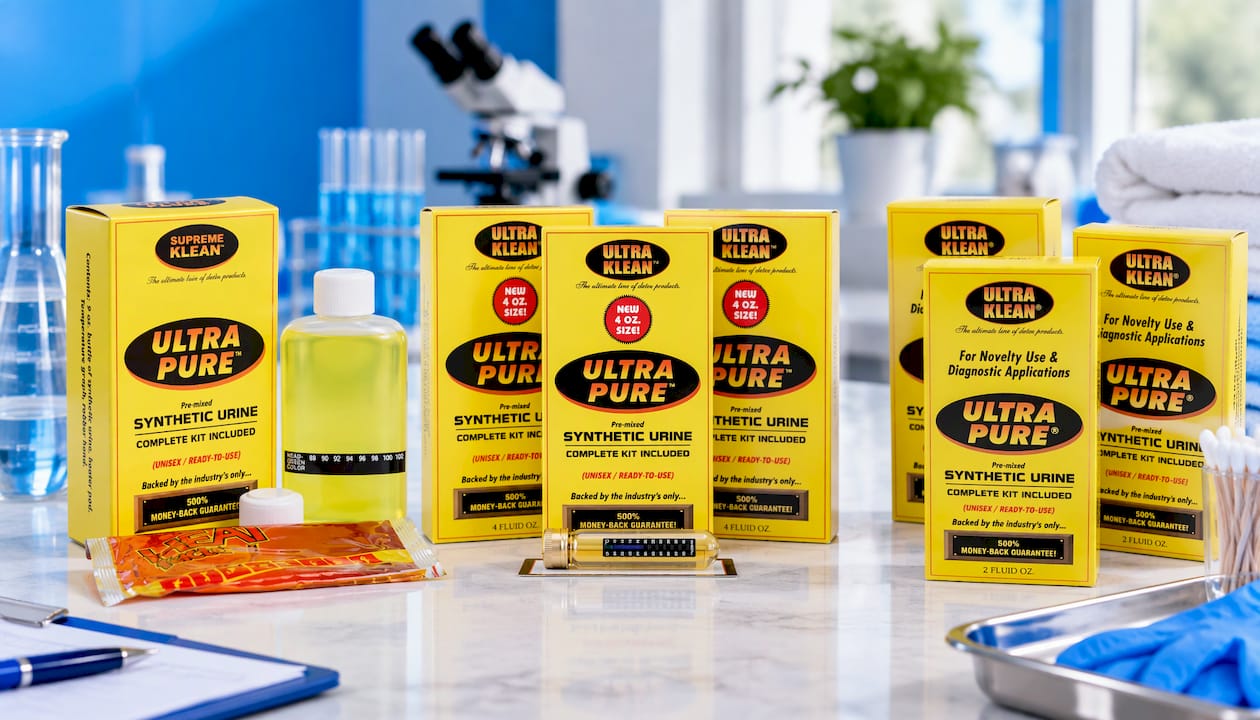
If your test is a urine screen, start with the Ultra Pure Synthetic Urine Kit, a premixed laboratory formula. For a bigger supply, the multi-pack bundle and the 2 oz buy 2 get 1 free bundle are listed on the site. If your test is a hair follicle screen, begin with Macujo Aloe Rid Shampoo from the hair, urine and saliva product sections.
Add a private consultation if you want the plan checked against your exact test and date.
Our perspective
Twenty years of helping people through drug tests has taught us one thing: every test has its own logic, and the people who do well are the ones who learn it early. A urine screen is a set of checks that reads a specimen as a whole. A hair screen is a different problem, with a different clock.
That is why we do not sell one answer to every question. We built the Macujo Method around test types, with products for hair, urine and saliva, a calculator that sets your schedule and videos that show each step. For urine, we offer a premixed laboratory formula kit. For hair, we put the most effort into preparation, starting with Macujo Aloe Rid Shampoo, designed to help cleanse your hair of toxins before a hair follicle test.
What we care about most is that you are not alone with it. Our consultations are unlimited until you pass, because a plan you understand is a plan you will follow.
Detox Experts
FAQ
Does human urine have uric acid?
Yes. Uric acid is a normal nitrogen waste product, and Cleveland Clinic lists it among the standard components of healthy urine. Adults on a normal diet pass less than 600 mg in 24 hours, according to Northwestern Medicine.
Is uric acid the same as creatinine?
No. Uric acid comes from purine breakdown, while creatinine comes from muscle metabolism. Labs treat creatinine as the main concentration marker, with a normal level of 20 mg/dL or higher, and read uric acid as a separate clue alongside gravity, pH and oxidants.
Can low uric acid in real urine have a medical cause?
Yes. The Journal of Analytical Toxicology paper lists conditions that can lower uric acid, including kidney disease, lead poisoning, preeclampsia, thiazide diuretics and low-dose salicylate. If you have any of these or take those medicines, tell your doctor or the Medical Review Officer so your result is read in context.
Does a synthetic urine kit need uric acid?
Labs treat uric acid as one of several markers, so a complete formula is the sensible standard. Our Ultra Pure kit is a premixed laboratory formula, and its product page has the ingredients and instructions.
Will a urine kit help with a hair follicle test?
No. A hair test samples your hair, so preparation is a hair routine. Our Macujo Aloe Rid Shampoo and wash calculator are designed for that, and you can book a consultation to set your schedule.
Sources
- MedlinePlus: Uric Acid Test
- Cleveland Clinic: Urine composition
- Northwestern Medicine: Uric Acid (Urine)
- Biochemistry renal module: urine composition
- DOT 49 CFR Part 40, Section 40.86
- Navis Clinical Laboratories: Detecting urine drug test tampering
- 10 CFR § 26.161: Cutoff levels for validity testing
- NLCP validation of specimen validity testing
- Journal of Analytical Toxicology: Sample validity lessons
- SAMHSA NLCP: Synthetic urines and adulterants
- 49 CFR § 40.145