


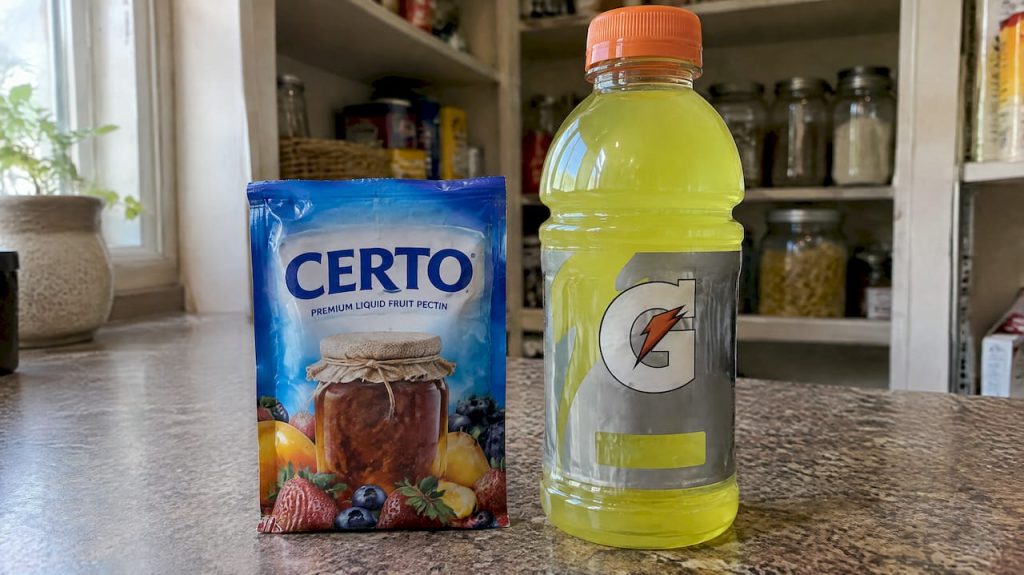
Certo is not a reliable, science-backed way to clear a urine drug test. Apparent successes usually come from temporary urine dilution, and labs check creatinine and specific gravity precisely to catch it. A dilute or invalid result brings its own consequences, from a retest to extra scrutiny. If you need real help, verify at home first, or use hair-test prep built on the Macujo Method.
TL;DR:
- Federal labs classify urine as dilute when creatinine is 2 to under 20 mg/dL and specific gravity is above 1.0010 but below 1.0030.
- A negative dilute result can trigger observed recollection, while an invalid sample may prompt medical review and workplace or legal scrutiny.
- Only light or occasional users already near the cutoff might see a temporary drop from dilution, and that change can disappear at the next urination.
- Use a home urine test before a formal screen to check your status, and choose abstinence and time when your schedule allows.
Table of Contents
- What is Certo, and why do people use fruit pectin for drug tests?
- How do proponents say pectin creates a “clean window”?
- What does the typical Certo protocol look like?
- How do labs detect dilution and tampering?
- Does Certo actually work, and who might it help?
- What are the risks of relying on Certo?
- What are safer, evidence-aligned options, and where do our products fit?
- Why do DIY hacks persist, and how should you weigh the risk?
- PassUSA solutions: kits, the Macujo drink, and private consultations
- FAQ
- Sources
What is Certo, and why do people use fruit pectin for drug tests?
Certo is a liquid fruit pectin sold for making jam and jelly. Pectin is a plant fiber that turns watery fruit juice into a gel, and that gelling power is the reason it ended up in drug-test forums. Someone reasoned that a substance that thickens jam might thicken the contents of your gut and trap whatever passes through.
The idea spread through message boards and video tutorials, where it picked up the nickname “Certo drug test method.” A few things are worth knowing about how people frame it:
- It targets urine screening for THC. Nearly every forum recipe is aimed at a urine test for marijuana metabolites, not any other drug class.
- It is not designed for blood tests. Blood testing looks for the active compound itself, and nothing about pectin changes what circulates in your bloodstream.
- It is not designed for hair tests. Hair testing reads a record of past exposure locked into the hair shaft, so a drink swallowed a few hours earlier has no logical path to that record.
- It is a folk remedy, not a product. Certo’s manufacturer markets it for canning and cooking, and nothing in that marketing connects it to drug screening.
Understanding this origin matters because it explains why the method sounds plausible. The story borrows real vocabulary, like fat-soluble compounds and gut recirculation, and stitches it into a hack that has never been validated. Our urine test for THC explainer covers what a standard screen actually looks for, which is the right starting point before you judge any shortcut.
How do proponents say pectin creates a “clean window”?
The theory goes like this. THC is stored in body fat and released slowly. The liver processes it into metabolites, including THC-COOH, which are then excreted in bile and urine. Some of what goes out in bile gets reabsorbed in the intestine and sent back to the liver, a loop called enterohepatic recirculation. Proponents claim that a pectin gel in the gut grabs bile and the metabolites riding in it, blocking that loop and carrying them out as waste.
From there, forum lore adds a timing claim: after drinking the mixture, you supposedly get a “clean window” when urine reads lower. The add-ons people stack on top of it usually include:
- B-vitamins, taken to restore the yellow color that heavy hydration washes out of urine.
- Creatine, taken to push creatinine upward so the sample looks less watery.
- Large volumes of fluid, meant to flush the system after the pectin “binds” its target.
Here is the problem. No peer-reviewed study shows that fruit pectin binds THC metabolites, interrupts recirculation, or speeds their elimination. The mechanism exists only as an explanation that sounds right. Experts who have looked at the claim attribute the occasional “success” story to dilution instead, a point the federal rules on specimen validity are built around. The gel story is a hypothesis nobody has demonstrated, and the dilution explanation fits everything people report.
What does the typical Certo protocol look like?
Forum posts vary, but the steps repeat so often that they have become a template. Here is the common version, described neutrally so you can compare it with how labs actually work:
- Mix liquid pectin into a sports drink such as Gatorade, then shake until it dissolves.
- Drink the whole mixture before the test.
- Follow it with water over the next stretch of time.
- Urinate several times before the collection, aiming for a “midstream” sample late in the window.
- Take a B-vitamin and sometimes creatine to adjust color and chemistry.
Two main variants circulate. The single-dose version uses one round before the test. The version with an additional round uses it the night before, on the theory that more pectin means more binding. Some people also fast or skip food beforehand, believing the pectin works better on an empty stomach.
The “Certo and Gatorade drug test” combination is popular because the sports drink supplies the liquid and the sugar that helps the pectin gel. The heavy hydration afterward is the part that most plausibly changes a urine result, and it is also the part that creates the biggest risk of a flagged sample.
Pro Tip: If you are going to read any forum protocol, ask one question of every step: does this change how much THC your body holds, or only how watery your urine looks? Almost every step falls into the second category.
How do labs detect dilution and tampering?
Federal laboratories do not just look for drugs. They also run specimen validity tests that check whether a sample looks like normal human urine. Two of the most important markers are creatinine, a waste product your muscles produce at a fairly steady rate, and specific gravity, a measure of how concentrated the urine is.
The federal criteria are published in 49 CFR Part 40, Section 40.88. A specimen is considered dilute when creatinine is at least 2 mg/dL but below 20 mg/dL and specific gravity is above 1.0010 but below 1.0030 on a single aliquot. It is considered substituted when creatinine is below 2 mg/dL and specific gravity is 1.0010 or lower, or 1.0200 or higher, on both the initial and confirmatory tests for creatinine and specific gravity.
The federal criteria for a “dilute” result also require creatinine to be at least 2 mg/dL and specific gravity to be above 1.0010. A creatinine under 2 mg/dL can indicate a substituted sample only when the specific-gravity criteria are also met on both the initial and confirmatory tests. Chugging fluids to beat a screen is exactly what pushes numbers toward these thresholds. (49 CFR 40.88)
Detection works in layers:
- Initial immunoassay screening gives a fast read against a cutoff. Our SAMHSA cutoff levels guide explains the THC numbers.
- Confirmatory testing with LC-MS/MS or GC-MS identifies and measures specific compounds with far greater precision. A sample that barely dips below a screening line can still be confirmed by these methods, and Medical Review Officers describe testing as highly technical, with labs watching for the chemistry discrepancies DIY methods tend to create.
- Medical Review Officer (MRO) review interprets the results. SAMHSA notes that HHS-certified labs run validity tests and MROs interpret federally regulated results, and its 2025 case studies show dilute, substituted, adulterated, and invalid specimens triggering further steps like MRO interviews and split-specimen analysis.
Our guide to how labs judge urine test validity and our explanation of creatinine rules go deeper on what those numbers mean for you.
Does Certo actually work, and who might it help?
There is no peer-reviewed evidence that pectin eliminates THC metabolites. Experts attribute apparent successes to dilution, which is the same effect you would get from drinking a lot of water. Columbia University’s health service notes that home detox kits usually do not speed THC elimination, and that aggressive hydration often explains the anecdotes. Time is usually the most reliable route to a negative urine screen.
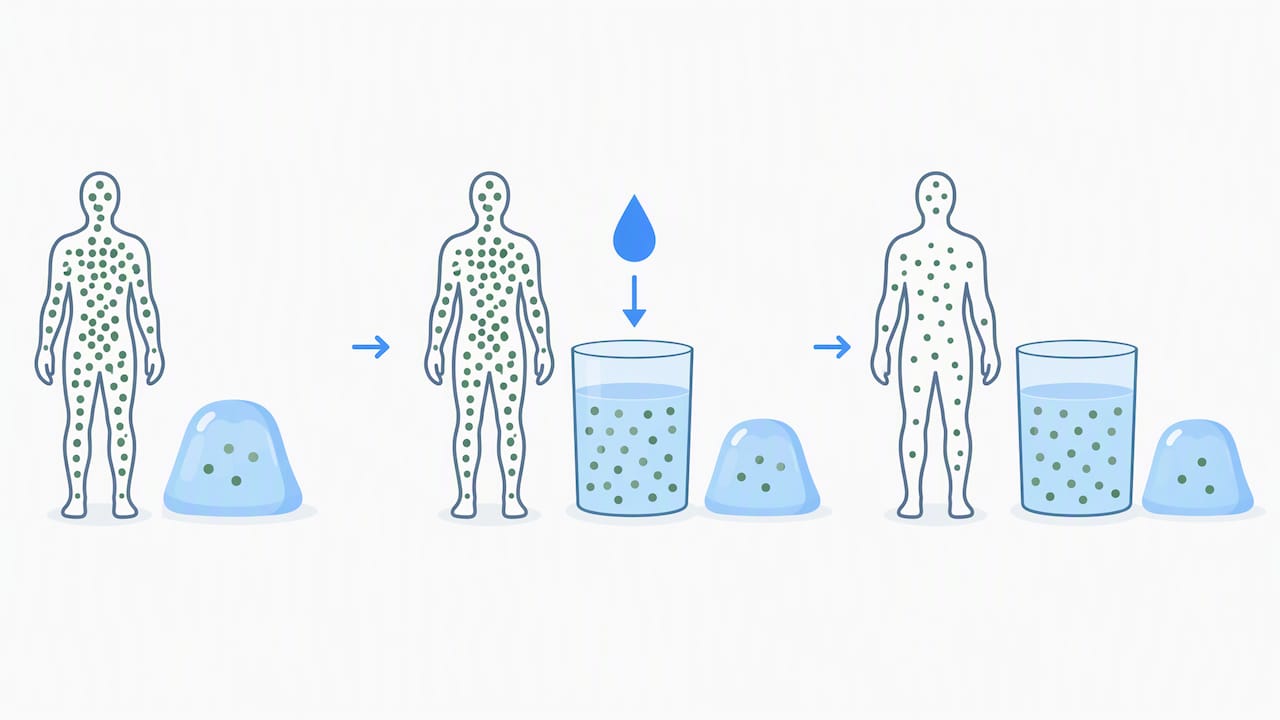
Who is most likely to see a temporary dip? Realistically, only light or occasional users, whose metabolite levels were already close to the cutoff. Even then, the dip comes from diluted urine rather than from any pectin chemistry, and it can disappear at the next void.
Chronic and heavy users are unlikely to benefit, for reasons rooted in how THC behaves in the body:
- Larger stores. THC is fat-soluble, so regular use builds a reservoir that releases metabolites slowly for days or weeks.
- Longer detection windows. Pharmacokinetic reviews of THC explain why short-term masking attempts are unlikely to succeed for frequent users.
- Continued release. Even if one sample dips, the next may not.
Here is the other catch: a lower immunoassay reading is not the end of the story. Confirmatory analysis and specimen validity testing can overturn it, and educational briefs from the court system list Sure-Jell and Certo among drug-testing myths that do not survive lab procedures. Anecdotes on forums are self-selected: people who passed post about it, and people flagged for a dilute sample mostly do not.
What are the risks of relying on Certo?
The biggest risk is not failing outright. It is producing a sample that looks wrong. A “negative-dilute” result means the lab found no drug above the cutoff but classified the sample as dilute. An “invalid” result means the lab could not obtain a usable reading. Neither is a clean pass.
Typical consequences include:
- A retest. MRO practice guidance shows that a Negative-Dilute result often leads to re-collection under observed conditions and increased scrutiny rather than an accepted result.
- Observed collection. A second sample may be taken with a monitor present, which removes most room for maneuvering.
- MRO escalation. The MRO may interview you and review the specimen record. Our guide on what to do after a negative-dilute drug test walks through the next steps.
- Employment or legal consequences. An anomalous profile can raise questions in a workplace or a court-ordered program, even when no drug is found.
There are health considerations too. Excessive fluid intake can pose health risks, and a thick pectin and sugar mixture can upset your stomach. DIY mixtures have no quality control, and added supplements are taken without any guidance on dose.
Pro Tip: If your goal is a normal-looking sample, extreme hydration works against you. A sample that reads as a plausible, concentrated urine is far less likely to trigger a retest than one that looks like water.
What are safer, evidence-aligned options, and where do our products fit?
Start by deciding which test you are actually facing, because preparation differs. A urine test looks back a matter of days to weeks. A hair follicle test looks back about 90 days, and that is our specialty. For hair, we built our approach around the Macujo Method, and we offer products to help prepare for a hair follicle test. Our THC hair detox plan explains the hair-testing window and our regimen.
Here are practical next steps:
- Verify first. Use a 13-Panel Urine Drug Test Dip Card to check where you stand before a formal screen. It saves you from guessing.
- Check your hair status. If hair testing is the threat, our At-Home Hair Follicle Drug Test Kit lets you see what a lab might see.
- Prepare with a plan. For hair, follow a Macujo-based regimen with the Aloe Rid Shampoo. For urine, saliva, or a fast turnaround, we carry products for those situations too.
- Get personal help. Our private consultations with Mike Macujo tailor a plan to your test type and timeline.
- Use time when you have it. Abstaining and retesting at home remains the most dependable path when your schedule allows.
Why do DIY hacks persist, and how should you weigh the risk?
Quick fixes spread because a test deadline makes any promise tempting, and a hack that worked once for someone becomes a story that travels. I understand the pull, but a story is not data. The cost of being wrong is high, because a flagged sample can be worse than an honest result.
A pragmatic checklist helps. Test at home first. Avoid extreme measures that trigger dilute flags. If hair testing is on the table, talk to someone who knows the process. Time, abstinence, and validated preparation beat folklore almost every time.
— Detox Experts
PassUSA solutions: kits, the Macujo drink, and private consultations
Instead of gambling on a jam-aisle hack, choose a path built for your actual test. We help people prepare for hair, urine, and saliva screenings, and offer support as they prepare.
Here is how to choose:
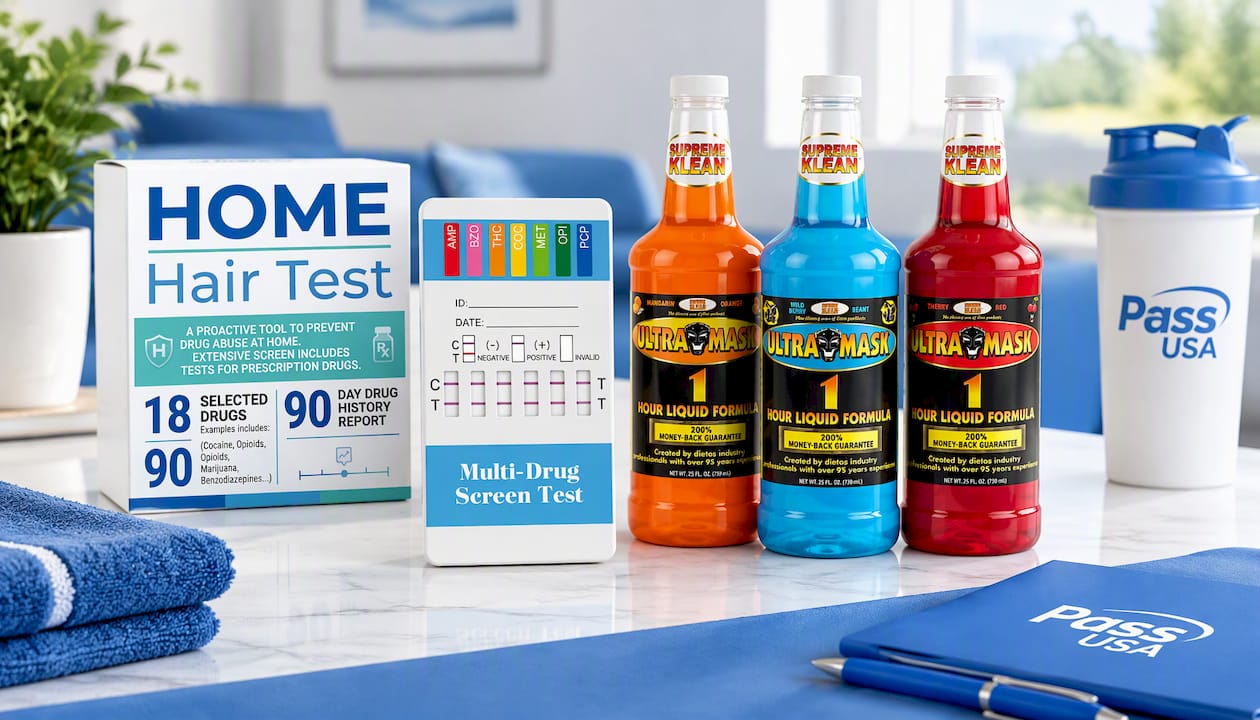
- Need to know where you stand? Start with the At-Home Hair Follicle Drug Test Kit or the 13-Panel Urine Drug Test Dip Card.
- Ready to prepare? The Macujo Premium Detox Drink is our full-body cleanse option, and our Aloe Rid Shampoo is the core of hair preparation.
- Want a plan built around you? Book a private consultation with Mike Macujo, and browse everything else at Passusa. Current prices are on our website.
Tell us your test type and your deadline, and we will point you to the right starting step today.
This article is general information, not a substitute for advice from a qualified doctor. Consult a qualified healthcare professional about your own circumstances before acting on anything here.
FAQ
How long does Certo take to set?
Pectin gels in a jar, but in your body there is no verified “setting” that affects drug metabolites. Forum protocols suggest drinking it before a test, though no study confirms any timing benefit.
What does Certo do for a drug test?
Apparent results are usually explained by dilution from heavy hydration.
What is the fastest way to clean out your system?
For urine, time and abstinence are the most dependable route, and no home product is guaranteed to speed THC elimination. If a hair test is the concern, a Macujo-based regimen with our Aloe Rid Shampoo is built for that specific job.
Can labs tell if you used Certo or diluted your urine?
Labs measure creatinine and specific gravity to spot dilution, using the federal thresholds in Part 40. A dilute result often triggers a retest or MRO review.
Sources
- DOT Rule 49 CFR Part 40 Section 40.88 | US Department of Transportation
- 2025 Medical Review Officer (MRO) Case Studies – Urine
- Workplace Drug Testing Resources | SAMHSA
- Law
- Do drug detox kits work? | Go Ask Alice!