


Commercial detox drinks are not reliably proven to clear drug metabolites from your system, according to laboratory and clinical evidence and CDC case reporting on tampering attempts. Labs catch most dilution and masking attempts through specimen validity testing, and outcomes vary sharply by test type. Detox Experts, who focus on hair follicle testing, break down what actually holds up.
TL;DR:
- Detox drinks primarily support dilution through ingredients like creatine, B vitamins, and diuretics, but do not remove drug metabolites from fat cells or hair.
- Lab detection of dilution relies on markers such as low creatinine, specific gravity, and pH, which are consistently flagged during specimen validity testing.
- Hair detox treatments can reduce analyte concentration by 50% to 90% but outcomes vary widely and cannot guarantee passing a hair follicle test.
- Saliva and blood tests have short detection windows or measure substances directly, making detox drinks ineffective for these testing methods.
- Abstinence and time remain the only proven strategies for passing drug tests, with structured multi-wash routines preferred for hair testing.
Table of Contents
- What detox drinks and kits claim to do
- Urine tests: what the evidence says and how labs detect tampering
- Hair tests and detox shampoos: why results are inconsistent
- Saliva, blood, and other tests: what to expect
- Health risks tied to detox products and DIY methods
- What actually works if a test is coming up
- Why we focus on hair test preparation
- How PassUSA can help you prepare
- Sources
- FAQ
What detox drinks and kits claim to do
Detox drinks, pills, and kits generally fall into two categories: things you swallow (in vivo products) and things used to alter a sample directly (in vitro adulterants). Most over-the-counter drinks are the first kind, marketed as dietary supplements that support the body’s own elimination process. Because supplements do not need FDA approval to prove they work, manufacturers can make broad claims without clinical backing.
The typical formula leans on a few ingredients with specific jobs:
- Creatine or creatinine boosters, meant to keep urine creatinine levels in a normal range after dilution.
- B vitamins, added mainly to restore the yellow color that heavy water intake washes out.
- Diuretics like caffeine or dandelion extract, intended to increase urine output and flush the bladder faster.
None of these ingredients removes THC metabolites or other drug byproducts from fat cells or hair shafts. They mostly support dilution, which is exactly the pattern labs are trained to catch.
Urine tests: what the evidence says and how labs detect tampering
Peer-reviewed research and toxicology guidance consistently find no reliable evidence that detox drinks eliminate drug metabolites. What they document instead is a predictable dilution pattern that specimen validity testing is specifically built to flag.
Labs classify a urine sample as dilute when creatinine falls between 2 and 20 mg/dL, alongside a low specific gravity reading, according to laboratory dilution data. That single measurement is often enough to trigger a second collection.
Specimen validity testing checks three main markers:
- Creatinine, which drops sharply when someone drinks excessive fluids before a test.
- Specific gravity, which measures urine concentration and flags samples that look too watered down.
- pH, which can reveal certain adulterants or unusual sample chemistry.
When a sample comes back dilute or invalid, the outcome depends on the testing program. Some employers simply request a re-collection under observation. Others, particularly in federally regulated or safety-sensitive roles, treat a repeatedly invalid result the same way they would treat a refusal to test. Forensic guidance notes that SVT programs increasingly screen for both natural dilution and synthetic urine substitution, which narrows the room for error with every generation of lab technology.
Hair tests and detox shampoos: why results are inconsistent
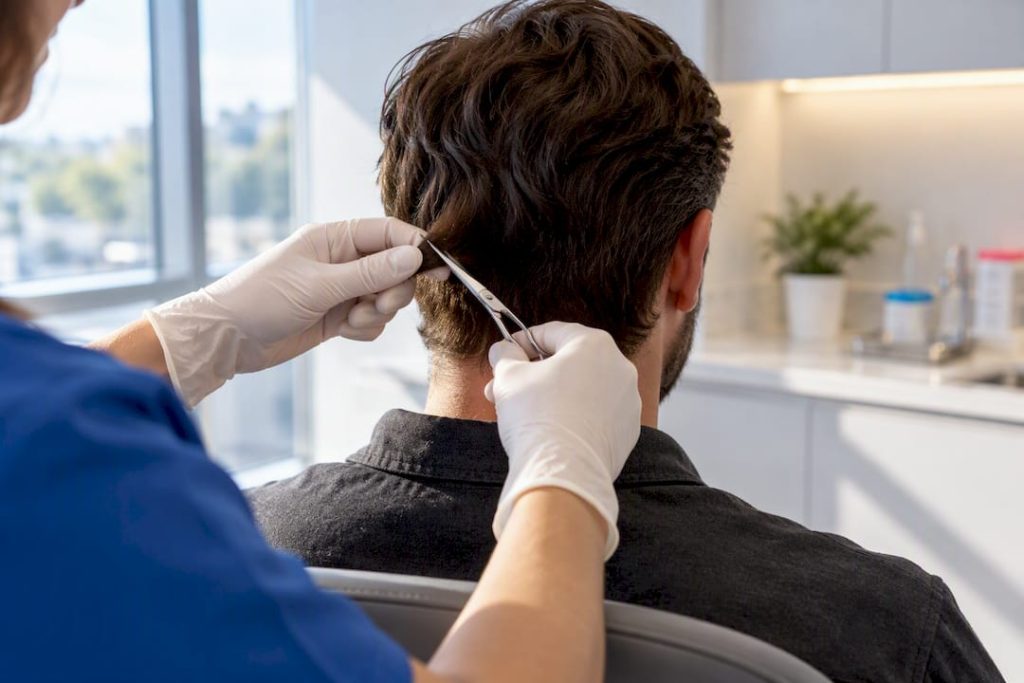
Hair follicle testing works differently from urine testing, and so does the evidence around treatments designed to beat it. Drug metabolites bind inside the hair shaft as it grows, which gives labs a detection window that can stretch back roughly 90 days, far longer than urine.
Specialized shampoos and chemical treatments can reduce analyte concentration in hair, but the results are far from uniform. Controlled studies found mean reductions somewhere between 50% and 90% with certain treatments, yet outcomes varied enough that no product guaranteed a clean result. A few patterns show up across the research:
- Chemical and physical treatments can leach some analytes out of the hair matrix.
- Reduction rates swing widely depending on hair type, treatment method, and how much of the substance was originally deposited.
- Aggressive treatments can leave chemical evidence that a trained lab technician can detect during specimen inspection.
This is the space where the Macujo Method was built, and it’s why a detox shampoo can be formulated to work through multiple wash cycles rather than promise a single miracle rinse. It’s a purification-focused approach, not a guarantee, and pairing it with the right hair test protocol matters more than any single bottle.
Pro Tip: Follow a multi-day wash protocol exactly as instructed rather than doing one intensive wash the night before your test; hair treatments are cumulative, not instant.
Saliva, blood, and other tests: what to expect
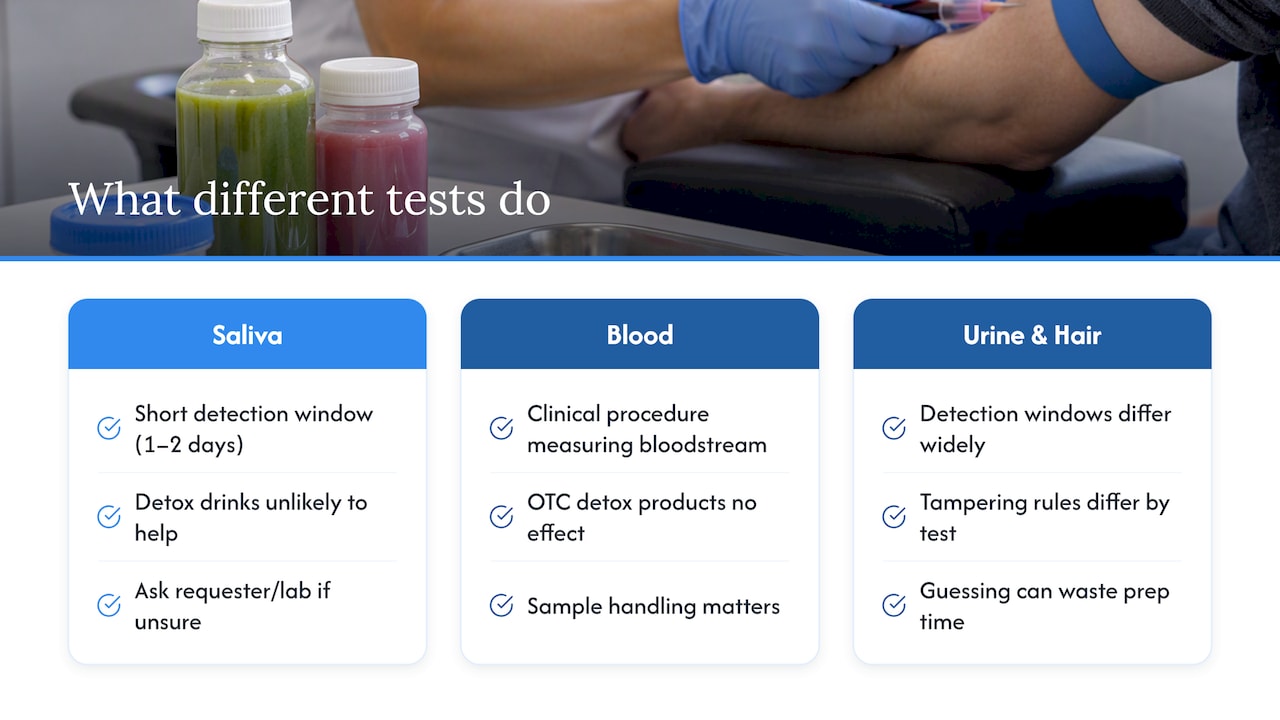
Saliva tests have a short detection window, often just a day or two for many substances, which leaves little time for a detox drink to do anything measurable before the test. Blood tests are clinical procedures that measure substances directly in the bloodstream, and over-the-counter detox products have no meaningful effect on that process.
If you’re not sure which test you’re facing, ask the requester or lab directly. Detection windows, sample handling, and what counts as tampering all differ enough between saliva, blood, urine, and hair that guessing wrong can waste your prep time entirely.
Health risks tied to detox products and DIY methods
Some detox attempts carry real medical risk, not just a wasted purchase. CDC poison control data found no evidence that niacin changes drug test results, yet documented over 3,000 cases of niacin exposure tied to nonmedical use, some of them severe.
Other documented harms include:
- Electrolyte imbalances from excessive water intake or diuretic overuse.
- A published case report of a 19-year-old who developed acute psychosis after using a detox kit.
- Unlisted or inconsistently dosed ingredients, since detox supplements face no FDA review for efficacy or safety claims.
The common thread is that tampering methods sit outside regulation, so quality control and dosing can vary from one bottle to the next.
What actually works if a test is coming up
Abstinence combined with time remains the only approach with consistent support, according to addiction research guidance. How long that takes depends on frequency of use, body fat percentage, and individual metabolism, so timelines vary person to person.
If a test is already scheduled or you’ve gotten an invalid or positive result back, here’s the order to work through:
- Confirm the test type and date so you know exactly what window and detection method you’re dealing with.
- Use an at-home test if one is available to get a rough read before the official screening.
- Contact the lab or the Medical Review Officer if a result comes back invalid, since specimen integrity questions often have a formal review process.
- Ask about retest options rather than assuming one flagged result is final.
Skip high-dose niacin, extreme water loading, and unverified chemical adulterants. Every documented shortcut in that category shows up in medical case literature for the wrong reasons.
Pro Tip: Keep a written timeline of your last use, test date, and any product you’ve used; it makes conversations with an MRO or lab far more productive if a sample gets flagged.
Why we focus on hair test preparation
Detox Experts have spent over 20 years working specifically inside hair follicle testing, which is the hardest detection window to influence and the one most home remedies get wrong. Weigh the evidence over testimonials, and talk to a professional when the stakes are high.
— Detox Experts
How PassUSA can help you prepare
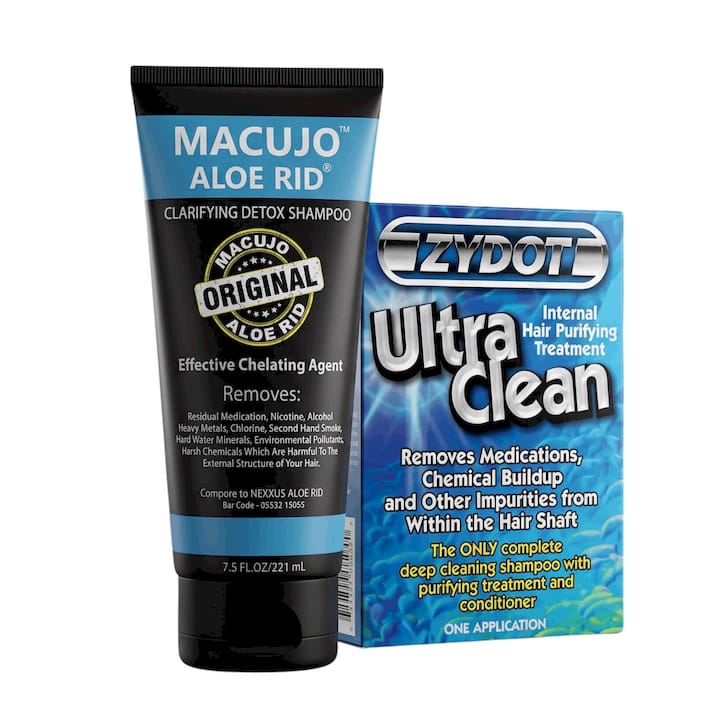
PassUSA builds its approach around the Macujo Method, offering products suited to your specific test type rather than a one-size-fits-all drink. For hair testing, the Macujo Aloe Rid and Zydot Ultra Clean Shampoo Detox Bundle pairs a signature shampoo with a clarifying follow-up wash.
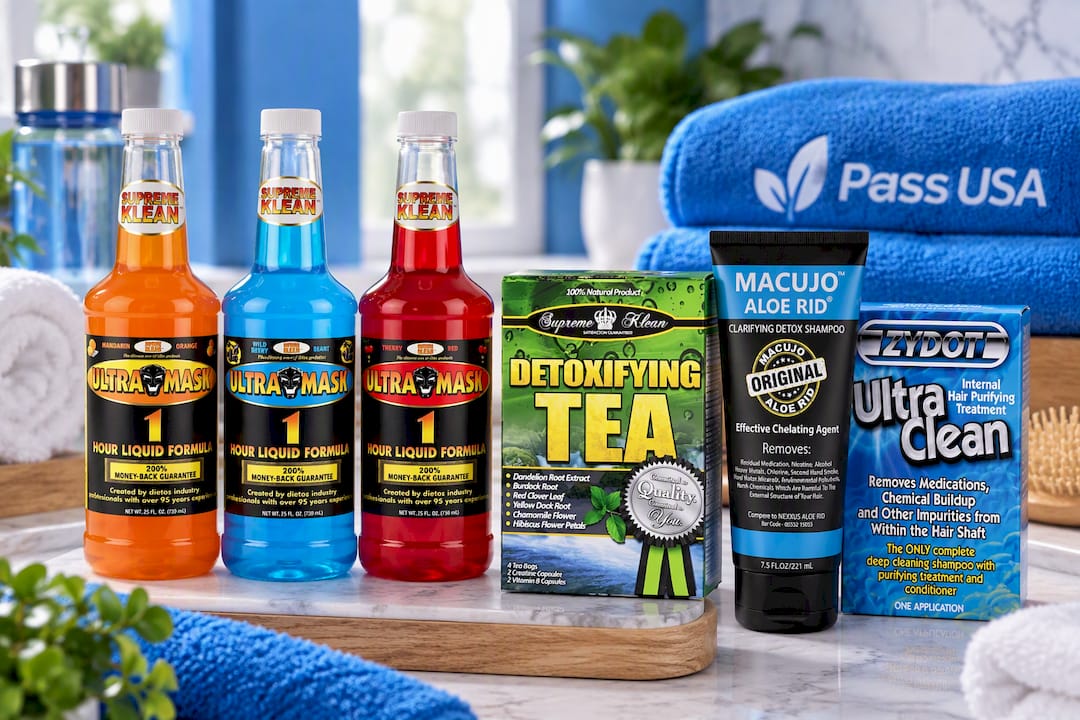
For full-body prep ahead of a urine test, the Macujo Premium Detox Drink and Macujo Premium Detoxifying Tea offer fast-acting and herbal options depending on your timeline. If you want guidance specific to your situation, our Private Consultation with Mike Macujo walks through personalized instructions based on your hair type, usage history, and test date. Browse the full range of hair, urine, and saliva test products to find what fits your test.
Sources
- PubMed article: (laboratory and dilution evidence)
- CDC MMWR report: Niacin exposures and misuse
- PMC article on hair treatment effects
- MD Anderson: Facts behind detox myths
FAQ
What is the best drink to clean out your system?
There is no drink proven to reliably clear drug metabolites from your system, according to laboratory evidence on dilution and specimen validity testing. Water and time support your body’s own elimination process, but abstinence remains the only consistently supported method.
Do detox cleanses actually work?
Detox cleanses lack peer-reviewed support for removing drugs or toxins beyond what your liver and kidneys already handle. MD Anderson recommends diet, exercise, sleep, and reduced alcohol as the safer, evidence-backed way to support natural detoxification.
Are detox drinks good for you?
Detox drinks are not inherently dangerous in small amounts, but some ingredients like high-dose niacin have caused documented harm when misused. CDC case data links niacin misuse to thousands of exposure cases, some severe.
What is the fastest way to flush your body?
There is no fast method that reliably clears drug metabolites, since clearance depends on frequency of use, body fat, and metabolism rather than a single drink or product. For hair testing specifically, a structured multi-wash protocol using products like the Macujo Aloe Rid shampoo bundle is a more consistent approach than a one-time rinse.