


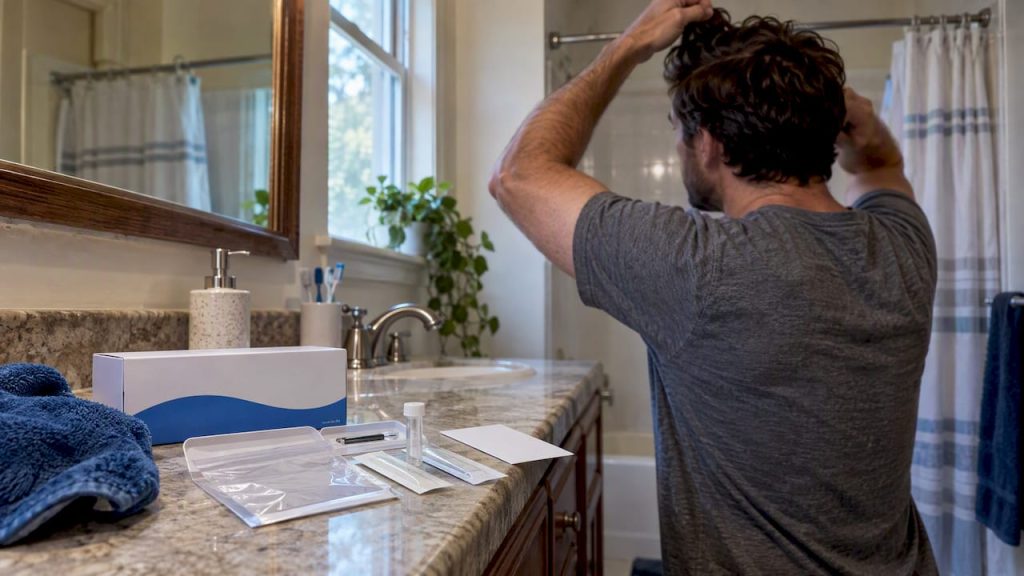
No method guarantees a negative result tomorrow, so your best move is matching your actions to the specimen type. If it’s a hair test, focus on Macujo-aligned shampoo prep starting immediately. If it’s urine, hydrate normally and gather any prescription documentation. Call the collection site now to confirm which specimen they’re using: that single call determines everything else you do tonight.
TL;DR:
- A hair test can be partially influenced by same-day decontamination products, but effectiveness varies based on hair porosity and treatment history.
- Urine dilution and adulteration tricks are highly likely to be flagged by modern lab markers like creatinine and specific gravity, making shortcuts risky.
- Confirmatory testing with GC-MS or LC-MS is necessary after a positive immunoassay screen, and positive results can be caused by legitimate prescriptions.
- Verifying specimen type and collecting documentation beforehand are crucial steps to prevent invalid results or false positives.
- Last-minute strategies should focus on proper sample preparation and documentation rather than aggressive chemical tricks that may backfire.
Table of Contents
- Your 24-hour checklist before a drug test
- Hair follicle test prep: the Macujo-aligned routine and its limits
- Urine tests: realistic day-before steps and why shortcuts backfire
- Saliva and blood tests: what’s realistically useful with one day left
- What happens at collection and how confirmatory testing works
- Evidence summary: what the research actually supports
- How prescriptions and medical conditions can affect your result
- A candid note on preparing with one day left
- Products and support you can use right now
- Sources
- FAQ
Your 24-hour checklist before a drug test
The hours before a scheduled test matter less for what they can fix and more for what they can prevent you from ruining. A methodical sequence beats panic every time.
- Confirm the specimen type. Call the collector, clinic, or employer contact and ask directly whether it’s hair, urine, saliva, or blood. Rules and timing differ enough that guessing wastes hours.
- If it’s hair: stop any current hair treatments, gather a Macujo-aligned shampoo such as Macujo Aloe Rid, and read the full directions once before you start rather than mid-process.
- If it’s urine: drink water at a normal pace, not in excess, and locate any prescription bottles or documentation you might need to explain a legitimate medication.
- Run an at-home check if you have time. An at-home hair follicle test kit or a 13-panel urine dip card can tell you roughly where you stand before you walk into the real one.
- Skip the internet folklore. Bleach, niacin megadoses, and other household chemistry stunts don’t have reliable backing and can hurt you physically without helping your result.
- Don’t overhydrate right before collection. A visibly diluted sample creates its own problems, which the next section covers in detail.
- Organize your documentation. A list of current prescriptions and your prescribing clinician’s contact information can matter if a screen comes back non-negative.
Pro Tip: Write down your specimen type, collection time, and any medications on a single note before bed: a calm reader makes better decisions than a stressed one at 6 AM.
None of this replaces stopping use; it’s about not sabotaging your own chances with a shortcut that backfires. Dilution attempts, questionable additives, and rushed chemistry are the most common ways people turn a marginal shot into a documented refusal or invalid result. The Cleveland Clinic’s overview of drug testing notes that detectability depends on the substance, dose, frequency, your metabolism, the specimen type, the assay’s cutoff, and time since last use, which is exactly why a generic “trick” rarely works the same way twice.
If you’re unsure which product fits your situation, a private consultation with Mike Macujo can help you prioritize the right steps for the hours you have left, rather than guessing between three different approaches at once.
Hair follicle test prep: the Macujo-aligned routine and its limits
A hair test is the one specimen type where a focused, same-day routine can plausibly make a measurable difference, though not a guaranteed one. The routine built around Macujo-style cleansing exists because peer-reviewed work has actually looked at whether these products change measured concentrations, and the honest answer is: sometimes, partially, and unevenly.
Supply checklist before you start:
- Macujo Aloe Rid Shampoo (or another Macujo-aligned product)
- A comb, preferably fine-toothed, for even distribution
- Old towels and gloves, since some steps are meant to sit and can stain fabric
- A timer, because rinse and contact times matter more than scrubbing hard
- The written directions, read once in full before you touch your hair
The stepwise approach:
- Start as soon as possible tonight. This is not a same-morning fix; contact time and repetition matter.
- Follow the step-by-step cleansing method exactly as written, including wait times between applications.
- Avoid scalding water, which can damage the hair shaft in ways a lab technician may notice.
- Choose the sample site carefully if you have any say: freshly bleached, heavily damaged, or unevenly treated hair can draw attention during collection.
- Dry and style normally afterward. Obvious signs of last-minute chemical treatment are themselves a flag some labs are trained to note.
The evidence behind this approach is real but bounded. A peer-reviewed study on commercially available hair products found that certain treatments reduced measured THC concentrations, with mean reductions reported after certain treatments were significant in many cases, showing partial decrease in measured concentrations but without guaranteeing a negative result, as effects varied by sample and reductions did not ensure analytes became undetectable.
A separate decontamination study published on PubMed looked specifically at damaged versus undamaged hair and found that even extensive washing left substantial residue in many samples. Effectiveness depended heavily on the hair’s porosity and the specific drug involved, which is the scientific reason no shampoo, however well formulated, works identically for every person. Porous or previously bleached hair can lose analytes unevenly, sometimes retaining more than expected in some sections and less in others, which is part of why heavily chemically treated hair can raise questions at the lab rather than answer them.
If your case involves marijuana specifically, the hair test guidance for marijuana detection covers the metabolite behavior that makes THC one of the more persistent substances in hair compared with some other drug classes.
If you have even a few hours of buffer, using an at-home hair follicle drug test kit before the real appointment tells you where you actually stand rather than leaving you to guess. If your appointment specifically requires an unaltered, unwashed sample collected under observation, understand that any aggressive last-minute treatment carries a trade-off: it might reduce concentration somewhat, or it might visibly alter the hair in a way that invites closer scrutiny.
Pro Tip: Contact time beats scrubbing force. Following the timing in the instructions matters more than how hard you work the shampoo in.
Urine tests: realistic day-before steps and why shortcuts backfire
For a urine test scheduled tomorrow, the safest day-before strategy is almost boring by design: drink water at a normal rate, skip alcohol and heavy diuretics, and don’t chug a gallon right before you walk in. Labs are specifically built to catch the tells of an overcorrected sample.
- Hydrate at a normal pace throughout the day, not in a rush before collection.
- Avoid alcohol and diuretic substances, which can complicate both your result and your collector’s assessment.
- Skip the temptation to drastically overhydrate immediately before the appointment. A sample that’s too dilute creates its own red flag.
- Bring your ID and any documentation for prescription medications that could explain a legitimate positive.
- Consider an at-home urine dip card earlier in the day to get a preliminary read before the real test.
Labs don’t just look for the substance itself. According to SAMHSA’s Medical Review Officer case studies, collectors and labs check creatinine levels, specific gravity, temperature, and oxidant markers specifically to catch dilute or adulterated specimens. Modern labs use multiple overlapping markers, which is exactly why many DIY dilution or adulterant tricks get flagged rather than passed. A sample that’s too watery, too warm, too cold, or chemically inconsistent with normal urine doesn’t quietly slip through: it gets reported as dilute or invalid, which can trigger a retest under more scrutiny than you started with.
If an at-home screen or the actual lab test comes back preliminarily positive, remember that an initial immunoassay result is not final. It moves to confirmatory testing, and that’s the point where your prescription documentation and a clear conversation with the Medical Review Officer actually matter.
Saliva and blood tests: what’s realistically useful with one day left
Oral fluid and blood tests work on a shorter clock than hair or urine, which limits what a single night of preparation can accomplish. These specimen types tend to reflect recent use, often within the last day or so, rather than weeks of history.
- Abstain completely from the point you learn about the test onward: there’s no effective shortcut for saliva or blood in the way there sometimes is for hair.
- Follow the collector’s instructions exactly, including any pre-collection rinse or waiting period they specify.
- Skip dramatic mouthwash routines or rinsing products unless the collector tells you to use one; unauthorized products can draw attention rather than help.
- If you want a preliminary read, a 12-panel oral fluid saliva test can give you a same-day indication before the actual appointment.
Because the detection window is shorter, there’s simply less room for a last-minute strategy to change the outcome compared with hair testing.
What happens at collection and how confirmatory testing works
Walking in prepared means knowing the process, not just your own actions. Collectors routinely check a urine sample’s temperature within seconds of collection, along with volume, and sometimes run an immediate creatinine or specific gravity check on site.
- Out-of-range temperature, insufficient volume, or unusual color can trigger a request for recollection.
- An initial result is an immunoassay screen, which can cross-react with unrelated substances and isn’t the final word, according to toxicology guidance on immunoassay limitations.
- A non-negative screen moves to confirmatory testing using GC-MS or LC-MS, which is more specific and takes longer to return, often several business days.
- Split-specimen testing lets you request an independent lab re-check the second portion of your sample if you dispute a result.
- The Medical Review Officer reviews any confirmed positive and will ask about prescriptions, so having your medication list and clinician’s contact ready in advance genuinely helps. Understanding common causes of unexpected results is worth a look through why false positives happen if you’re worried about a specific medication.
Evidence summary: what the research actually supports
The honest read of the science is that hair decontamination can work partially, urine adulteration is increasingly detectable, and nothing produces a certain result.
- The PMC hair-product study found real but variable reductions in measured THC after certain treatments, not elimination.
- The PubMed decontamination study found that even extensive washing left meaningful residue in many samples, depending on hair porosity and the drug involved.
- SAMHSA’s case studies document how labs catch adulterated or dilute urine using multiple markers at once.
- Research on sample manipulation detection in hair draws a hard line between “may alter measurement” and “guaranteed removal,” which is the distinction this entire article is built around.
Studies that alter measured drug concentrations in hair or urine describe a reduction, never a guarantee of a negative result, and treat the two claims as fundamentally different.
That distinction, backed by peer-reviewed researchers studying sample manipulation, is why no responsible guide, including this one, promises a certain outcome.
How prescriptions and medical conditions can affect your result
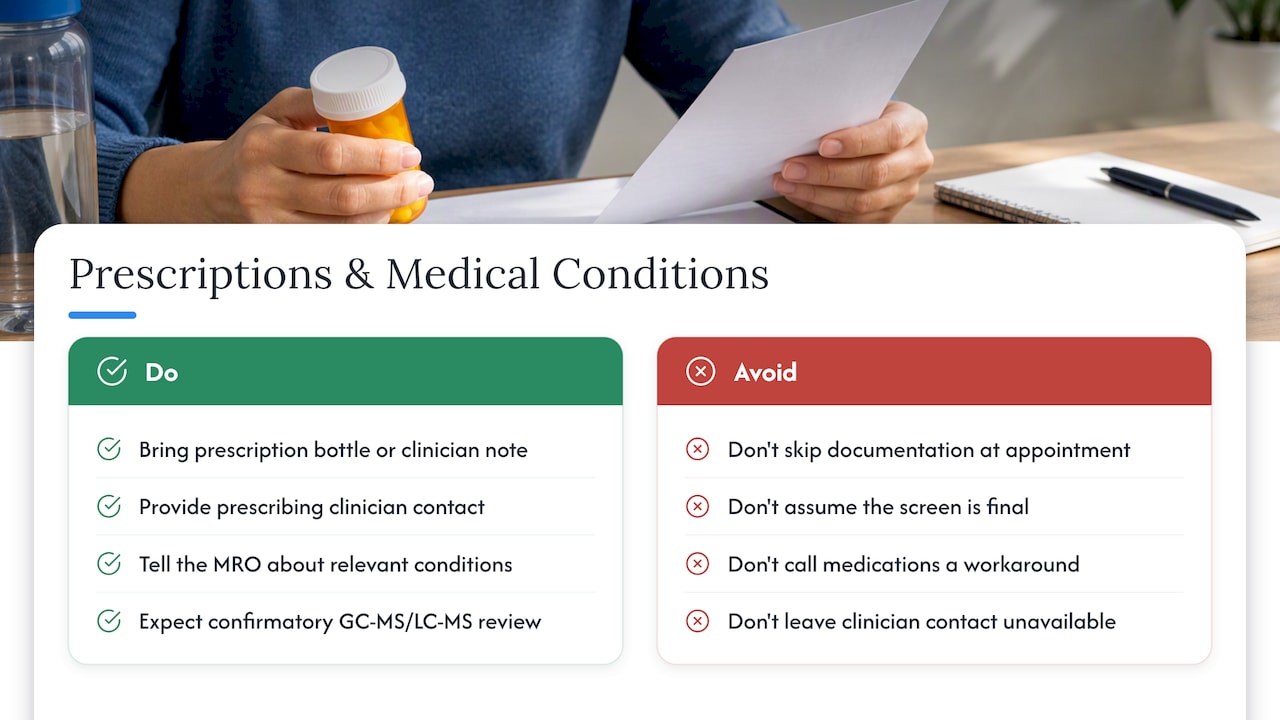
A legitimate prescription can cause a positive screen without anything having gone wrong. Certain prescribed stimulants, some pain medications, and even a handful of over-the-counter products can cross-react with an initial immunoassay test, which is one reason that screen alone isn’t treated as final. This is exactly what confirmatory GC-MS or LC-MS testing and Medical Review Officer review exist to sort out.
If you take a prescribed medication that could plausibly explain a positive, bring the prescription bottle or a note from your prescribing clinician to your appointment, or have the clinician’s contact information ready for the MRO to call directly. Certain medical conditions, including some kidney or liver conditions, can also affect how quickly substances clear your system, which is part of why detection windows are described as ranges rather than fixed numbers.
None of this is a workaround. It’s paperwork that protects you if a legitimate medication triggers a screen that needs a second look. Skipping this step is the single most avoidable mistake people make when they actually have a valid explanation sitting in their medicine cabinet.
A candid note on preparing with one day left
Twenty years of helping people through exactly this situation has taught us that the people who do best are the ones who pick one clear plan and execute it, rather than trying five different shortcuts at once. That’s why we lean so heavily on hair prep done right and documentation done early, instead of risky improvisation. If you’re not sure what your specific situation calls for, a private consultation can help you sort priorities fast.
— Detox Experts
Products and support you can use right now
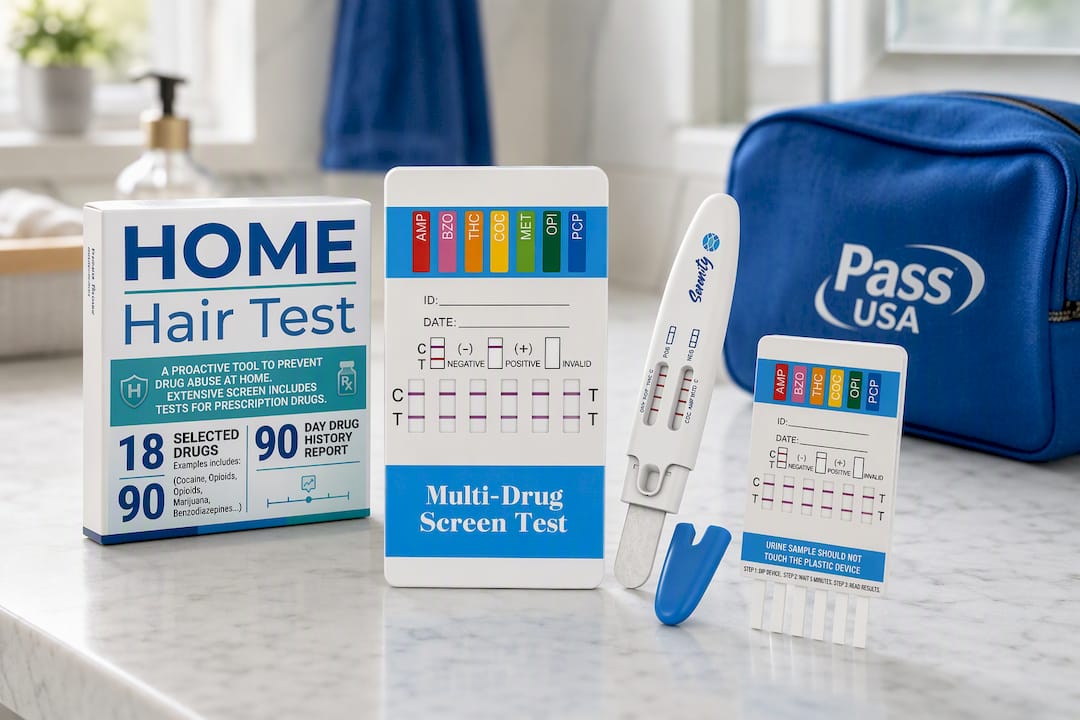
Whatever specimen you’re facing tomorrow, ordering the right product tonight beats piecing together a plan from forum posts. We built PassUSA around the Macujo Method specifically because it’s a documented, repeatable process rather than a guess, and we back it with personalized support until you pass.
- Hair test: Macujo Aloe Rid Shampoo for tonight’s prep, paired with an at-home hair follicle test kit to check your status before the real appointment.
- Urine test: a 13-panel urine dip card gives you a same-day read at home.
- Saliva test: a 12-panel oral fluid saliva test works as a quick pre-check.
- Not sure where to start? A private consultation with Mike Macujo walks you through which steps actually fit your timeline and test type.
Browse the full range of hair, urine, and saliva test products to find what matches your situation tonight, or book a consultation if you want a plan built around your specific hours remaining.
This article is general information, not a substitute for advice from a qualified doctor. Consult a qualified healthcare professional about your own circumstances before acting on anything here.
Sources
- Drug testing – Cleveland Clinic
- Manipulation of THC hair concentrations by commercially available products – PMC
- 2024 Medical Review Officer (MRO) Case Studies – Urine (SAMHSA)
- Evaluation of decontamination procedures for drug testing in undamaged versus damaged hair – PubMed
FAQ
Can I drink alcohol if I have a drug test tomorrow?
Alcohol itself typically isn’t part of a standard drug panel, but it won’t help your result and can complicate collection if you appear impaired. The Cleveland Clinic notes that clear judgment and following collector instructions matter more than any perceived shortcut, so it’s safest to abstain.
Can urgent care or clinics detect fake urine?
Modern labs check multiple validity markers, including temperature, creatinine, and specific gravity, specifically designed to flag urine that doesn’t match normal human ranges. SAMHSA’s case studies document how these overlapping checks catch many substituted or adulterated samples that older single-marker tests missed.
How long do drugs stay detectable in urine?
Detection windows depend on the substance, dose, frequency of use, and your individual metabolism, so there’s no single fixed number that applies to everyone. The Cleveland Clinic explains that factors like assay cutoff and time since last use all shift the window for any given person.
Which type of drug test is hardest to pass?
Hair tests generally cover the longest detection history, which is why last-minute preparation is harder for hair than for urine or saliva. Even so, peer-reviewed decontamination research shows that washing effectiveness varies by hair porosity and drug type, so difficulty isn’t uniform from person to person.
Does a positive screening result mean I automatically failed?
No, an initial immunoassay screen is preliminary and can cross-react with unrelated substances, according to toxicology guidance on testing methods. A non-negative screen moves to confirmatory GC-MS or LC-MS testing and Medical Review Officer review before any final determination is made.