


A Complete Reference Guide to Workplace Screenings, Panels, Chain of Custody, and Laboratory Procedures
Navigating professional evaluations, corporate workplace policies, or regulatory compliance programs requires a clear understanding of modern drug testing standards. Whether you are an employer establishing safety protocols or an individual preparing for a routine evaluation, knowing how screenings operate ensures complete transparency, procedural fairness, and adherence to established legal frameworks.
1. Understanding the Scope of Professional Drug Screenings
Drug screening is a standardized administrative and biological evaluation utilized across various sectors, including corporate workplaces, federal agencies, transportation industries, and healthcare institutions. According to guidelines established by organizations such as the Substance Abuse and Mental Health Services Administration (SAMHSA), the primary objective of professional screening is to maintain safety, reduce liability, and ensure compliance with regulatory mandates.
Testing programs are rarely implemented arbitrarily; instead, they follow structured administrative triggers:
- Pre-Employment Screening: Administered following a conditional job offer to verify compliance with company drug-free workplace policies.
- Random Testing Programs: Unannounced evaluations conducted across safety-sensitive sectors (such as aviation, logistics, and heavy manufacturing) to deter ongoing substance use.
- Post-Accident Evaluations: Triggered immediately following workplace incidents, property damage, or operational errors to assess whether chemical substances contributed to the event.
- Reasonable Suspicion Testing: Implemented when trained supervisors observe specific, contemporaneous behavioral indicators of impairment on duty.
2. Common Drug Test Panels Explained
Screenings are categorized into ‘panels’ based on the specific group of substances or metabolic classes they target. The configuration of a panel depends heavily on industry regulations and organizational policies:
- The Standard 5-Panel Test: Widely recognized as the federal and corporate baseline screening, this panel targets five major substance classes: Cannabis (THC), Cocaine, Amphetamines/Methamphetamine, Opiates (including codeine, morphine, and heroin), and Phencyclidine (PCP).
- Expanded Panels (10-Panel and Above): Frequently utilized in healthcare, transportation, and specialized safety roles. In addition to the standard five classes, expanded panels screen for additional prescription medications or controlled substances, such as barbiturates, benzodiazepines, methadone, and synthetic opioids.
- Specialized Panels: Certain industries implement customized analytical panels designed to detect specific synthetic cannabinoids, prescription opioids, or alcohol biomarkers (such as EtG) in accordance with precise safety protocols.
3. Specimen Collection Standards and Chain of Custody
The integrity of any professional drug screening relies entirely on strict adherence to Chain of Custody (CoC) protocols. The CoC process is a meticulous tracking system that ensures a biological specimen is accounted for from the exact moment of collection until final laboratory disposal.
Standard collection procedures involve:
- Identity Verification: Donors present government-issued identification, and personal belongings are secured to prevent specimen tampering.
- Secure Collection: Samples are provided under controlled environmental conditions designed to ensure privacy while maintaining oversight.
- Tamper-Evident Sealing: The collection container is sealed with specialized tamper-evident tape bearing unique barcode numbers.
- Documentation: Both the donor and the collector sign dual-signature control forms to certify that the specimen was sealed in the donor’s presence.
-
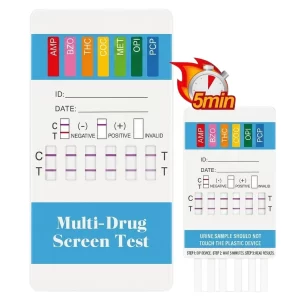
13-Panel Urine Drug Test Dip Card – Clinical Grade (Includes Fentanyl)
$ 11.95 Add to cart -

Macujo Premium Detoxifying Tea – Natural Herbal Body Flush
$ 31.95 Add to cart -
Sale!
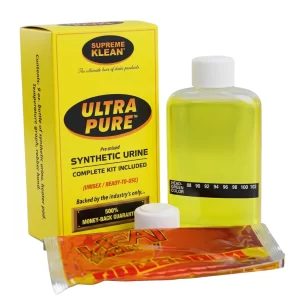
Ultra Pure Synthetic Urine Kit – Laboratory Grade Formula
Original price was: $ 45.00.$ 37.00Current price is: $ 37.00. Add to cart -

Macujo Premium Detox Drink – Fast-Acting Full Body Cleanse
$ 44.00 Select options This product has multiple variants. The options may be chosen on the product page
4. The Two-Tier Laboratory Testing Process
Certified toxicology laboratories utilize a rigorous two-step analytical methodology to prevent false reporting and guarantee scientific accuracy:
- Initial Immunoassay Screening: This rapid, cost-effective assay screens large batches of biological specimens. If a sample tests below the established laboratory cutoff concentration, it is reported as a presumptive negative. If it exceeds the threshold, it is classified as a presumptive positive.
- Confirmatory Testing (GC-MS / LC-MS/MS): Any presumptive positive sample undergoes definitive confirmation using advanced instrumentation such as Gas Chromatography-Mass Spectrometry (GC-MS) or Liquid Chromatography-Tandem Mass Spectrometry (LC-MS/MS). This sophisticated chemical analysis identifies and quantifies exact molecular structures with near-absolute scientific certainty.
5. Specimen Validity Testing
Before a sample is evaluated for drug metabolites, laboratories perform rigorous validity testing to verify that the specimen is authentic, unaltered, and of human origin. Key validity parameters include:
- Creatinine Levels: Measures natural waste products to ensure the sample is not excessively diluted.
- Specific Gravity: Evaluates the density and concentration of the fluid.
- pH Balance: Checks whether the sample’s acidity or alkalinity falls within normal physiological ranges.
- Oxidizing Agents: Tests for the presence of chemical adulterants or exogenous substances intended to mask metabolites.
Specimens failing validity checks are flagged as diluted, adulterated, or substituted, which typically results in immediate retesting or administrative action.
6. The Role of the Medical Review Officer (MRO)
A Medical Review Officer (MRO) is a licensed physician with specialized training in forensic toxicology who acts as an independent gatekeeper between the laboratory and the testing entity. When a laboratory confirms a positive, adulterated, or substituted result, the MRO contacts the donor to discuss the findings. If a positive result is linked to a legitimate, legally valid prescription (such as prescribed amphetamines or benzodiazepines), the MRO verifies the prescription with the issuing pharmacy or physician and reports the final result to the employer as negative. This vital process protects individual medical confidentiality while preserving workplace safety standards.
-
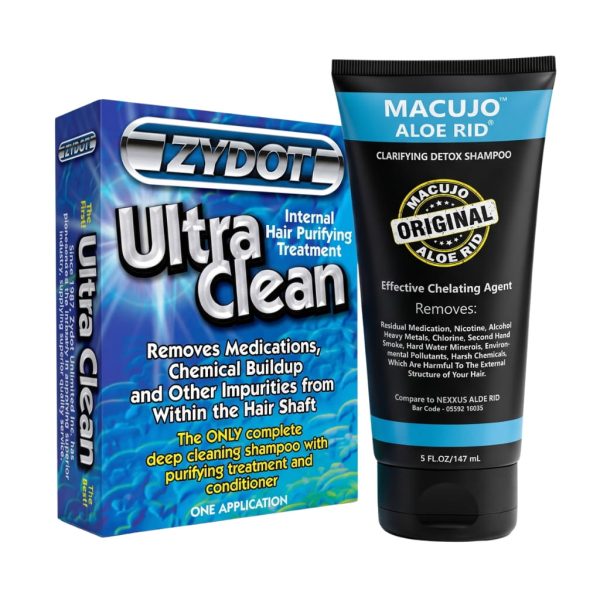
5oz Macujo Aloe Rid & Zydot Ultra Clean Shampoo Bundle
$ 125.00 Add to cart -
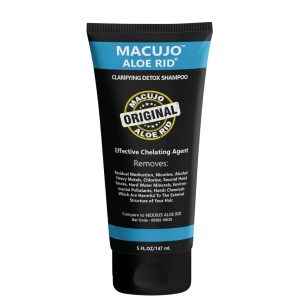
5oz. Macujo Aloe Rid Old Formula Shampoo
$ 100.00 Add to cart -
Sale!
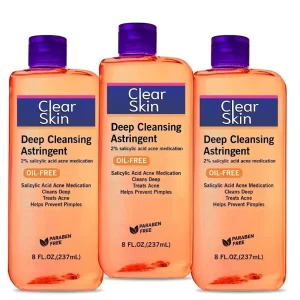
3-Pack Deep Cleansing Astringent (2% Salicylic Acid) – Macujo Method Essential
Original price was: $ 40.00.$ 30.00Current price is: $ 30.00. Add to cart -
Sale!
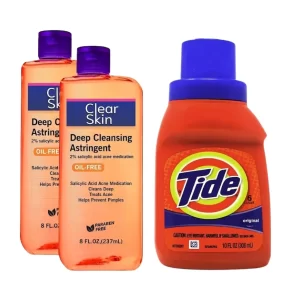
Clean & Clear Astringent & Liquid Detergent Pack (International Shipping)
Original price was: $ 50.00.$ 45.00Current price is: $ 45.00. Add to cart
Frequently Asked Questions
Q: What is a laboratory cutoff concentration?
A: A cutoff concentration is the minimum threshold established by regulatory bodies or laboratories. A specimen is only reported as positive if the concentration of the target substance or metabolite equals or exceeds this predefined limit.
Q: Can over-the-counter medications trigger a positive screen?
A: Certain over-the-counter medications or dietary items can occasionally cause initial immunoassay cross-reactivity. However, these presumptive positives are thoroughly investigated and clarified during the MRO review process.
Q: What happens if a specimen is reported as ‘diluted’?
A: A diluted specimen occurs when water or fluid intake lowers the natural concentration of urine components. Testing authorities often request a retest—frequently under direct observation—to secure an evaluable sample.
Q: Does a positive drug test establish current impairment?
A: No. Detection assays identify the presence of parent compounds or metabolic byproducts in biological specimens, but detection alone does not automatically correlate with acute physical or psychological impairment at the exact time of testing.