


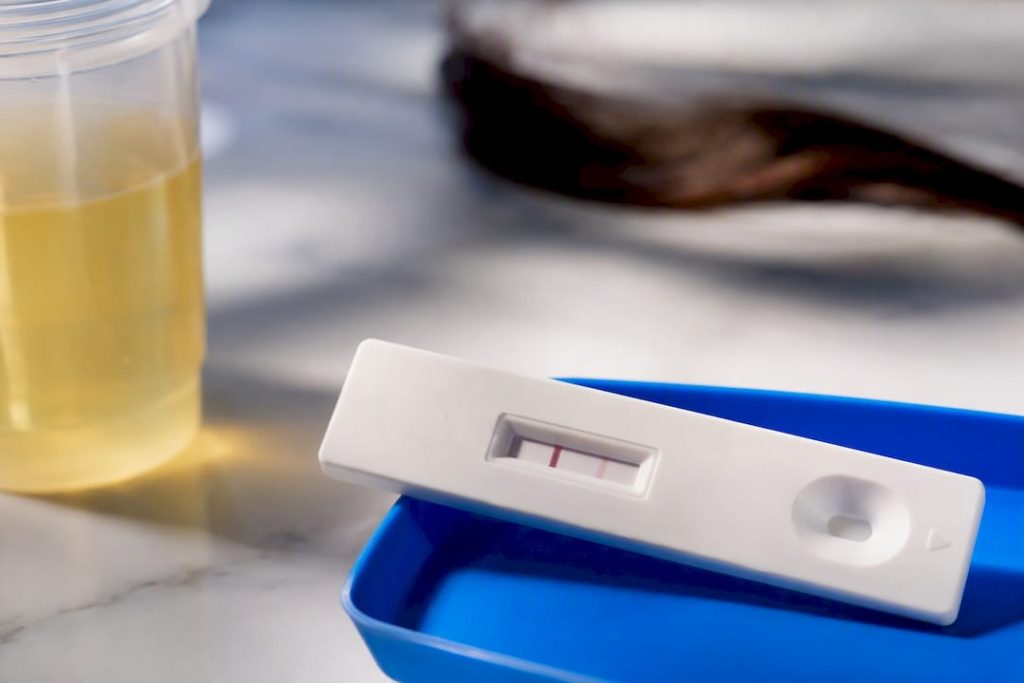
If you see a colored test (T) line within the read window and a visible control © line, that panel reads negative, no matter how faint the T line looks. If the C line shows up alone with no T line at all, that’s a preliminary positive and needs confirmation before anyone treats it as final. Ignore any line that appears after the manufacturer’s stated read window. For anything with real consequences on the line, get accredited lab confirmation through GC-MS or LC-MS/MS.
TL;DR:
- A visible test line within the read window always indicates a negative result, regardless of its faintness, unless the control line is absent or only appears after the window.
- Expired, improperly stored, or tampered samples can produce unreliable faint lines, which should prompt retesting with fresh first-morning urine and lab confirmation.
- Faint lines occur because immunoassays detect threshold levels, with low metabolite concentrations producing lighter T lines, but external factors like dilution or kit variability can also cause faintness.
- Oral fluid tests follow the same rule, but eating or rinsing may affect results, while hair samples require lab analysis with no T line interpretation possible at home.
- Always confirm preliminary positives with accredited lab tests (GC-MS or LC-MS/MS) before making definitive decisions, especially in high-stakes situations.
Table of Contents
- Faint Line Drug Test Meaning: The Quick Reading Rules
- Why Drug Test Lines Come Out Faint
- When a Faint Line Still Means Negative, and When It Doesn’t
- Does the Faint Line Rule Change by Sample Type?
- Preliminary Positive? Here’s What Actually Confirms It
- Passusa’s Experience With Hair Testing and Readiness Checks
- Detox Experts’ Practical Take
- Products to Consider Before Your Test
- Sources
- FAQ
Faint Line Drug Test Meaning: The Quick Reading Rules
Reading a rapid test correctly comes down to a handful of steps, and skipping any one of them is how people end up second-guessing a result that was actually clear.
- Check the control © line first. If it never appears, the test is invalid and needs to be redone with a fresh kit.
- If both C and T lines show up inside the read window, that panel is negative, even if the T line is barely visible.
- If only the C line appears, treat that panel as a preliminary positive and follow whatever confirmation process your program requires.
- Read results within the exact time window printed on the Instructions for Use, under decent lighting, not under a phone flashlight in a dim bathroom.
- If you’re still unsure, retest with a new kit using first morning urine, or send the sample out for lab confirmation.
Pro Tip: Set a timer the second you activate the test. Reading a strip two minutes early or ten minutes late is one of the most common reasons people misjudge a faint line.
Why Drug Test Lines Come Out Faint
Rapid drug screens run on competitive immunoassay chemistry, and that single fact explains almost every faint-line mystery. Labeled antibodies in the strip compete with drug metabolites in your sample for a fixed number of binding spots on the T line. When metabolite levels sit below the cutoff, more antibodies land on the T region and a line forms, faint or bold. When metabolite levels clear the cutoff, fewer antibodies reach that spot and the line stays thin or disappears entirely. Cleveland Clinic’s guidance on drug testing describes rapid screens as immunoassays built for a pass/fail answer, not a dose readout.
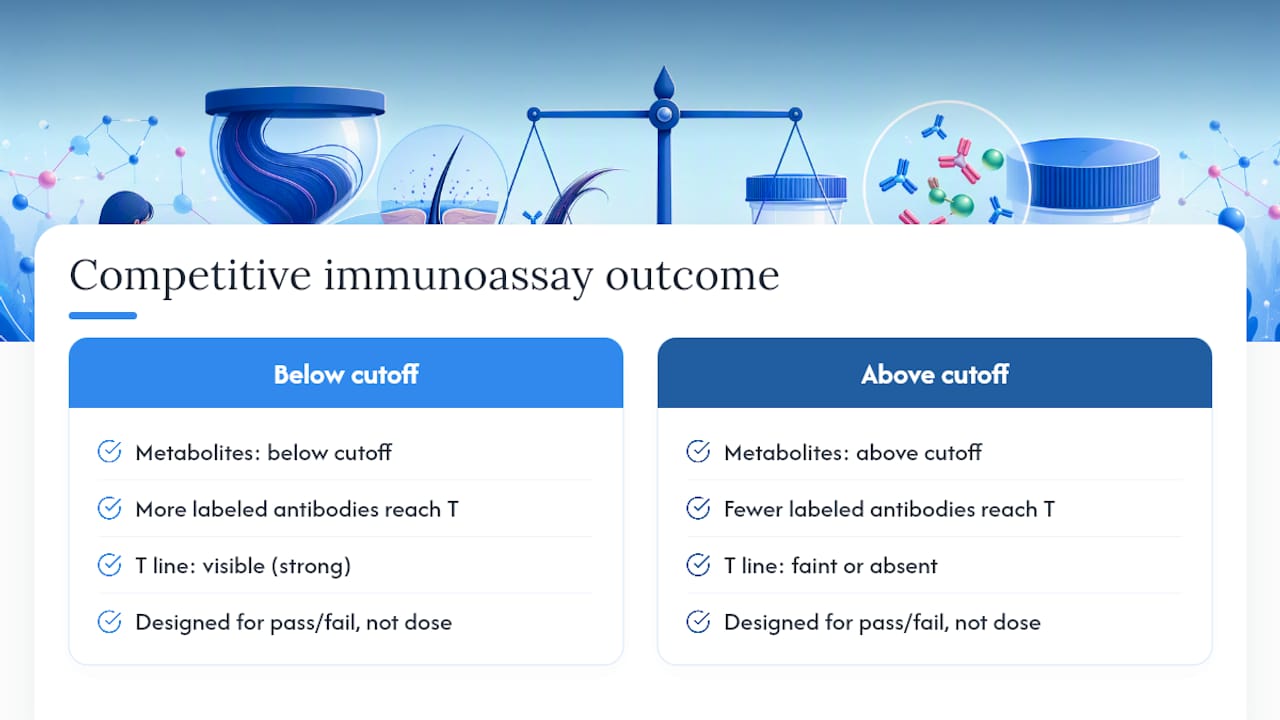
A faint line can show up for reasons unrelated to proximity to a cutoff, such as sample dilution by heavy fluid intake, membrane or manufacturing variability between test lots, poor lighting or viewing angle, or an expired/stored kit. Line darkness is not intended to measure substance amount but to indicate threshold passage, which is the purpose of a screening test.
When a Faint Line Still Means Negative, and When It Doesn’t
The core rule holds in almost every situation: a visible T line within the window equals negative. But a handful of scenarios can throw that rule off, and knowing them keeps you from either panicking over nothing or trusting a result you shouldn’t.
- Expired or improperly stored kits can produce unreliable lines in either direction. Check the expiration date before you even open the packaging.
- Evaporation or indent lines appear after the read window as a colorless or gray shadow rather than a true colored line. Clearblue’s explanation of faint lines on pregnancy tests describes the same phenomenon on a different strip, and the fix is identical: read on time, and disregard anything that shows up later.
- Sample tampering or substitution shows up as unusual temperature, color, or pH and typically triggers a retest under observation.
- Dilute specimens from excess fluid intake get flagged separately through creatinine and specific gravity checks rather than through the line itself, according to USA Mobile Drug Testing’s overview of faint-line causes.
When any of these apply, the move is the same: retest with first morning urine, document the original strip with a photo and timestamp per your program’s rules, and request lab confirmation if the stakes are high enough to justify it. Our guide on passing urinalysis tests walks through cutoff concentrations in more detail if you want the fuller picture.
Does the Faint Line Rule Change by Sample Type?
The basic chemistry is the same across urine and oral fluid rapid tests, but each sample type comes with its own wrinkles.
- Urine immunoassays: any visible T line within the window is negative, the same rule covered above.
- Oral fluid (saliva) tests: the visible T line rule still applies, but recent eating, drinking, or mouth rinsing can affect fluid volume and occasionally muddy a read. Waiting the standard rinse period before testing helps.
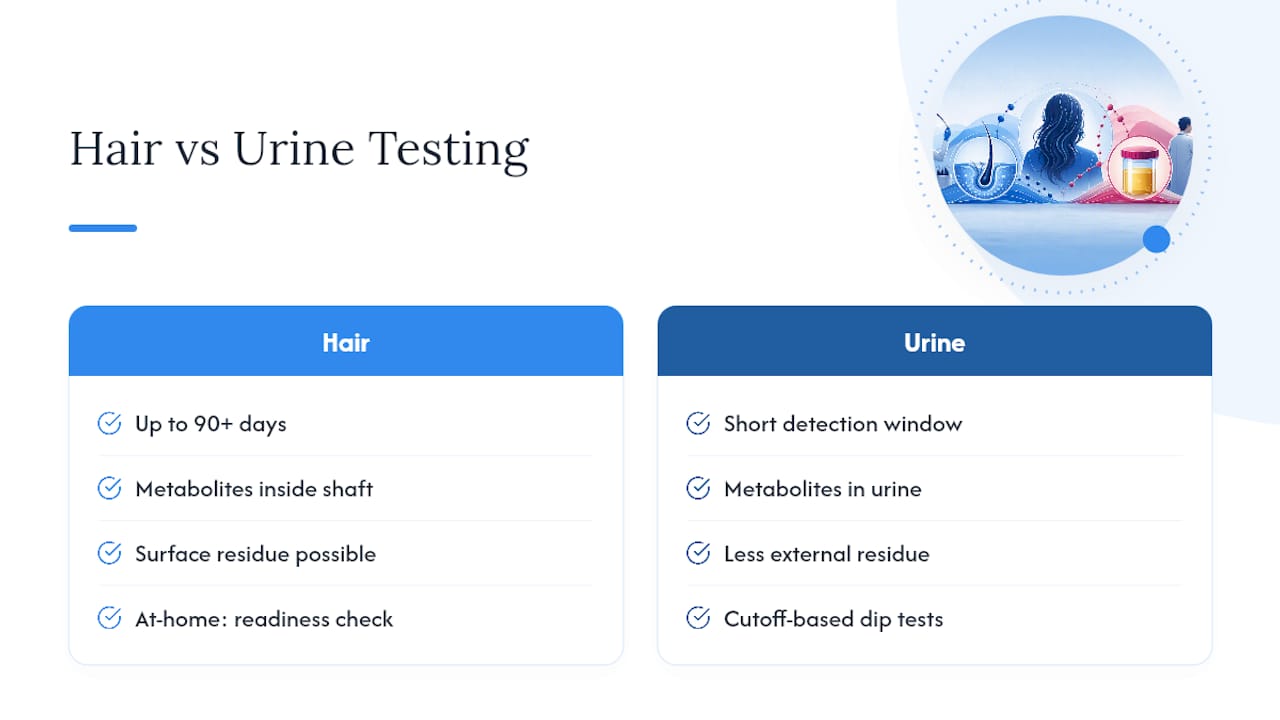
- Hair follicle testing: this is where the faint-line concept simply doesn’t apply. Hair samples go through lab-based GC-MS or LC-MS analysis, not a strip you read at home. There’s no T line to squint at.
- At-home hair kits: useful as a readiness check before you commit to an accredited lab test, not as a final verdict.
Hair testing detects metabolites bound inside the hair shaft as well as substances deposited on the surface from smoke or contact, which is a different problem than a urine cutoff. That’s exactly why targeted hair-prep approaches, like the Macujo Method principles behind Passusa’s Aloe Rid shampoo, focus on breaking down both the internal residue and the external buildup rather than just diluting a sample.
Preliminary Positive? Here’s What Actually Confirms It
A missing T line on a rapid screen is a preliminary result, not a diagnosis, and treating it as final is where people get into trouble.
- Preserve the specimen exactly as your program’s chain-of-custody rules require. Don’t discard or disturb it.
- Request confirmatory lab testing using GC-MS or LC-MS/MS. The Joint Commission and SAMHSA both point to accredited lab confirmation as the standard for any screen that will drive employment, legal, or clinical decisions, since these methods identify specific compounds rather than reacting to a class of metabolites.
- Ask about Medical Review Officer review if you’re in a workplace program. An MRO can account for legitimate prescriptions before a result gets reported as positive.
If you just want personal reassurance before things escalate, retest under controlled conditions with a clinical-grade dip card rather than guessing.
Pro Tip: Never rely on a single home strip to settle a high-stakes question. Confirm, then decide.
Passusa’s Experience With Hair Testing and Readiness Checks
Passusa has spent more than 20 years focused specifically on hair, urine, and saliva detox, and that hair-specific experience matters because hair testing behaves so differently from a urine dip. Metabolites bind inside the hair shaft over a growth window that can stretch back 90 days or more, and external exposure to smoke can deposit additional residue on the surface. That’s a different challenge than a urine cutoff, and it’s why our team built the Aloe Rid Shampoo based on Macujo Method principles rather than a generic clarifying wash.
An at-home hair kit is a useful readiness check before a lab appointment, but it’s not the final word. Accredited lab assays using GC-MS or LC-MS/MS determine actual outcomes. At-home products, ours included, are tools for preparation and self-checking, not substitutes for a certified result.
Detox Experts’ Practical Take
The biggest mistake people make with a faint line isn’t misreading the chemistry, it’s rushing the read. Follow the instructions, retest with a fresh kit if anything feels off, and push for lab confirmation whenever a result carries real consequences. If you want a second opinion before you act, Passusa’s consultations are there for exactly that kind of question.
— Detox Experts
Products to Consider Before Your Test
Passusa built its self-screening lineup around one idea: know where you stand before a result that matters gets read by someone else. Each product below fits a specific moment in that process.
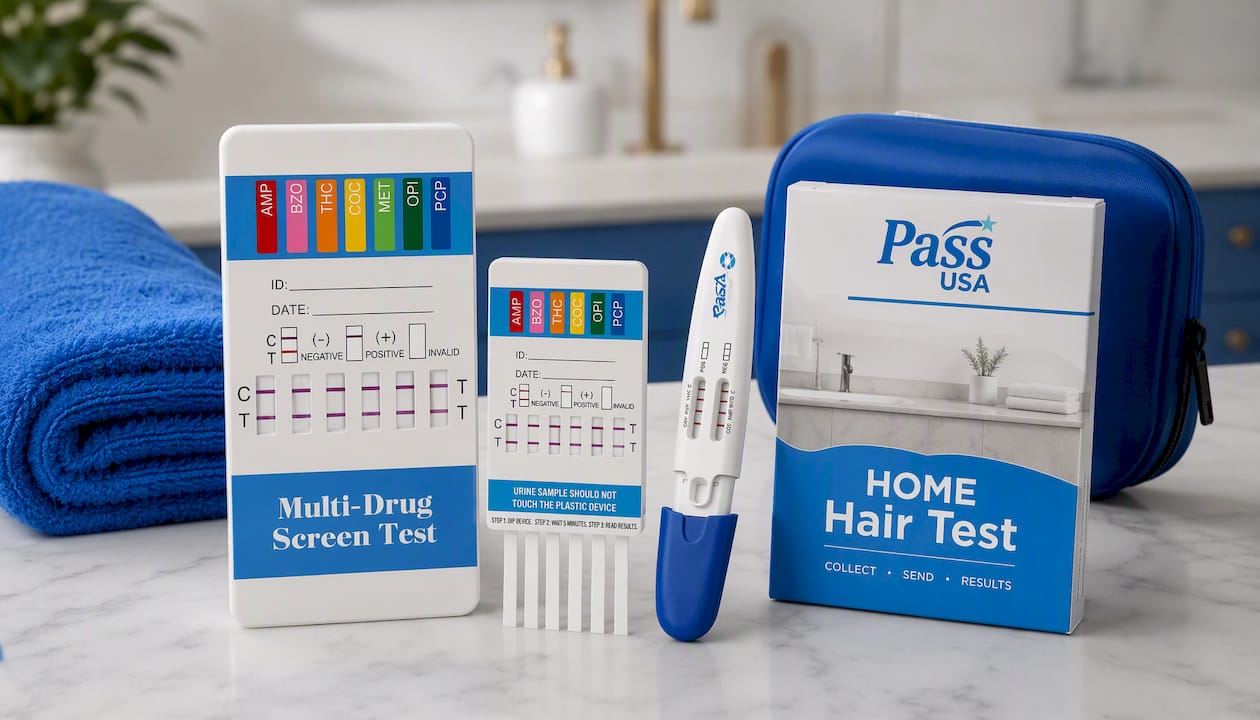
The 13-Panel Urine Drug Test Dip Card is a clinical-grade screen covering 13 panels, including fentanyl, and it’s built for a straightforward self-check before you walk into anything official. The 12-Panel Multi-Drug Oral Fluid Saliva Test works the same rapid pen-style format for a quick saliva check when a mouth swab is what you’re actually facing. And the At-Home Hair Follicle Drug Test Kit gives you a fast, confidential readiness read before a hair sample goes to an accredited lab, which pairs naturally with a hair-prep routine like Aloe Rid Shampoo in the days beforehand.
None of these replace a certified lab result when the outcome carries real weight. They’re built to tell you where you stand while there’s still time to act on it. Check the product pages for full specs and instructions, then reach out to Passusa’s team if you want guidance on which option fits your timeline.
Sources
FAQ
Does a faint line count as a positive?
No. A visible T line within the manufacturer’s read window, alongside a visible C line, indicates a negative result regardless of how light that line looks.
Can a faint line still be negative?
Yes, and it’s actually the expected outcome. Rapid immunoassays are built as pass/fail tools, so any colored T line, faint or dark, means the sample fell below the test’s cutoff.
Is a very faint line on a rapid test positive?
Not if it’s a true colored line within the read window; that reads as negative. A shadowy line that appears only after the window has closed is an evaporation or indent line and shouldn’t be counted at all.
What color does my pee have to be to pass a drug test?
Color isn’t a reliable pass/fail indicator on its own, since programs use creatinine and specific gravity checks rather than visual color to catch dilute or substituted samples. Extremely pale or clear urine can trigger a dilution flag and a request for retesting.