


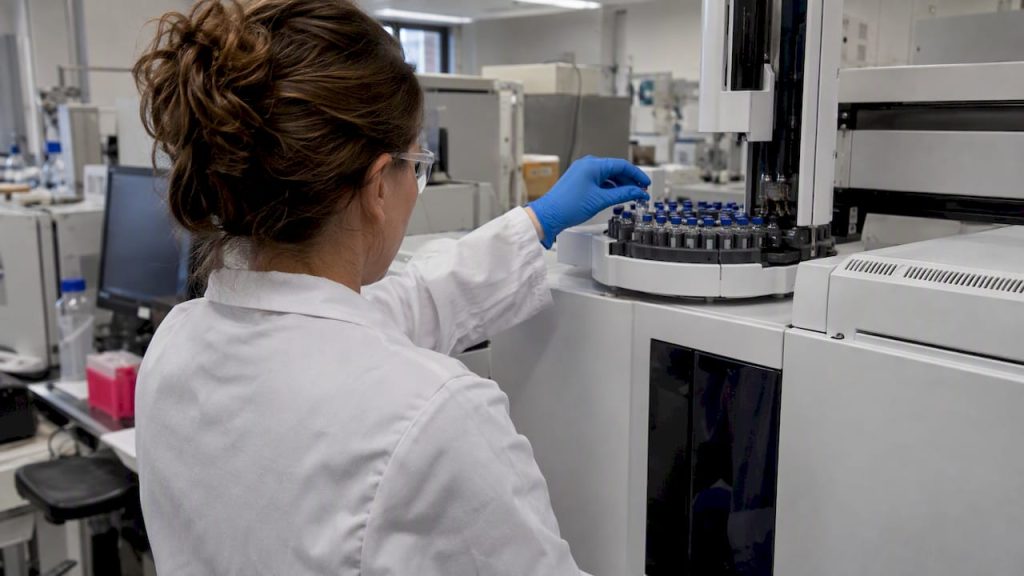
GC-MS (gas chromatography-mass spectrometry) is the laboratory confirmatory test that identifies specific drugs or metabolites after an initial screen flags a sample as non-negative. It follows presumptive immunoassay testing and feeds results to a Medical Review Officer for workplace decisions, a process outlined in SAMHSA’s drug testing guidance. Unlike a screen, GC-MS pinpoints the exact substance, not just a drug class, which is why labs and regulators treat it as the final word.
TL;DR:
- Confirmation uses a fresh urine aliquot, with identification requiring retention time and ion ratio matches against a reference standard run alongside the sample.
- Labs check blanks and controls; typical acceptance criteria require ion ratios within 20% and a primary ion signal to noise ratio of at least 3.3.
- Urine confirmation targets specific compounds: laboratories measure THC’s longer lasting metabolite and distinguish amphetamine from methamphetamine and morphine from codeine.
- Confirmation adds one to three business days after a nonnegative screen; Medical Review Officer review of a confirmed positive can extend the process beyond a week.
- Federal workplace cutoffs shape reporting, and the Medical Review Officer checks custody records, interviews the donor, and reviews prescriptions before final verification.
Table of Contents
- How GC-MS Confirmation Works in a Urine Testing Workflow
- What GC-MS Detects: Drugs, Metabolites, and Analytical Limits
- Laboratory Acceptance Criteria and Quality Control Behind Confirmation
- GC-MS vs Immunoassay and LC-MS/MS: Strengths and Limits
- What a Confirmed Result Means and How the MRO Gets Involved
- Getting Ready for Hair, Urine, or Saliva Testing
- Common Adulteration Attempts and Why GC-MS Catches Them
- Reading a GC-MS Result: Where False Positives and Negatives Come From
- From Sample Collection to Report: How Long GC-MS Confirmation Takes
- What the Confirmation Process Really Tells Test-Takers
- Preparing for Your Test with PassUSA’s Products and Consultations
- FAQ
- Sources
How GC-MS Confirmation Works in a Urine Testing Workflow
Labs use a separate aliquot and a validated confirmatory method to avoid cross-contamination and guarantee specificity, a safeguard built into federal testing requirements under SAMHSA’s guidance. The sample that screened non-negative on immunoassay never gets reused for confirmation; a fresh portion goes through its own preparation and analysis.
The confirmatory process generally follows this sequence:
- Extraction: technicians use solid-phase extraction or liquid-liquid extraction to isolate the target analytes from the urine matrix.
- Hydrolysis: certain drug classes, including some opioids, require an enzymatic or acid hydrolysis step to free conjugated metabolites before extraction.
- Internal standards: a deuterated version of the target compound is added to each sample to track recovery and correct for instrument variability.
- GC separation: the prepared extract is injected into the gas chromatograph, where compounds separate based on how they travel through a heated column.
- Ionization and detection: the mass spectrometer ionizes separated compounds, typically through electron ionization, then scans in selected ion monitoring or full scan mode to record mass fragments.
- Identification: a positive identification requires the retention time and specific ion ratios to match a concurrently run reference standard.
This layered approach is why confirmatory testing carries more weight than a screen: it isolates and verifies molecular identity rather than reacting to a chemical class.
What GC-MS Detects: Drugs, Metabolites, and Analytical Limits
GC-MS confirms specific compounds rather than broad categories. Common targets include the THC metabolite Δ9-THCCOOH, benzoylecgonine (the primary cocaine metabolite), morphine and codeine, and amphetamine or methamphetamine.
- THC metabolite: labs confirm Δ9-THCCOOH rather than active THC, since the metabolite persists longer in urine.
- Cocaine metabolite: benzoylecgonine is targeted because cocaine itself breaks down quickly.
- Opioids: morphine and codeine are confirmed individually, which matters for distinguishing poppy seed exposure from heroin or prescription use.
- Stimulants: amphetamine and methamphetamine are confirmed separately since one can be a metabolite of the other.
Each analyte has a confirmation cutoff and a limit of quantitation set by the testing purpose, whether forensic, clinical, or workplace. Federal workplace programs rely on cutoffs and reporting categories established through SAMHSA’s Mandatory Guidelines, which means the same specimen could be read differently depending on which cutoff applies.
Laboratory Acceptance Criteria and Quality Control Behind Confirmation
Labs do not accept a GC-MS result on a single run. Every confirmed identification sits inside a quality control framework that includes blank runs to rule out contamination, positive controls to verify the system is detecting correctly, and instrument performance logs tracked over time.
State laboratory procedures spell out the specific thresholds technicians apply:
- Retention time window: a sample’s peak must fall within approximately ±0.2 minutes of the standard, according to Maine CDC’s published urine drug procedures.
- Ion ratio agreement: characteristic ion ratios typically must agree within ±20% of the concurrently run standard.
- Signal-to-noise minimum: the primary ion generally needs a signal-to-noise ratio of at least 3.3 for the identification to count.
Reference standards run alongside patient samples on the same batch, so drift in the instrument shows up immediately rather than days later. Maintenance logs, blank checks, and re-extractions exist because a dirty injector or a degraded column can shift retention times just enough to miss the acceptance window.
Pro Tip: A borderline retention time or ion ratio doesn’t necessarily mean a wrong result. It often triggers a re-run or a lab comment rather than an automatic rejection.
GC-MS vs Immunoassay and LC-MS/MS: Strengths and Limits
Each method plays a distinct role in the testing chain, and understanding the handoff explains why a single sample might pass through two or three different techniques.
- Immunoassay screening: fast and inexpensive, but prone to cross-reactivity with structurally similar compounds, which is why a non-negative screen needs confirmation rather than a direct report.
- GC-MS confirmation: slower and more expensive than screening, but it identifies the exact compound and typically quantifies it, according to comparative forensic studies on confirmation methods.
- LC-MS/MS: an alternative confirmatory technique with strong sensitivity and the ability to run multiple analytes in one pass, often preferred for compounds that do not separate well on a gas chromatograph.
For test-takers, the practical takeaway is turnaround time: a screen can clear in hours, but confirmation by GC-MS or LC-MS/MS adds days, and the method chosen often depends on the specimen type and the analyte panel being requested.
What a Confirmed Result Means and How the MRO Gets Involved
Laboratories report results in defined categories: negative, confirmed positive, dilute, substituted, adulterated, or invalid. For DOT-regulated testing, results must come from HHS-certified labs and get reported directly to a Medical Review Officer, with numeric values attached to confirmed positives, per SAMHSA’s testing resources.
The MRO verification process typically follows these steps:
- Review the chain of custody form for completeness and any collection irregularities.
- Contact the donor for a confidential interview about the result.
- Check for a legitimate medical explanation, such as a valid prescription that could account for the finding.
- Issue a final verification as positive, negative, or cancel the test if a valid explanation applies.
Cutoff changes illustrate how much this process matters. The HHS Medical Review Officer Guidance Manual documents how adjustments, including shifts in the morphine confirmatory cutoff, have changed how certain positive results get interpreted over time. If an MRO contacts you, providing prescription documentation promptly can resolve the review faster.
Getting Ready for Hair, Urine, or Saliva Testing
Hair testing works differently from urine or saliva because the lab is extracting analyte incorporated into the hair shaft, not just surface residue. The Society of Hair Testing’s consensus guidance notes that validated decontamination and extraction protocols determine what a lab actually measures, which is why preparation for hair testing looks different from a quick rinse.
Before any lab appointment, a self-screen gives you a realistic read on where you stand:
- An at-home hair follicle drug test kit lets you check your own sample before a lab ever sees it.
- A 13-panel urine drug test dip card offers clinical-grade screening for urine specimens, fentanyl included.
- A 12-panel oral fluid saliva test covers rapid pen-style screening for saliva-based programs.
A sensible workflow is to self-screen first, review what the test shows, then book a private consultation if timing is tight or the result is unclear.
Common Adulteration Attempts and Why GC-MS Catches Them
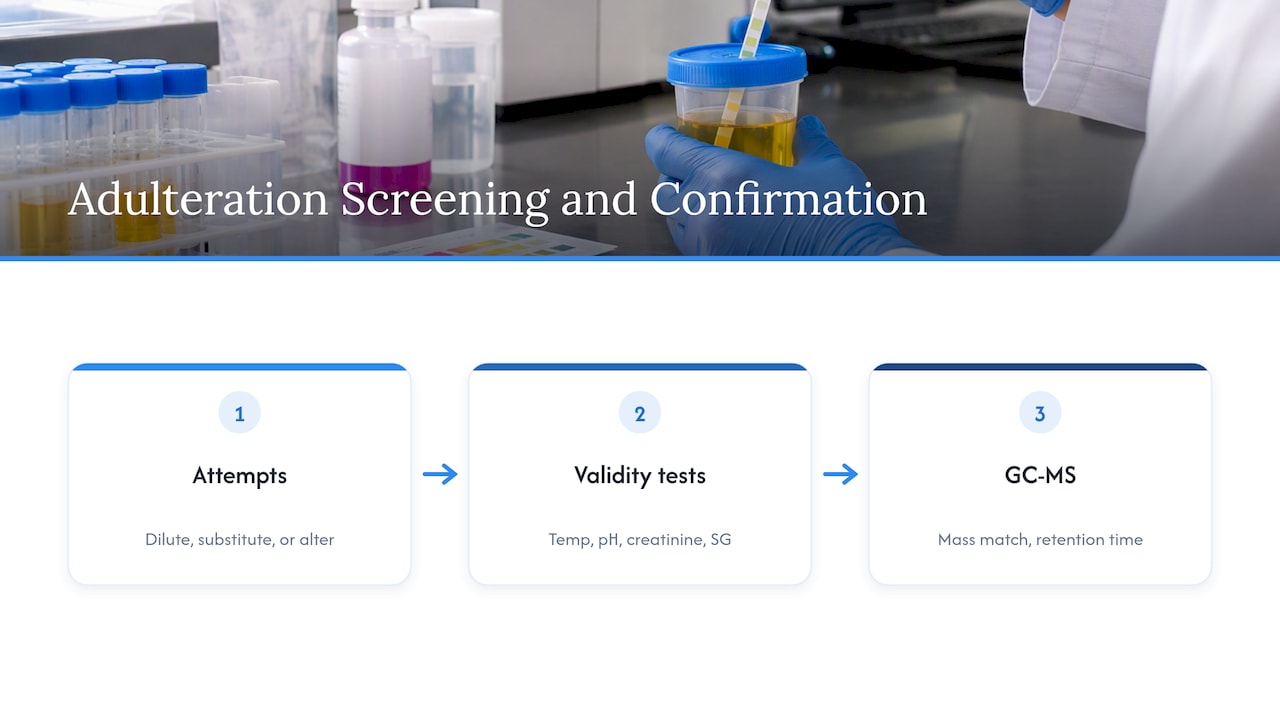
People facing an imminent test sometimes try to dilute, substitute, or chemically alter a specimen to produce a false negative. Urine adulteration attempts range from adding household chemicals like bleach or vinegar to swapping in synthetic or someone else’s urine. Labs screen for these attempts through temperature checks at collection, along with creatinine, specific gravity, and pH measurements that flag a sample as diluted, substituted, or adulterated before it ever reaches the GC-MS stage.
For hair, surface adulteration attempts typically involve bleaching, dyeing, or aggressive washing meant to strip external contamination. The SoHT consensus guidance points out that laboratory extraction differs fundamentally from surface cleansing: a validated wash and digestion step is designed to separate externally deposited drug from analyte incorporated into the hair matrix during growth. That distinction is why a product marketed as a quick fix does not interact with the confirmatory chemistry the same way a validated lab protocol does.
GC-MS itself does not detect adulterants directly; that job falls to the specimen validity testing done before or alongside the confirmatory run. What GC-MS does is verify identity with enough specificity that dilution or masking agents cannot fake a negative result once a sample reaches the extraction and separation stage. If an analyte is present above the confirmation cutoff, the mass spectral match and retention time will show it regardless of what was added to the specimen, unless the adulteration destroyed the sample outright, which specimen validity testing is designed to catch first.
Reading a GC-MS Result: Where False Positives and Negatives Come From
A confirmed GC-MS positive is about as close to definitive as drug testing gets, but interpretation still has nuance worth understanding. True false positives at the confirmatory stage are rare because the method requires both retention time and ion ratio matches against a reference standard, not a single data point. Most of what gets labeled a “false positive” in casual conversation actually happened at the screening stage, where immunoassay cross-reactivity flagged a non-target compound.
False negatives are more often explained by timing than by instrument error. If a specimen is collected after the detection window for a substance has closed, or if the amount present falls below the limit of quantitation, GC-MS will correctly report no detection, even though use occurred earlier. This is why detection windows matter so much for anyone timing a test; our guide to how long drugs stay in your system breaks down typical windows by substance and specimen type.
Borderline results near a cutoff can also create confusion. A specimen just above or below the confirmation threshold may prompt a lab comment or a request for clarification rather than a simple pass or fail, especially when ion ratios sit near the edge of the acceptance window described in state lab procedures. None of this means the science is unreliable; it means a single number on a report represents a chain of validated steps, and understanding that chain helps explain why results sometimes need MRO review before they become final.
From Sample Collection to Report: How Long GC-MS Confirmation Takes
The timeline from collection to a final reported result typically unfolds in stages. Collection and chain-of-custody documentation happen first, often within minutes at a collection site, followed by shipment to an HHS-certified laboratory. Screening by immunoassay usually completes within a day of the lab receiving the specimen.
Any sample that screens non-negative moves to confirmatory testing, which adds extraction, hydrolysis where needed, and the GC-MS run itself. This stage commonly takes an additional one to three business days, since each batch runs alongside quality control standards and cannot be rushed without risking a failed acceptance check. Once the lab finalizes a confirmed result, it reports numeric values directly to the MRO rather than to the employer, per SAMHSA’s reporting framework.
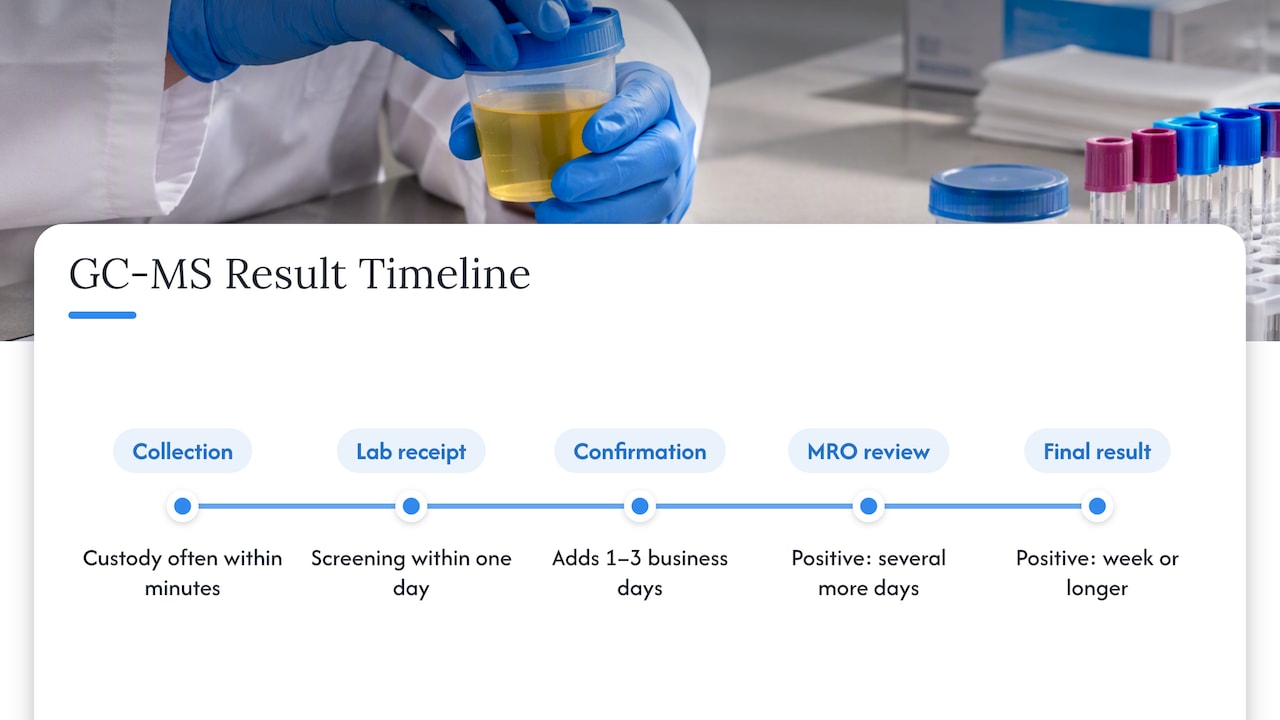
MRO review adds its own timeline. A straightforward negative report to the employer can happen quickly, but a confirmed positive requiring a donor interview and prescription review may take several more days to reach final verification. Total turnaround for a negative result often lands within a few days of collection, while a confirmed positive requiring full MRO adjudication can stretch to a week or longer depending on how quickly the donor responds to outreach.
What the Confirmation Process Really Tells Test-Takers
The biggest misunderstanding about GC-MS confirmation is that people treat it as just a stricter version of the screening test. It isn’t. A screen answers a yes-or-no question about a drug class; confirmation answers a specific chemical identity question with a documented, standard-matched trail that holds up to scrutiny. That difference is exactly why specimen type should drive how you prepare, not a one-size approach applied to hair, urine, or saliva alike.
Hair testing deserves the most attention because its science works on extraction, not surface removal, which is a detail most people searching for quick fixes never fully grasp. With over 20 years in this field, our focus has stayed on matching the preparation method to what the lab actually measures. If your test date is close, start with an honest self-screen rather than guessing.
— Detox Experts
Preparing for Your Test with PassUSA’s Products and Consultations
We built our product lineup around the same logic that drives laboratory confirmation: understanding what you’re dealing with before you act. Our Macujo Aloe Rid Shampoo approach addresses hair testing specifically, targeting toxins that have bonded to the hair shaft rather than relying on a surface rinse that laboratory extraction methods would see straight through.
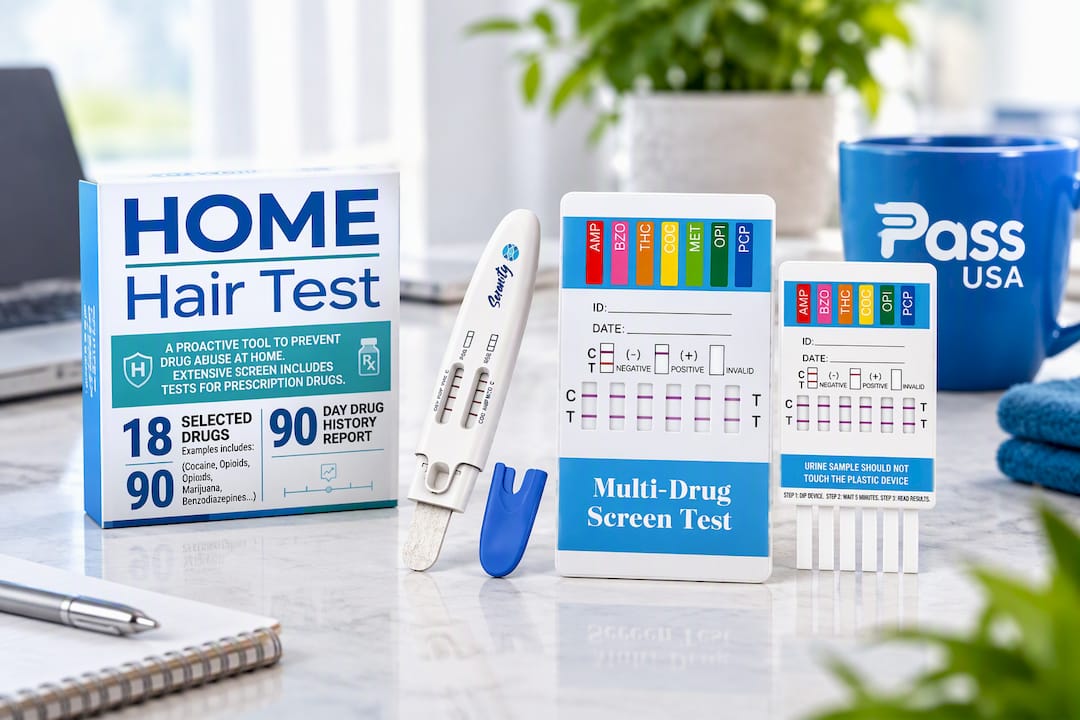
We recommend a simple sequence: self-screen first, then decide your next step based on what you find.
- Check your hair with our at-home hair follicle drug test kit before committing to any preparation method.
- Screen urine with our 13-panel dip card or saliva with our 12-panel oral fluid test for a fast read on where you stand.
- Book a private consultation with Mike Macujo for a personalized plan when your test date is close or your self-screen result is unclear.
We offer consultations with instructions built around a proven method and tailored to your specific test type. Start with a self-test today, then reach out for a consultation if you want a plan built around your results.
FAQ
What drugs show up on a pre-employment drug test?
Standard federal panels commonly include marijuana metabolite, cocaine metabolite, opiates, amphetamines, and phencyclidine, with many employer panels adding synthetic opioids like fentanyl. The exact list depends on the employer’s program and whether it follows federal workplace guidelines.
What does GC-MS tell us?
GC-MS identifies the exact chemical identity of a substance in a specimen by matching its retention time and ion fragmentation pattern against a known reference standard. It can also quantify how much of that substance is present, which is why it serves as the confirmatory step after an immunoassay screen.
What are the downsides of gas chromatography?
Gas chromatography paired with mass spectrometry takes longer and costs more than immunoassay screening, and it requires sample extraction steps that add processing time. Some compounds also need chemical modification before they separate well on a gas chromatograph, which is part of why LC-MS/MS is sometimes used instead for certain analytes.
How is mass spectrometry used in drug testing?
Mass spectrometry breaks separated compounds into characteristic ion fragments, and the pattern of those fragments acts like a chemical fingerprint. Laboratories compare that fingerprint and its retention time against a reference standard run in the same batch to confirm a specific drug or metabolite’s identity.