


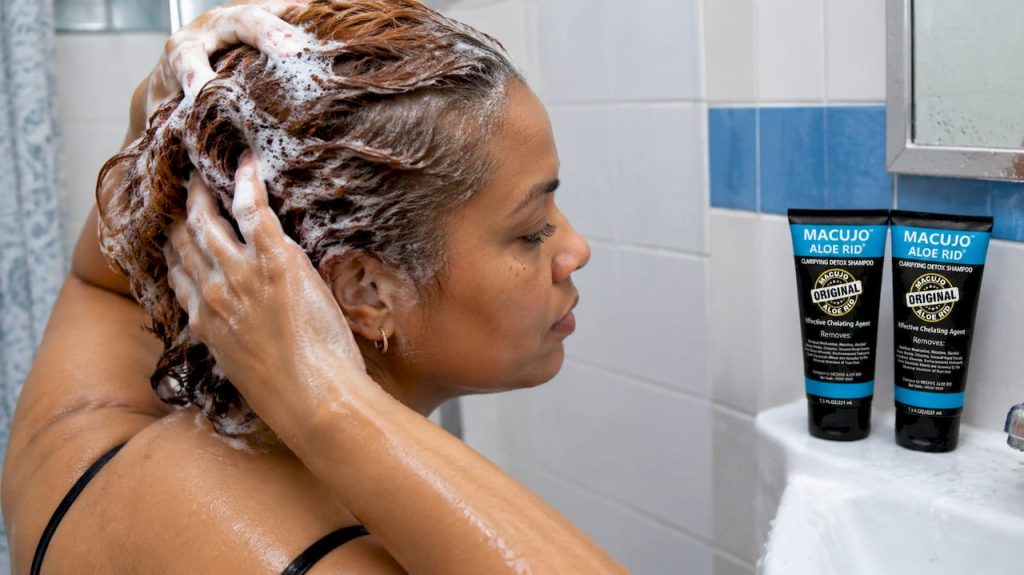
The Macujo Method is a multi-step hair wash routine built around Macujo Aloe Rid Shampoo. Each round layers a shampoo wash, a baking soda paste, a salicylic acid astringent, a detergent scrub and a vinegar rinse. This guide gives you the steps in order, the supplies, how many washes people typically plan for, and what the labs and independent research say, so you can decide with real information.
TL;DR
- The current version of the method is a 9-step wash round, done with Macujo Aloe Rid Shampoo, a 2% salicylic acid astringent, vinegar, baking soda and a mild laundry detergent.
- Proponents plan many rounds, spread over days, not a single wash. Start as early as you can.
- Hair tests generally look back about 90 days, so washing is a preparation step, not a guarantee. Labs say they use their own washing procedures to deal with external contamination.
- Protect your skin: wear gloves and goggles, and stop if your scalp becomes irritated.
- If your test is close, we offer unlimited consultations until you pass, with a calculator and video instructions.
Table of Contents
- What the Macujo Method is
- Supplies you need before you start
- The Macujo Method steps, in order
- How many Macujo washes do people do?
- How a hair test works, and why timing matters
- What the evidence says about washing hair
- Why the shampoo matters in this routine
- Protect your skin and scalp
- A shaved head does not remove the risk
- Other tests: urine and saliva
- Perspective: why we tell people to start early
- Get a plan built around your test date
- FAQ
- Sources
What the Macujo Method is
Mike Macujo developed the method in the late 1990s as a home routine for hair follicle tests. The original version was a 7-step routine using a drugstore aloe shampoo and household items such as vinegar, astringent, baking soda and laundry detergent. It was later reworked into the 9-step version, which is built around Macujo Aloe Rid Shampoo.
We built our approach at Passusa on this method, with 20+ years of experience helping people prepare for hair tests. Everything below describes how the routine is meant to be done. Later we cover what testing labs and researchers say about it, because you should hear both sides.
Supplies you need before you start
Gather everything first. Once a round begins, you do not want to leave halfway through.
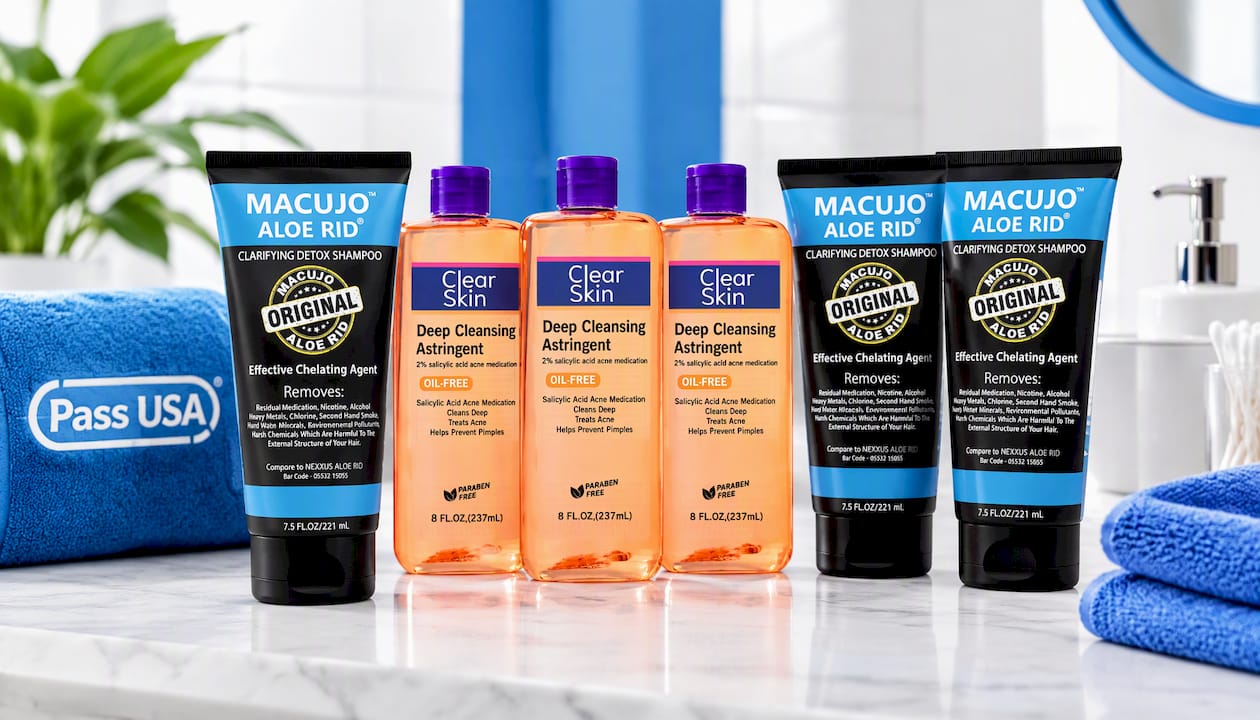
- Macujo Aloe Rid Shampoo
- A clear astringent with 2% salicylic acid (our 3-pack deep cleansing astringent is made for this role)
- White vinegar or apple cider vinegar at 5% acidity, in a spray bottle
- Original liquid laundry detergent
- Plain baking soda
- Warm water and clean, sanitized towels for every round
- Rubber gloves, goggles and a shower cap
The gloves and goggles are not optional. Detergent and vinegar in the eyes or on cuts hurts, and the astringent can sting.
The Macujo Method steps, in order
The published instructions describe each wash round as follows. Read all the steps before you start, as the e-book itself advises.
- Shampoo. Wash your hair with Macujo Aloe Rid Shampoo, rinse well and dry with a sanitized towel.
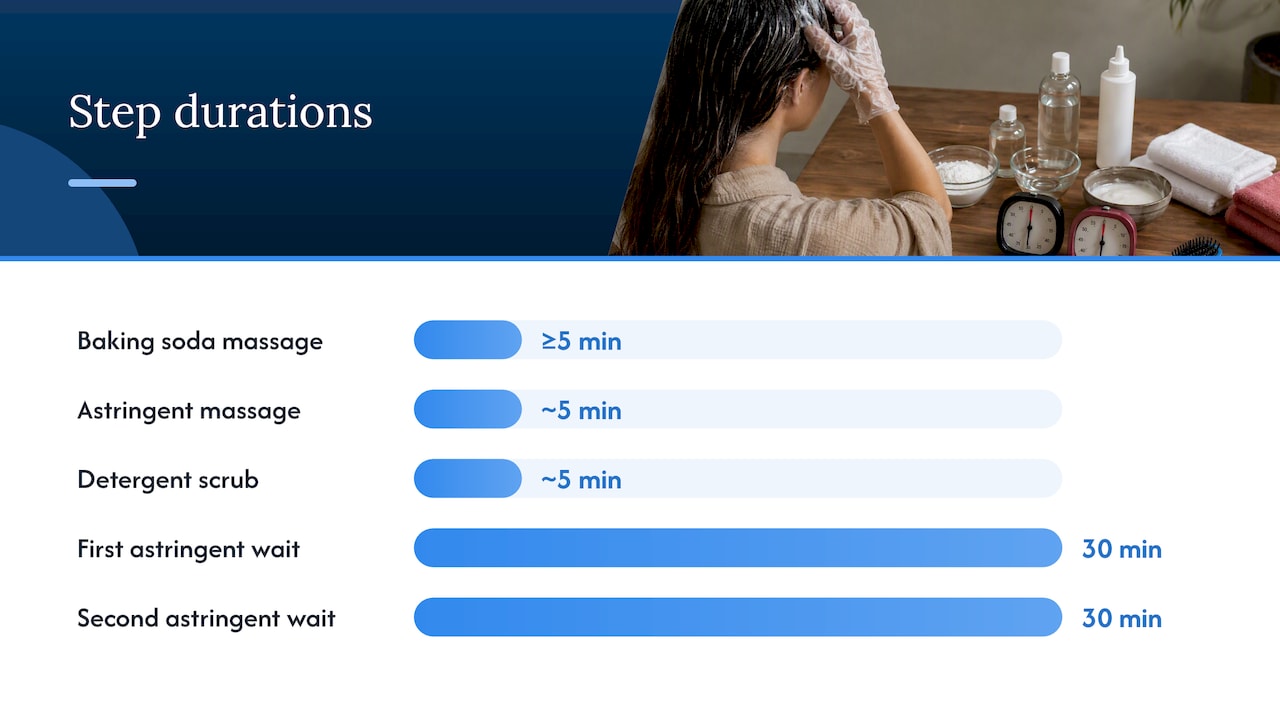
- Baking soda paste. Mix baking soda with warm water until it has a sauce-like consistency. Work it through your hair and massage for at least 5 minutes. Rinse and dry again. This step is meant to open the hair cuticle.
- Astringent, first application. Spray the salicylic acid astringent over all your hair, massage it in for about 5 minutes, then leave it for 30 minutes.
- Detergent scrub. Scrub your hair with a small amount of liquid laundry detergent for about 5 minutes. Rinse with plenty of water.
- Shampoo again. Apply Macujo Aloe Rid Shampoo and rinse thoroughly with warm water.
- Vinegar. Spray vinegar over your hair and massage it in. Leave it on, patting dry only if needed, and wipe any excess from your forehead and ears.
- Astringent, second application. Spray the astringent over all your hair again and massage thoroughly. A tingling feeling is described as normal. Leave it for 30 minutes.
- Rinse. Rinse thoroughly and dry with a clean towel.
- Finish with shampoo. Complete the round with a final wash of the Aloe Rid shampoo, rinse well and dry.
A full round takes a good while, mostly because of the two 30-minute astringent waits. Plan on roughly two hours of bathroom time per round and block it out so you are not rushing.
For a visual walkthrough, we publish step-by-step video instructions. Our Macujo Method at home guide covers setup, products and honest limits in more detail.
How many Macujo washes do people do?
This is the question behind “how many Macujo washes.” The method’s e-book tells users to repeat the full routine at least 5 to 10 times, with 1 to 3 rounds per day. That means a person who starts with a week or more in hand can spread rounds out, while someone with only a day or two has to compress them.
Here is how people usually think about it:
| Time before your test | Typical approach |
|---|---|
| 10 days or more | Spread rounds out, one to two per day, with rest for your scalp |
| 3 to 7 days | Two to three rounds per day, watching skin condition |
| 24 hours | Compressed schedule; see our drug test tomorrow checklist |
The schedule is the proponents’ plan, and no independent body has validated a specific number. The Substance Abuse and Mental Health Services Administration (SAMHSA) notes in its hair-testing literature summary that no industry-standard decontamination procedure exists and wash duration remains debated. So a count is a plan, not a proven threshold.
If you want a schedule built around your own test date, hair length and use history, our 10-day hair-first detox plan lays out a day-by-day approach, and our calculator and consultations tailor it further.
How a hair test works, and why timing matters
Knowing what the lab looks at tells you what you are up against.
- Quest Diagnostics says a hair test analyzes the cut hair shaft, not the follicle. Labs generally test the first 1.5 inches of scalp hair, representing about 90 days, after a 5 to 10 day delay before use shows up above the scalp.
- Head hair grows about half an inch a month, which is why 1.5 inches maps to roughly three months.
- The standard panel covers amphetamines, opiates, cocaine, the marijuana metabolite and PCP.
- Labcorp gives the same picture: a 1.5-inch sample can show use up to about 90 days before collection.
Two practical points follow. First, new hair grows in as you wash, so the part nearest your scalp is the part you cannot wash away. Second, a 2025 review in the Journal of Applied Laboratory Medicine says what shows up in hair depends on drug properties, hair pigmentation, timing and grooming. Two people with the same use history can get different results.
Hair testing is also the method employers choose when they want a long look-back. Quest says it is used especially for pre-employment and random testing, while urine or oral fluid suits recent use better. If you want to see how this plays out for job applicants, read our guide to pre-employment drug test rules.
What the evidence says about washing hair
You deserve a straight answer here, because it affects how you plan.
The labs say washing is part of their own process. Quest states that it uses washing, wash-solution analysis and, in some confirmatory assays, metabolite requirements to separate external contamination from use. It also says it has not found adulterants that can beat its test, and that shampoos, sprays or gels applied to cut hair had little or no effect.
Independent research is mixed rather than uniformly negative:
- A study of commercial shampoos found mean THC reductions from 52% with one product to 65% with another after three 30-minute treatments, and results varied with product and hair condition.
- A 2023 review reports that repeated washing can lower concentrations for some drugs, but results vary by analyte and product.
- SAMHSA says external contamination cannot be completely removed, and that it has not assessed the effectiveness of subversion products on the market.
We read that as follows: washing can reduce what is on and in the hair, results are not uniform, and nobody can honestly promise an outcome from any single routine. That is why we focus on starting early, following the steps exactly and using authentic products. Our success rate breakdown goes deeper into what the numbers do and do not mean.
Why the shampoo matters in this routine
The method is written around Macujo Aloe Rid Shampoo, and the steps assume it. Swapping in a random shampoo changes the routine into something nobody has described. If you are building your supply, the Original Formula 2-pack gives you enough for several rounds. Because each round uses the shampoo at least twice, longer schedules go through bottles quickly, so count your rounds before you order.
If you want the shampoo paired with a second formula, there is also the Macujo Aloe Rid and Zydot Ultra Clean bundle. Our detox shampoo instructions explain how the bundles are used.
Natural remedies are a different story. We explain why home tricks fall short of a product-based protocol in natural detox vs. products.
Protect your skin and scalp
The routine uses acids, detergent and baking soda, repeated several times. NIOSH lists soaps, detergents, cleaning agents, solvents and weak alkaline solutions among causes of occupational dermatitis, and says repeated contact can compromise the skin barrier. Baking soda paste is mildly alkaline and detergent is a cleaning agent, so this applies to you.
Some sensible habits:
- Wear gloves when handling detergent and astringent, and goggles when spraying.
- Keep products off your eyes, ears and any cuts or broken skin.
- If you get burning, swelling, blistering or a rash that does not settle, stop and see a doctor or dermatologist before continuing.
- If you have a skin condition such as eczema or psoriasis, ask your dermatologist before you start.
A shaved head does not remove the risk
A common idea is that shaving settles the matter. Quest says collection is directly observed and that body hair can be used when scalp hair is unavailable. Body hair can reflect a different, often longer, window, so shaving may not help and can raise questions. Plan around your actual hair.
Other tests: urine and saliva
Hair is our main focus, but the same careful planning applies elsewhere. Urine and oral fluid tests suit recent use, so the clock is different: it is measured in days or hours, not months. We carry products for urine and saliva tests, including detox drinks, teas, synthetic urine kits and mouthwash, and at-home test kits so you can check where you stand. Browse them on the Passusa home page. Whatever the test, match your preparation to the test type your employer or agency will use. If you are unsure which one it is, ask the employer or testing site.
Perspective: why we tell people to start early
We have walked thousands of people through this routine, and the pattern is consistent. Those who struggle usually started late, skipped a step to save time, or swapped in a different shampoo. Those who do best treat it like a project: they buy everything up front, block out time, read all nine steps once and then follow them exactly.
We also tell people the truth about limits. Labs run their own washing procedures, hair varies, and no one can guarantee a result. What we can promise is support: you can talk with us as many times as you need until you pass, and we will help you adjust the plan to your test, your timeline and your hair.
— Detox Experts
Get a plan built around your test date
If your test is coming up, the quickest path is to talk through your timeline. A private consultation with Mike Macujo covers your test type, schedule and number of rounds. If you already know your plan, stock up on the Original Formula shampoo 2-pack and the astringent, and start today. Facing a federal transport test? See our DOT hair test preparation guide. For a wider overview, our hair follicle test guide is the place to begin.
FAQ
How many times should I do the Macujo Method?
The method’s e-book says at least 5 to 10 full rounds, with 1 to 3 rounds per day. The right number depends on your test date, hair length and use history. No independent body has set a standard count, so use the schedule as a plan and talk with us if your timeline is short.
Is the Macujo Method 7 steps or 9 steps?
The original 1990s routine had 7 steps and was built for low levels of THC. The current version has 9 steps and is designed to be done with Macujo Aloe Rid Shampoo. If you find instructions with a different count, check that they match the latest version.
Can I do the Macujo Method in 24 hours?
You can compress rounds into a day, but you will get fewer rounds than someone with a week. Quest notes hair tests reach back about 90 days, so more time helps. Our 24-hour checklist shows how to use the time you have.
Does the Macujo Method work on a lab-grade hair test?
Labs say they have not found adulterants that beat their test, and research shows washing effects vary by product and hair. We cannot promise an outcome. We can promise guidance until you pass your test.
Sources
- SAMHSA: The science of hair testing, literature summary
- SAMHSA: DTAB open proceedings, September 2014
- Quest Diagnostics: Hair testing FAQ (2023)
- Quest Diagnostics: Hair Testing FAQ (2021)
- Quest Diagnostics: Hair drug screening facts
- Labcorp: Workplace drug testing FAQs
- Journal of Applied Laboratory Medicine: Review on toxicology testing in hair
- Manipulation of THC hair concentrations by commercial shampoos
- Advances in testing for sample manipulation
- NIOSH: Occupational dermatoses program