

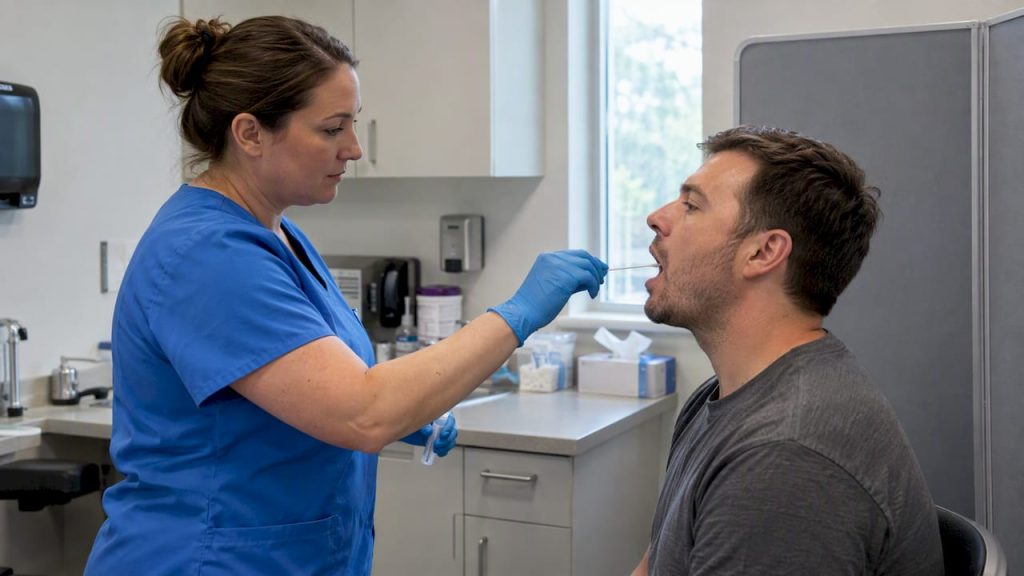
A workplace mouth swab test, also called an oral fluid test, is designed to catch very recent drug use rather than a long history of it. The detection window generally runs from about 5 to 48 hours after last use, so the main thing to plan around is timing, not months of abstinence. Expect either an instant on-site screen or a lab-confirmed result, and follow the collector’s instructions closely.
TL;DR:
- Mouth swab tests detect recent drug use within 5 to 48 hours, making timing critical for passing based on last substance intake.
- Results are subject to device sensitivity, with false negatives possible early or late after use, and variables like administration method and individual metabolism also affecting accuracy.
- To improve chances, avoid food, drink, mouthwash, and tobacco at least 10 minutes before testing, and verify your current status with an at-home screening device beforehand.
- Confirmatory testing with lab analysis and medical review officers is required for nonnegative screens to prevent false positives from affecting employment outcomes.
- THC detection in saliva varies widely and can sometimes extend beyond 48 hours for frequent users, especially with lower cutoff levels and more sensitive devices.
Table of Contents
- How does a mouth swab test actually work?
- How do detection windows compare across oral fluid, urine, and hair?
- How accurate are mouth swab tests, really?
- What should you do in the hours before a test?
- What happens if your result comes back nonnegative?
- Where PassUSA fits into getting this right
- What the conventional advice gets wrong
- Which PassUSA product matches your test type
- Sources
- FAQ
How does a mouth swab test actually work?
A trained collector, often from a third-party testing vendor, conducts the swab directly and watches the process from start to finish. This observed collection exists to prevent substitution or tampering, which is much easier to pull off with a urine sample than with saliva taken straight from your mouth.
Most devices use a pad or sponge-tipped stick that you hold against your cheek or under your tongue for one to several minutes until an indicator shows enough fluid has been collected. Some programs use an expectorant method instead, where you spit into a collection tube. Either way, the sample volume needed is small, and collectors are trained to recognize when it falls short.
Results come in two stages:
- Point-of-collection testing (POCT): an instant screen that gives a preliminary result in minutes.
- Laboratory confirmation: required for any nonnegative screen, with results typically back in 24 to 72 hours.
- Invalid or insufficient specimen: triggers a second attempt, sometimes after a short waiting period, rather than an automatic failure.
A negative screen usually ends the process on the spot. A nonnegative screen moves to confirmatory testing before anyone treats it as a true positive.
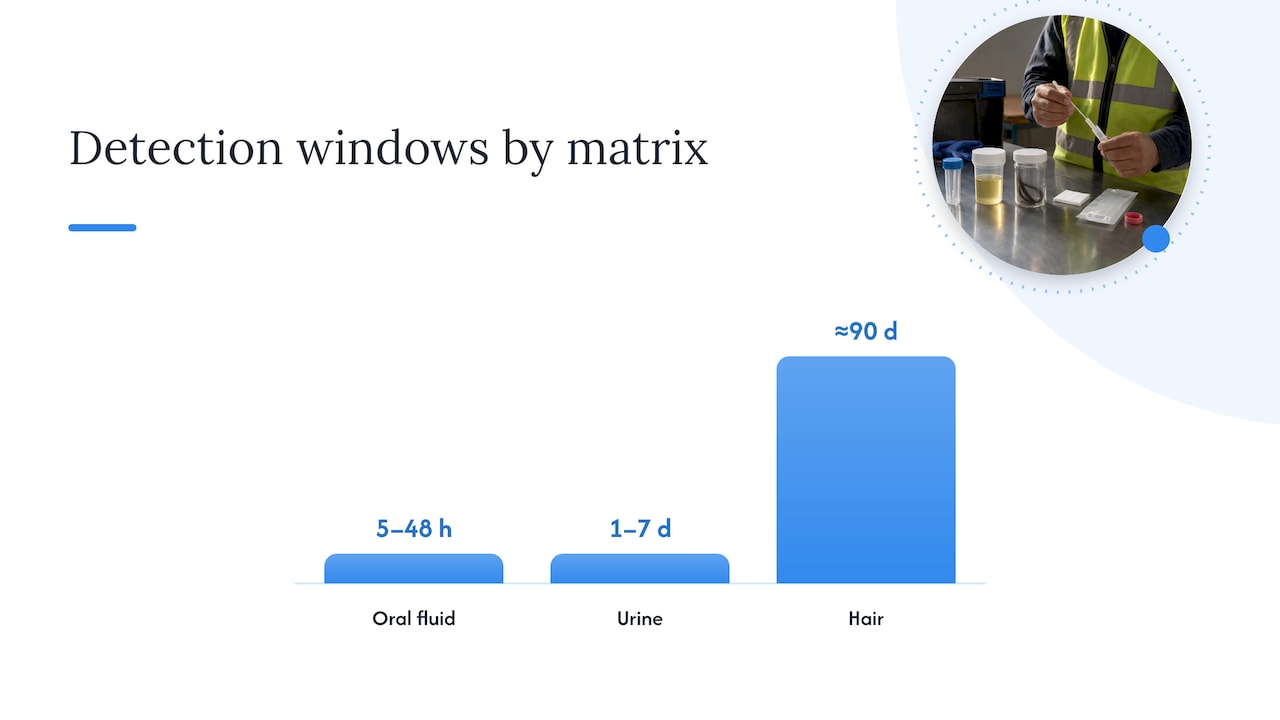
How do detection windows compare across oral fluid, urine, and hair?
Oral fluid’s short window is its defining trait, and it’s worth seeing next to the alternatives:
- Urine: roughly 1 to 7 days, depending on the substance, dose, and usage pattern.
THC behaves differently from most other substances in oral fluid. A meta-analysis of oral fluid THC concentrations found wide variability tied to dose, frequency of use, and route of administration, and some frequent users showed detectable THC beyond the typical 24 to 48 hour range. That matters for anyone assuming a standard cutoff applies evenly to occasional and daily users alike.
Cutoff levels and assay choice also shift what counts as detectable. A device set to flag lower concentrations will catch recent, light use that a less sensitive device misses entirely, so two labs testing the same person at the same time can produce different calls.
How accurate are mouth swab tests, really?
Accuracy depends heavily on which device is used and where the cutoff is set. A performance evaluation of point-of-collection THC devices found that sensitivity varies by device, with some producing false negatives at short intervals after use and improving only at later timepoints. In practice, that means an instant screen is a useful first pass, not a final verdict.
Several factors commonly confound a result:
- Device variability: different pad materials and chemistries react differently to the same sample.
- Route of administration: smoking, vaping, edibles, and other routes produce different oral fluid concentrations even at similar doses.
- Recent oral contamination: food, mouthwash, or certain drinks right before the test can interfere with collection.
- Timing relative to use: testing too soon or too late relative to last use changes what shows up.
- Chronic versus occasional use: regular users can retain detectable levels longer than occasional users.
- Metabolism: individual differences affect how quickly a substance clears from oral fluid.
A nonnegative screen is never treated as final on its own. Confirmatory testing at an HHS-certified laboratory, followed by Medical Review Officer review, is what resolves disputes over an initial result. Our own breakdown of why saliva tests can be harder to pass than other formats covers more of these accuracy quirks in detail.
Pro Tip: Ask the collector or HR what device and cutoff level your program uses. Programs with lower cutoffs catch lighter, more recent use.
What should you do in the hours before a test?
Preparation for an oral fluid test is mostly about timing and avoiding anything that could void your sample, not about long-term detox.
- Avoid food, drink, gum, tobacco, and mouthwash for at least 10 minutes before collection, and check whether your employer specifies a longer window, up to 60 minutes in some programs.
- If you take over-the-counter or prescription medications, bring documentation and disclose them to the collector or Medical Review Officer if asked.
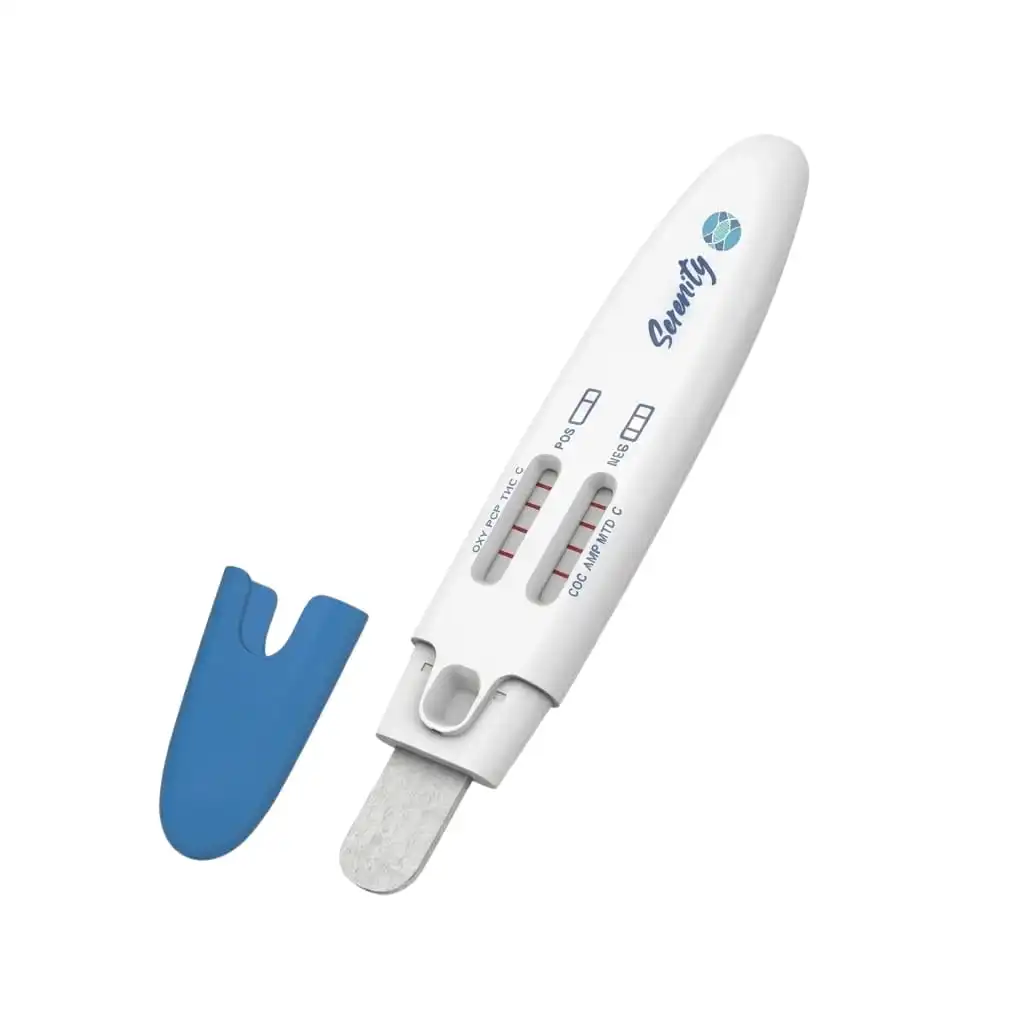
- If you’re considering using a product beforehand, verify your status first with an at-home oral fluid screening device rather than guessing.
- Never attempt substitution or tampering. Collectors are trained specifically to catch it, and refusal to test carries the same consequences as a confirmed positive in most workplace policies.
The SAMHSA oral fluid collection handbook describes standard procedures collectors follow, including mouth inspection and a prescribed wait window before collection, so there’s little room for surprise tactics on test day. If your test is close and you want a clearer read on where you stand, an at-home device gives you a real answer instead of a guess, and our guide to saliva drug testing tactics walks through how to use one properly.
Pro Tip: Run your own oral fluid screen the night before if timing allows. A clean result at home is the closest thing to a dry run you’ll get.
What happens if your result comes back nonnegative?
A nonnegative screen is a starting point, not a verdict. Here’s the typical sequence:
- Lab confirmation: the sample goes to an HHS-certified laboratory for confirmatory testing, which generally takes a day or two longer than the initial screen.
- Split specimen (A/B): federally regulated programs collect enough sample to split into two parts, so you can request testing of the B specimen if you dispute the A result.
- Medical Review Officer review: an MRO contacts you to discuss any legitimate medical explanation, such as a prescription, before a result is reported as positive to your employer.
- Disagreement steps: request documentation of the result, raise the issue with HR, and consider legal or medical counsel if the explanation doesn’t resolve the dispute.
This structure exists precisely because oral fluid screens can be wrong at the margins. The split specimen and MRO review are the formal checks that catch those errors before they affect your job.
Where PassUSA fits into getting this right
Some companies have built their approaches around the Macujo Method and have gathered customer testimonials over many years of experience. That experience shapes a simple philosophy: verify before you guess.
- Match the product to the test: saliva detox mouthwash is for saliva tests, a hair kit is for hair tests, and urine products are for urine tests. Mixing them up wastes money and time.
Our saliva testing guide and our hair test kit page both go deeper into which approach fits which situation, since hair, urine, and saliva each call for a different plan.
What the conventional advice gets wrong
Most advice on mouth swab tests either overstates how long detection lasts or treats every device as equally sensitive, and neither is accurate. The bigger risk isn’t a long detection window, it’s assuming you know your own timeline when THC behavior in oral fluid varies so much between occasional and frequent users.
The advice that gets repeated most, drink more water, chew gum, rinse your mouth, mostly addresses the wrong problem. Oral contamination tricks can backfire by triggering an invalid specimen result, which just means a second attempt under closer observation. The single highest-value move is verifying your actual status with a real device before the employer’s test, because a guess based on general detection windows isn’t the same as knowing your own result. Prioritize that over any mouth-rinsing routine you’ve seen online.
— Detox Experts
Which PassUSA product matches your test type
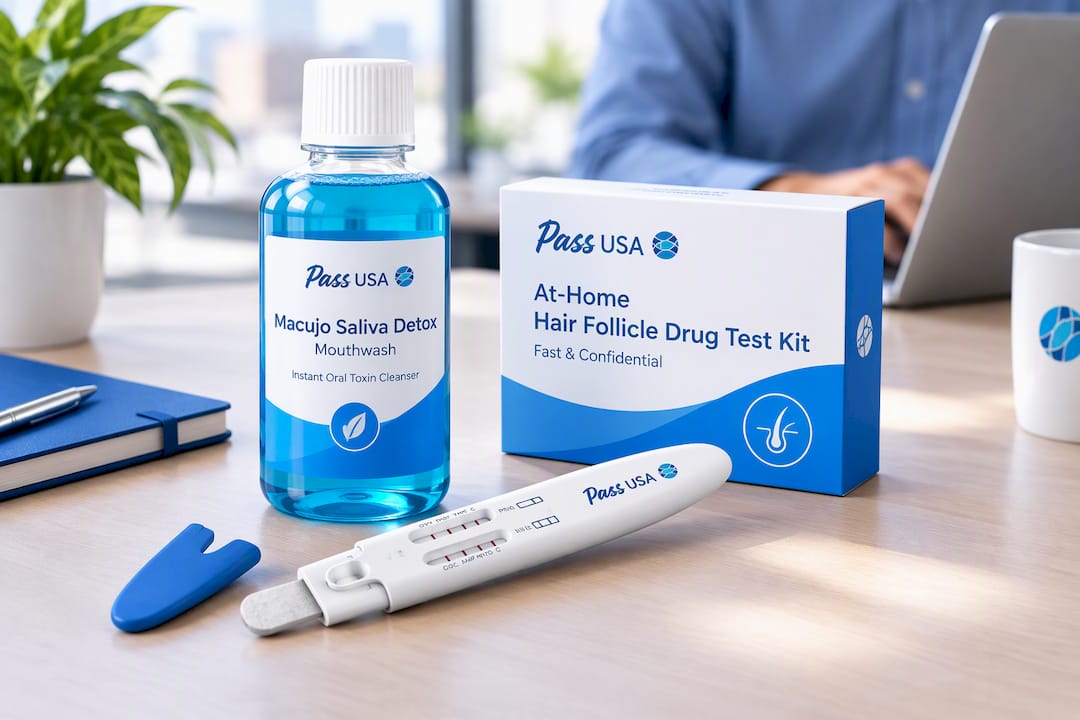
If you’re facing a saliva test and want to act on a product rather than guess, start by confirming where you stand, then choose the right tool for the test you actually have.
- Run an at-home oral fluid screen first to see your current status before relying on anything else.
- If you choose to use a product for a saliva test, the Macujo Saliva Detox Mouthwash is built specifically for that format.
- For hair follicle tests, which cover a much longer window than saliva, check the at-home hair follicle test kit to confirm your status before the real thing.
- If your test is imminent and you need personalized guidance, book a private consultation with Mike Macujo.
| Test type | Typical detection window | Relevant PassUSA option |
|---|---|---|
| Oral fluid | 5 to 48 hours | Oral fluid screening device, saliva detox mouthwash |
| Urine | 1 to 7 days | Urine test products |
| Hair | Up to about 90 days | At-home hair follicle test kit |
Pro Tip: Test at home before you test at work. A known result beats a hopeful guess every time.
Oral fluid tests are best understood as indicators of recent use, not a record of long-term history.
That framing, confirmed by Labcorp’s own guidance, is exactly why timing and verification matter more than any single trick. Browse the full range of hair, urine, and saliva test products to find the option that matches your situation, or reach out for a consultation if your test date is close.
Sources
- Mouth swab drug test — Medical News Today
- Workplace drug testing resources | SAMHSA
- Concentrations of Delta 9-tetrahydrocannabinol (THC) in oral fluid at different time points after use: An individual participant meta-analysis
FAQ
How to pass a mouth swab test for work?
The most reliable approach is avoiding recent use within the 5 to 48 hour detection window, since that’s what the test is built to catch. Avoiding food, drink, and mouthwash right before collection and following the collector’s instructions also reduces the risk of an invalid specimen.
What throws off a mouth swab test?
Recent food, drink, tobacco, or mouthwash use close to collection time can interfere with the sample and lead to an invalid or insufficient specimen rather than a clean result. Device sensitivity and cutoff levels also affect whether a given result comes back negative or nonnegative for the same person.
How far back can a mouth swab detect drugs?
Oral fluid tests generally detect use from about 5 to 48 hours before the test, which is much shorter than urine (1 to 7 days) or hair (up to 90 days). Chronic, frequent users of certain substances like THC can sometimes show detectable levels beyond that typical window.
How many days do you have to be clean to pass a mouth swab test?
There’s no single universal number, since detection depends on the substance, dose, and how often you use it, but oral fluid’s window is generally measured in hours rather than days, typically up to 48 hours. Frequent or heavy users of certain substances may need longer, since some studies found detectable THC beyond that standard range in chronic users.