


For an imminent hair test, a targeted product protocol like the Macujo Method beats natural DIY methods, because hair stores drug metabolites deep in the shaft where rinses and home remedies cannot consistently reach them. For urine or saliva tests, validated detox drinks or specimen-aware timing work better than water loading or detox teas alone. Natural methods alone carry the highest failure risk, especially for hair.
TL;DR:
- Natural detox methods like washing and vinegar rinses are ineffective at removing bonded drug metabolites from hair, which stay within the shaft.
- Bleaching or dyeing hair can reduce drug concentrations by about 40% to 60%, but does not reliably eliminate all metabolites or guarantee passing.
- Hair tests reflect drug use over months due to slow hair growth, making short-notice natural detoxification virtually impossible.
- Targeted protocols like the Macujo Method combine multiple steps to clean surface residues more effectively than DIY remedies.
- Aggressive hair treatments carry risks such as hair loss and scalp irritation, and should be used carefully within a structured, safe protocol.
Table of Contents
- How Hair, Urine, and Saliva Tests Detect Drug Use
- Natural or DIY Detox Methods and Their Scientific Limits
- Commercial Products and Targeted Protocols: the Macujo Approach
- Weighing Effectiveness and Safety for an Imminent Hair Test
- A Prioritized Checklist for an Imminent Test
- How Long Natural Detoxification Actually Takes
- Common Myths About Detoxing for a Hair Test
- Where Our Experience Fits Into This Picture
- Getting Ready for Your Test With the Right Tools
- FAQ
- Sources
How Hair, Urine, and Saliva Tests Detect Drug Use
Each test type works differently, and that difference explains why natural methods succeed more often with urine and saliva than with hair.
Hair testing typically reflects a window of drug history tied to hair growth, since scalp hair grows at a fairly steady rate and drugs become locked into the shaft as it forms. Metabolites enter hair through the bloodstream during growth, through sweat and sebum, and through external contact with smoke or residue. Once incorporated, they stay put. This is fundamentally different from urine, where the body clears most drug traces within days, or saliva, which reflects only the most recent use, often measured in hours to a couple of days.
Labs do not just run a single pass and call it done. For hair specifically, forensic protocols include:
- Wash procedures that remove surface contamination before testing the shaft itself.
- Metabolite-to-drug (MD) ratio analysis, which helps labs distinguish external exposure from actual ingestion, according to a systematic review of MD ratios.
- Segmental analysis, cutting hair into sections to map drug use over time.
- Confirmatory testing using GC-MS or LC-MS, which catches what simpler screening methods miss.
A forensic toxicology review of hair testing notes that distinguishing contamination from systemic incorporation is genuinely complex, which is why a quick home rinse rarely fools a confirmatory lab result. You can read more about how the hair detection window works if you want the full mechanics.
Natural or DIY Detox Methods and Their Scientific Limits
People try a long list of home remedies before a hair test, and most of them share the same weakness: they target the surface of the hair, not what is bonded inside it.
- Repetitive washing with regular shampoo strips oils but does not reach metabolites embedded in the cortex.
- Baking soda pastes and vinegar rinses change hair’s pH temporarily but have no demonstrated ability to pull out incorporated drug compounds.
- Bleaching or dyeing is the one natural-adjacent method with measurable lab backing, though it is more of a cosmetic treatment than a detox step.
A peer-reviewed study on cosmetic hair treatments found that bleaching or dyeing can reduce measured drug concentrations by roughly 40% to 60% on average, but it does not reliably eliminate metabolites entirely. That reduction sounds significant until you consider that a lab testing a sample already below the cutoff for one drug may still return a positive for another, or detect enough residual signal to flag the test.
For urine and saliva, the common natural moves are drinking extra fluids, trying detox teas, or leaning on cranberry-based remedies. These are inconsistent at best. Overhydration can trigger specimen validity checks that flag abnormal creatinine levels or dilution, which some labs treat as a red flag requiring a retest under observation.
The safety side matters too. The FDA has logged adverse event reports tied to aggressive hair-cleansing attempts, including hair loss, breakage, and scalp irritation, problems that can show up when people push DIY methods past what hair can tolerate.
Commercial Products and Targeted Protocols: the Macujo Approach
The Macujo Method takes a different strategy than simple washing: it combines a sequence of products designed to open the hair cuticle, strip external residue, and prepare the shaft before a specialized cleansing shampoo is applied. The idea is to address what sits on and near the hair’s outer layer rather than relying on one product to do everything.
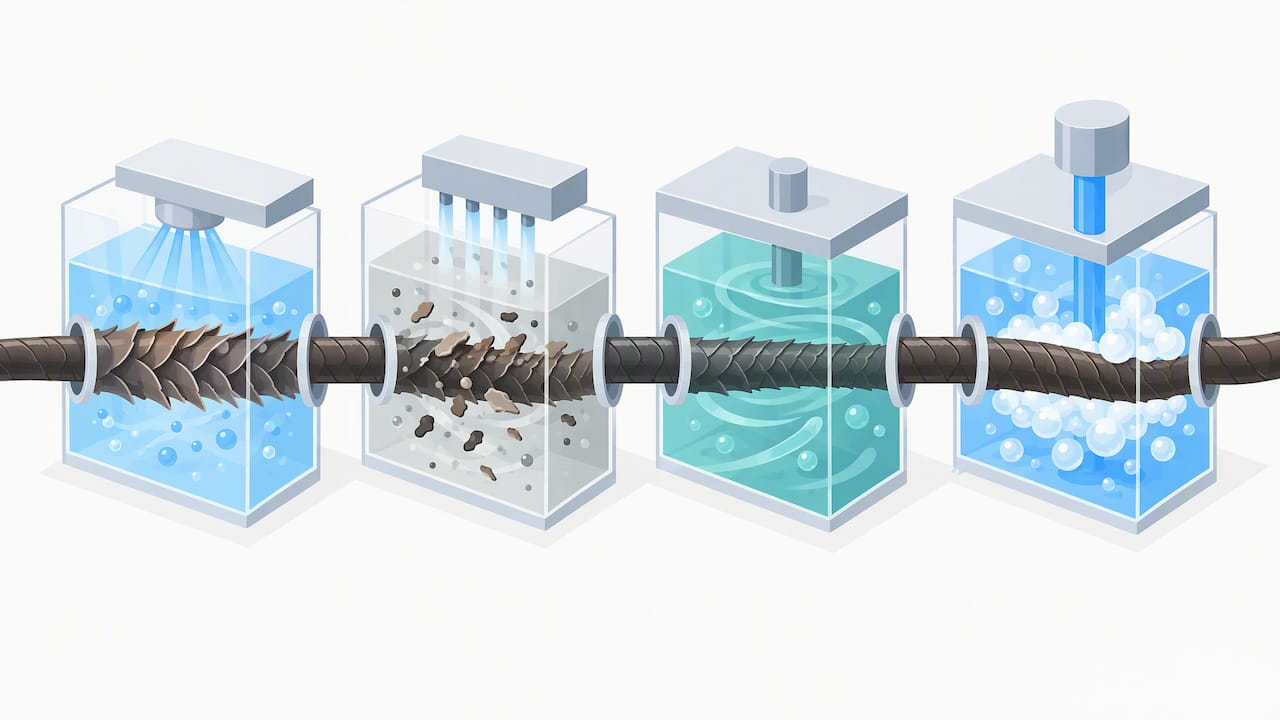
Pro Tip: Follow the protocol steps in order and avoid skipping the prep stage, since products applied to unprepared hair tend to underperform.
Within that same prep-and-cleanse philosophy, a few product categories serve specific jobs:
- Macujo Premium Detoxifying Tea functions as a natural herbal body flush, intended to support the body’s own elimination process ahead of a test.
- Macujo Premium Detox Drink is a fast-acting full body cleanse built for same-day or short-notice situations, with urine preparation as its primary focus.
- At-Home Hair Follicle Drug Test Kit lets you check your own result privately before walking into an official appointment, which turns guesswork into a verified checkpoint.
None of these claim to guarantee removal of every metabolite bonded inside the hair shaft. What a product-and-protocol combination realistically offers is a reduction in surface residue and a more controlled, repeatable preparation process than ad hoc home remedies. For someone facing a test in the next few days, that distinction between “surface cleanup” and “complete molecular removal” is the honest line to draw before choosing a plan.
Weighing Effectiveness and Safety for an Imminent Hair Test
Comparing natural methods to targeted products comes down to three questions: does it work, is it safe, and will a lab catch it anyway.
On effectiveness, cosmetic treatments like bleaching show a measurable average reduction of 40% to 60% in detected concentrations, but that is a population average, not a guarantee for any individual sample. Targeted protocols that combine a preparation step with a specialized cleansing shampoo tend to produce more consistent, repeatable results than a single cosmetic treatment applied on its own, because they address both surface buildup and the cuticle layer rather than one or the other.
On safety, the math changes. The FDA’s adverse event data on hair cleansing products documented over 1,400 reports of hair loss, breakage, and scalp reactions tied to certain conditioning products, a reminder that aggressive repeated treatments carry real physical risk, not just a chance of an unreliable result.
On detection risk, labs are not passive. Wash protocols plus MD ratio analysis mean a surface-level cleaning event rarely changes a confirmatory outcome when metabolites are already incorporated into the shaft, according to forensic toxicology research.
Where DIY might marginally help:
- Light, recent, low-frequency use, where fewer metabolites have had time to bind.
- Hair that has already been chemically treated for unrelated cosmetic reasons.
Where it likely will not help:
- Regular or heavy use over weeks or months.
- Any test with a short notice window and no time for a structured, multi-step protocol.
A Prioritized Checklist for an Imminent Test
When time is short, sequence matters more than volume. Here is a practical order of operations.
- Stop any aggressive DIY treatment immediately if you notice scalp irritation, breakage, or unusual dryness; damaged hair can draw extra scrutiny during collection.
- Choose a structured protocol rather than combining random home remedies, and follow the step-by-step comparison of natural versus commercial approaches to pick the right sequence for your situation.
- Document any recent cosmetic hair treatments (bleaching, dyeing, relaxing) since these can factor into how a lab interprets your results.
- Verify before the official test using an at-home hair kit so you are not walking in blind.
- For urine or saliva tests, use a validated detox drink exactly per its instructions, and avoid extreme overhydration that can trigger a specimen validity flag.
Pro Tip: If you experience scalp burning, swelling, or a rash during any cleansing protocol, stop immediately and rinse with cool water; persistent irritation warrants medical attention, not more product.
When a situation feels complicated (multiple substances, very short notice, or a failed at-home check), a guided consultation is worth more than guesswork at this stage.
How Long Natural Detoxification Actually Takes
Natural detox timeframes depend heavily on which test you are facing, and the honest answer is that hair offers almost no realistic natural timeline at all.
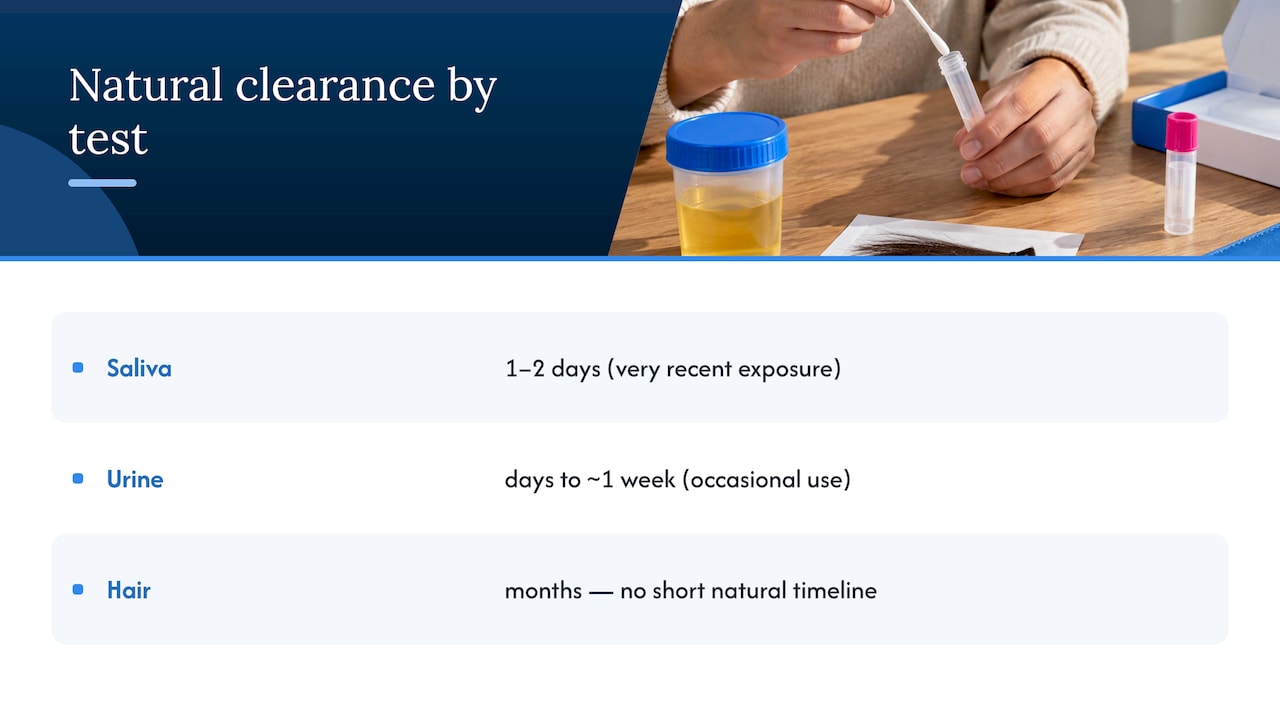
For urine, the body naturally clears most common substances within days to roughly a week for occasional use, though heavier or more frequent use extends that window considerably. Hydration and time are the only genuinely natural levers here, and they work on the body’s own clearance schedule, not an accelerated one.
For saliva, natural clearance is the fastest of the three matrices, often resolving within a day or two of last use, since saliva mainly reflects very recent exposure rather than stored metabolites.
For hair, there is no meaningful natural timeframe that changes results on short notice. Because hair growth is slow and metabolites are locked into the shaft as it forms, waiting it out would mean waiting for the affected hair to grow out, trim off, or be replaced, a process measured in months, not days. This is the core reason natural methods that work reasonably well for urine and saliva simply do not translate to hair. Anyone facing a hair test with only days of notice is working within a biological timeline that natural detox cannot shortcut, which is why product-assisted preparation exists in the first place.
Common Myths About Detoxing for a Hair Test
A few persistent myths lead people toward wasted time and damaged hair.
Myth: Regular shampooing multiple times a day will clear a hair test. Washing removes surface oils and some external residue, but it does not reach metabolites bonded inside the hair shaft, which is where the test actually looks.
Myth: Shaving your head guarantees a pass. Labs that encounter insufficient head hair can often collect from other body hair, which has its own, typically longer, detection window.
Myth: Bleaching completely removes all drug traces. Bleaching can meaningfully reduce measured concentrations, averaging a 40% to 60% drop, but it does not reliably eliminate metabolites, and uneven application can leave detectable sections.
Myth: Home remedies like apple cider vinegar or Listerine rinses work the same as lab-tested products. These lack the evidence base and targeted chemistry needed to address the cuticle and cortex the way a structured protocol does.
Myth: Any detox shampoo bought online will work the same way. A market review of online subversion products found many such products are marketed with unverified claims, with far more options targeting urine than hair, which means hair-specific claims deserve extra scrutiny before you rely on them.
Where Our Experience Fits Into This Picture
We have spent many years focused specifically on hair, urine, and saliva detox preparation, building a product lineup around the Macujo Method and backing it with personalized consultations rather than one-size-fits-all instructions. Many customers have worked through our process for imminent tests, which is why we pair every product sale with real guidance instead of leaving people to guess at a protocol. If you experience any adverse reaction during a cleansing routine, stop immediately and consider speaking with a medical professional; we would rather you pause than push through a reaction.
— Detox Experts
Getting Ready for Your Test With the Right Tools
If your test is days away, the fastest path is pairing the right product with the right protocol instead of improvising.
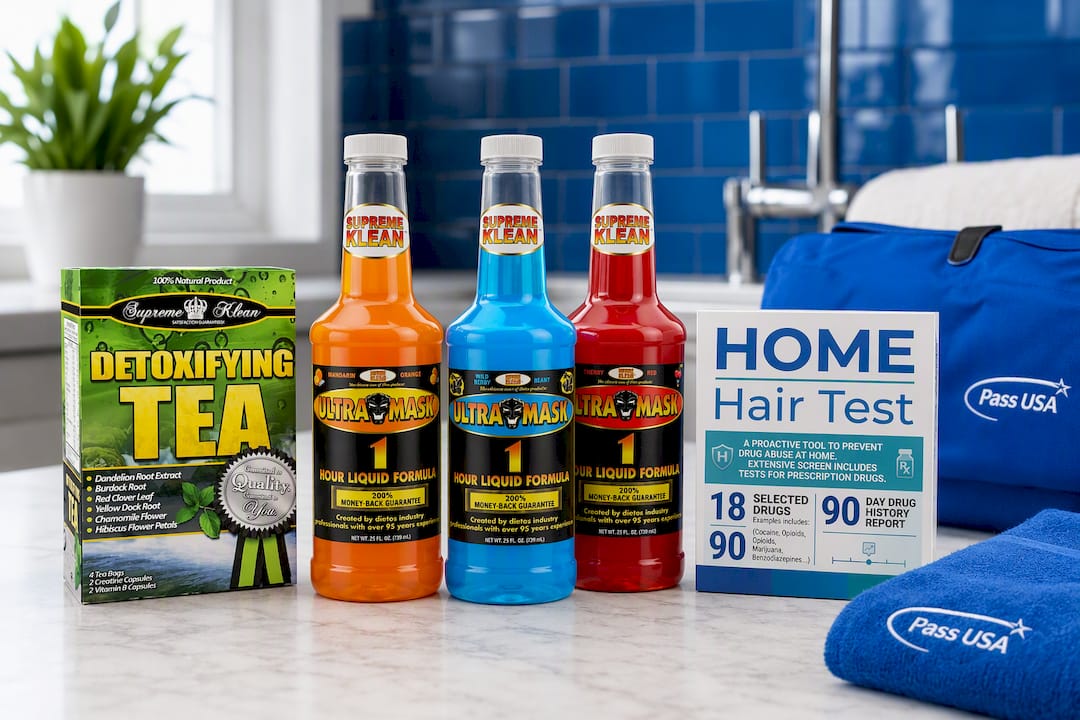
- Macujo Premium Detoxifying Tea supports a natural herbal body flush as part of your prep routine.
- Macujo Premium Detox Drink offers a fast-acting cleanse built for short-notice urine preparation.
- At-Home Hair Follicle Drug Test Kit lets you confirm your results privately before the real test.
- Private Consultation with Mike Macujo gives you a personalized walkthrough of the exact steps for your hair type and timeline.
We built our full product lineup around hair, urine, and saliva situations specifically, so you are not stitching together generic remedies on your own. Verify with an at-home kit, and book a consultation if you want someone to confirm your plan before test day.
FAQ
Can natural detox methods really pass a hair follicle test?
Natural methods like washing, vinegar rinses, or baking soda pastes mainly affect surface residue and rarely reach metabolites bonded inside the hair shaft. For most regular users, a structured product protocol offers a more reliable, repeatable result than natural methods alone.
Does bleaching or dyeing hair remove drug metabolites?
Bleaching and dyeing can reduce measured drug concentrations by roughly 40% to 60% on average, but they do not consistently eliminate metabolites completely. Uneven application can also leave untreated sections that still test positive.
How long does a hair follicle test detect past drug use?
Hair testing commonly reflects a detection window tied to the length of hair tested, often covering several months of history because hair grows at a fairly steady rate and locks in metabolites as it forms. This long window is a major reason natural detox methods struggle to change results on short notice.
Are detox drinks or teas effective for urine and saliva tests?
Detox drinks intended for urine preparation work on a much shorter biological timeline than hair, since the body naturally clears most substances from urine within days. Saliva clears even faster, but overusing fluids or teas can trigger specimen validity flags tied to dilution.
Is it safe to use aggressive hair-cleansing products before a test?
The FDA has received adverse event reports linking some hair-cleansing products to hair loss, breakage, and scalp irritation. Following a structured protocol as directed, rather than repeating aggressive treatments, reduces that risk.
Sources
- Influence of the cosmetic treatment of hair on drug testing
- FDA — hair cleansing products and adverse events
- A systematic review of metabolite-to-drug ratios of pharmaceuticals in hair
- DTAB minutes — prevalence of subversion products