


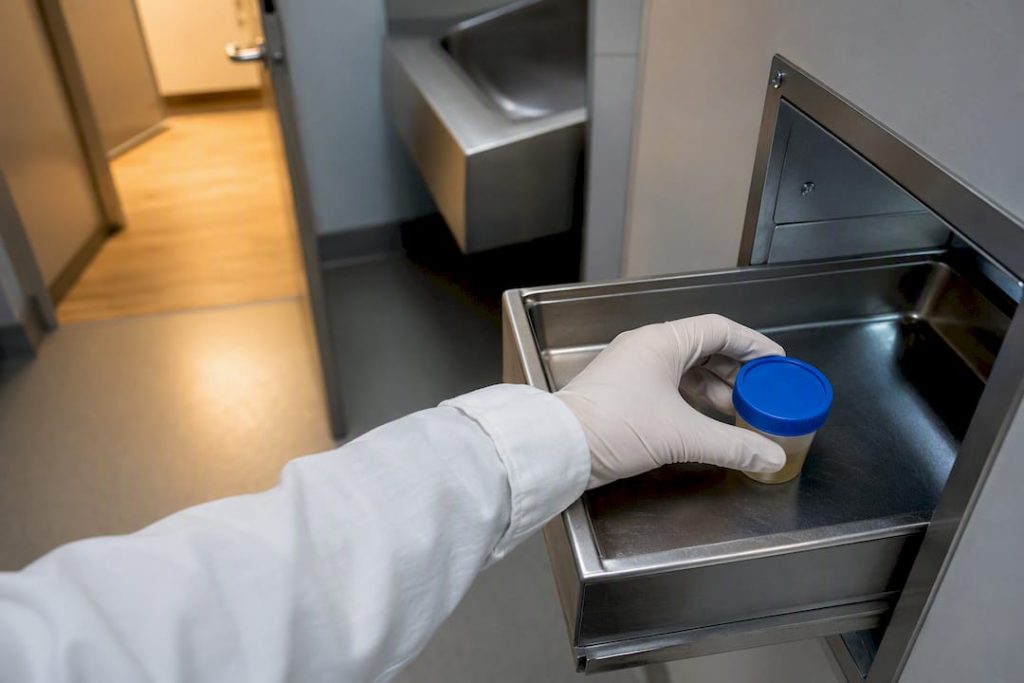
A negative dilute drug test means your sample came back negative for drugs but too watered down for the lab to trust its own reading. It is not a fail. Depending on the exact creatinine level, the DOT or your employer may require a retest, sometimes under direct observation. The Medical Review Officer (MRO) makes the call, and a resource like Passusa can help you understand the process and prepare properly before your next screening.
TL;DR:
- A negative dilute test indicates your sample was too watery for reliable drug detection but is not a failure; retesting may be required based on creatinine levels.
- Creatinine levels between 2 and 5 mg/dL automatically trigger an observed retest under DOT rules, while above 5 mg/dL often permits discretion.
- Drinking excessive water immediately before testing increases dilution risk, so steady hydration and pre-test self-checks can help prevent a dilute result.
- Medical conditions or prescribed diuretics can naturally cause dilute samples, which should be documented when retesting is necessary.
- Employers’ policies, especially DOT regulations, require specific protocols for handling dilute results, with refusal to cooperate being treated as a test refusal.
Table of Contents
- What “Negative Dilute” Actually Means on a Lab Report
- The Numeric Cutoffs That Define a Dilute Result
- Why Urine Comes Back Diluted in the First Place
- DOT and Employer Rules After a Dilute Result
- What To Do If You Get a Negative Dilute Result
- How To Avoid a Dilute Result Next Time
- Passusa’s Role in Test Preparation and Verification
- Why Fair, Transparent Policies Matter More Than Suspicion
- Get Ahead of Your Next Test With the Right Prep
- Sources
- FAQ
What “Negative Dilute” Actually Means on a Lab Report
Every urine screen actually produces two separate findings. The first is the drug result itself, positive or negative, based on an immunoassay screen for the substances the panel covers. The second is a specimen validity check, a set of measurements that tell the lab whether the sample is even usable.
A “negative, dilute” report means the drug screen came back clean, but the validity panel flagged the urine as too diluted to fully trust. The lab isn’t accusing you of anything. It’s simply saying the sample’s chemistry sits outside the normal range, which affects confidence in the result. The MRO reviews both findings together before deciding what happens next.
Typical checks in a validity panel include:
- Creatinine — a waste product from muscle metabolism; low levels suggest excess fluid.
- Specific gravity — measures how concentrated the urine is compared to water.
- pH — flags unusual acidity or alkalinity that can point to adulterants.
- Temperature — must fall within a narrow range at the moment of collection.
- Adulterant screen — checks for bleach, soap, or other substances added to mask results.
The Numeric Cutoffs That Define a Dilute Result
Labs don’t rely on guesswork. The specimen validity thresholds are precise, and where your sample falls determines what happens after the initial test.
A dilute specimen has creatinine between 2 and 20 mg/dL and specific gravity between 1.0010 and 1.0030. Fall below 2 mg/dL creatinine, and the specimen is usually called substituted rather than dilute, which triggers a much more serious review. The narrow range near the lower end of this spectrum matters most under DOT rules, because it’s the range that makes an observed recollection mandatory rather than optional.
| Result Type | Numeric Criteria | Typical Response |
|---|---|---|
| Dilute (low creatinine) | Creatinine 2–5 mg/dL | Mandatory direct-observed recollection |
| Dilute (higher creatinine) | Creatinine above 5 mg/dL, SG 1.0010–1.0030 | Employer discretion; may allow one retest |
| Substituted | Creatinine <2 mg/dL | Treated as a refusal in many DOT cases |
| Adulterated | Fails pH or adulterant screen | Treated as a refusal in most cases |
Why Urine Comes Back Diluted in the First Place
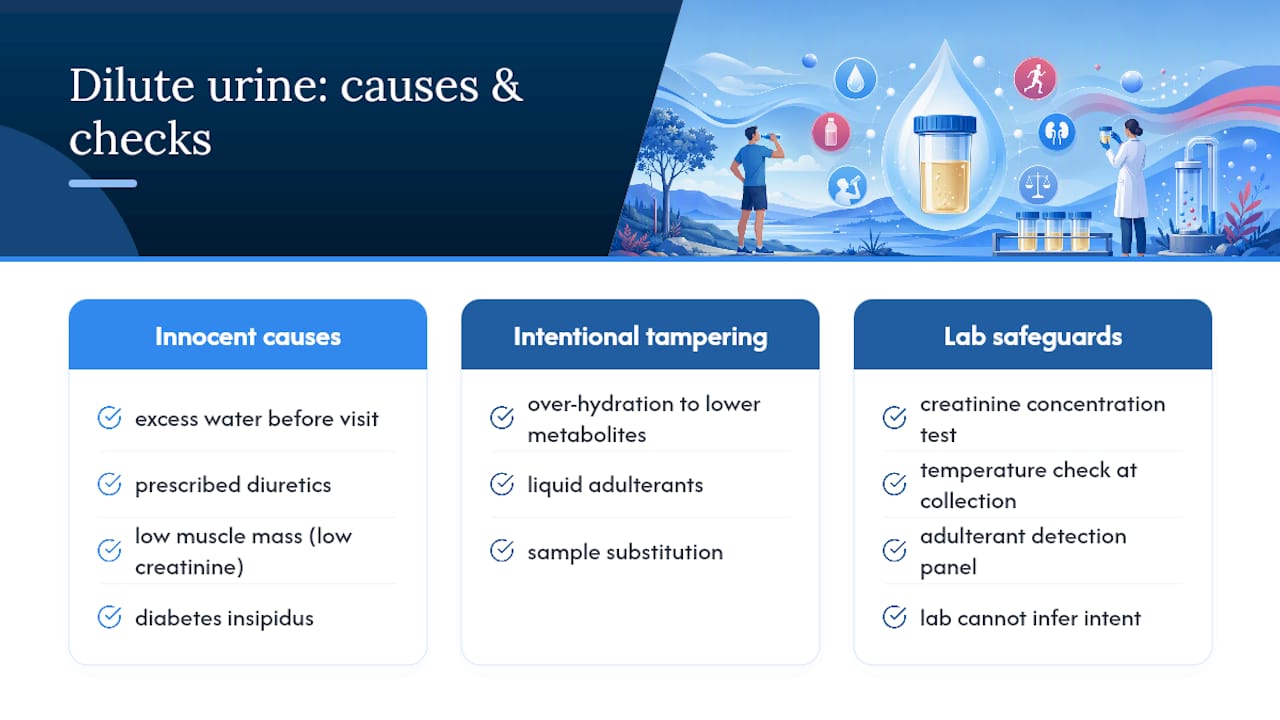
Most dilute results have a boring, innocent explanation. Someone drinks a lot of water before a doctor’s visit, takes a prescribed diuretic, or simply has lower muscle mass, which naturally produces less creatinine. Certain medical conditions, including diabetes insipidus, push fluid intake and output higher than average.
Other cases are less innocent. Some people intentionally over-hydrate right before collection hoping to dilute drug metabolites below the detection cutoff, and research on in vivo dilution confirms this can reduce THC detection in some cases. Others try liquid adulterants or outright substitution. Labs can’t read intent from a number on a report. That’s exactly why the temperature check and adulterant panel exist alongside the creatinine test, and why Healthline’s overview of diluted urine lists both hydration habits and tampering as recognized causes.
Pro Tip: If you have naturally low muscle mass, your baseline creatinine may already sit near the low end of normal. That alone can tip a sample into “dilute” territory without you doing anything unusual.
DOT and Employer Rules After a Dilute Result
DOT-regulated employers follow a strict, two-tier process laid out in 49 CFR §40.197. Here’s how it plays out step by step:
- The lab reports creatinine and specific gravity to the MRO along with the negative drug finding.
- If creatinine falls between 2 and 5 mg/dL, the MRO directs an immediate recollection under direct observation. No exceptions.
- If creatinine is above 5 mg/dL, the employer has discretion. It may accept the result or order one more test, but observation isn’t automatic.
- If the second specimen also comes back negative dilute, that result generally stands as final. No further dilution-based retesting is permitted outside a narrow MRO-directed exception.
Non-DOT private employers aren’t bound by these federal rules, but many adopt similar policies voluntarily for consistency and to reduce legal exposure. A few practical consequences to keep in mind:
- Refusing a required observed recollection is treated as a refusal to test under DOT rules, not a minor inconvenience.
- A refusal can mean immediate removal from safety-sensitive duties.
- Non-DOT employers set their own consequences, so a written policy matters more than assumptions.
What To Do If You Get a Negative Dilute Result
Don’t panic, and don’t skip steps. If you’re directed to retest, comply and note the exact timing since observed collections follow strict procedural rules that protect both you and the lab.
- Show up promptly for the retest and follow every instruction from the collection site staff.
- If you have a medical condition or medication that plausibly explains the dilution, such as a prescribed diuretic, gather documentation from your provider before the retest if possible.
- Submit that documentation to the MRO, who can factor it into the final determination.
- Request written clarification from the MRO or your Designated Employer Representative (DER) about what happens next, and keep copies of every email or letter.
Pro Tip: Never rely on memory for these conversations. A dated email asking the MRO to confirm your creatinine reading and next steps creates a record that protects you if the situation gets disputed later.
How To Avoid a Dilute Result Next Time
The biggest mistake people make is chugging water in the waiting room right before their appointment. That actually increases dilution risk instead of “flushing” anything useful, since the body hasn’t had time to reach a stable concentration. Studies on urine drug monitoring pitfalls point out that timing, not volume alone, drives dilution risk.
A few habits actually help:
- Drink water at a normal, steady pace throughout the day rather than in one large amount beforehand.
- Avoid diuretics like caffeine pills or water pills in the 24 hours before a scheduled test.
- Disclose any prescribed diuretics to the collection site or MRO ahead of time.
- Check your own concentration at home before an appointment using a clinical-grade urine dip card.
Pro Tip: A self-check dip card won’t diagnose drug use, but it will show you whether your creatinine and specific gravity fall in a normal range before you walk into a lab and risk a dilute flag.
Passusa’s Role in Test Preparation and Verification
Passusa offers personalized consultations and a catalog of detox and testing products to help people understand and prepare for drug screening.
For hair follicle test specifically, the Macujo Aloe Rid Shampoo method remains Passusa’s core offering, built to cleanse hair of surface toxins before a scheduled test. For urine and saliva screening situations, Passusa also offers self-verification tools:
- The 13-panel urine dip card lets you check your own sample’s concentration and drug status before a real appointment.
- The 12-panel oral fluid saliva test offers a fast alternate screening option for saliva-based tests.
- The Ultra Pure Synthetic Urine Kit is available as a lab-grade formula product; use of synthetic urine should always follow local law and the specific policy of the test in question.
Reach out to Passusa directly for a consultation if you have an upcoming test and want guidance tailored to your situation.
Why Fair, Transparent Policies Matter More Than Suspicion
Most negative dilute results are exactly what they look like: an innocent hydration or medical issue, not an attempt to cheat a test. Employers still have a legitimate safety interest in reliable results, which is why consistent, written retest policies matter so much. Arbitrary decisions erode trust on both sides. If you suspect a medical condition explains your result, talk to your doctor and ask the MRO directly for clarity rather than guessing.
— Detox Experts
Get Ahead of Your Next Test With the Right Prep
Most people don’t find out their sample was flagged until it’s too late to fix anything. Passusa gives you a way to check your status before that happens instead of after. For hair follicle test, the Macujo Aloe Rid Shampoo method is built specifically to work through the hair shaft and cleanse it of surface contamination ahead of a scheduled screening, and it remains Passusa’s flagship solution for anyone facing a hair test.
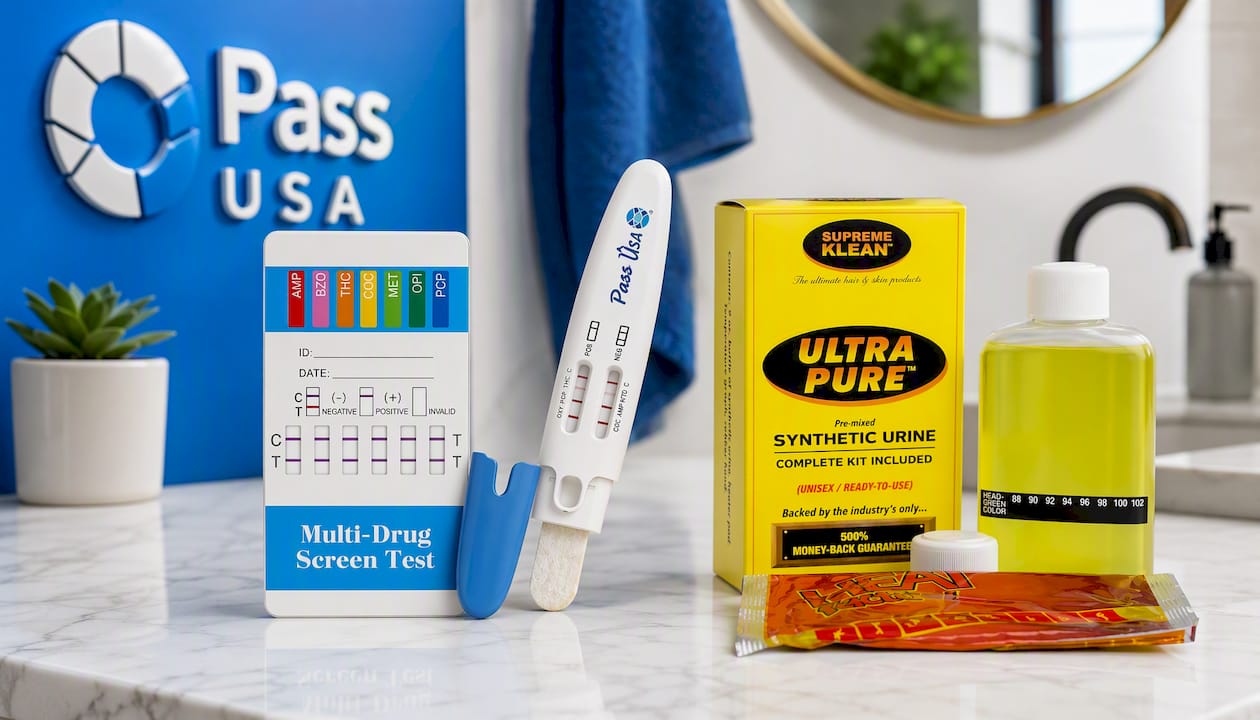
If your concern is urine or saliva screening instead, start by checking your own sample at home with the 13-panel dip card or the 12-panel saliva test before your actual appointment. Passusa also offers personalized consultations for anyone facing an imminent test who needs a specific plan rather than generic advice. Visit Passusa to browse the full product lineup and get a consultation started today.
Sources
- DOT Rule 49 CFR Part 40 Section 40.197 | US Department of Transportation
- 49 CFR § 40.197 – What happens when an employer receives a report of a dilute urine specimen? | LII / Legal Information Institute
- Urine drug monitoring: methods, interpretation, and pitfalls (PMC)
- Diluted urine: Causes, symptoms, and tests | Healthline
- Specimen validity checks and adulteration (UNC course material)
FAQ
Will Employers Accept a Negative Dilute Result?
Most employers accept it as a negative, but DOT-regulated employers may require an observed retest if creatinine falls between 2 and 5 mg/dL, and non-DOT employers set their own policies.
What Does It Mean If Urine Is Dilute?
It means the sample’s creatinine and specific gravity fall outside the normal concentration range, making the lab flag it for follow-up even though the drug screen itself was negative.
How Long After Drinking Water Will Urine Be Diluted?
Dilution can show up within an hour or two of heavy fluid intake, which is why chugging water right before a scheduled appointment often backfires instead of helping.
Can Diluted Urine Cause a False Negative?
Yes. Excess fluid can push some drug metabolites, especially THC, below the detection cutoff, which is one reason labs flag dilute samples for extra scrutiny.
How Can I Check My Own Urine Before a Test?
A clinical-grade urine dip card lets you check creatinine and specific gravity at home before your official appointment.