

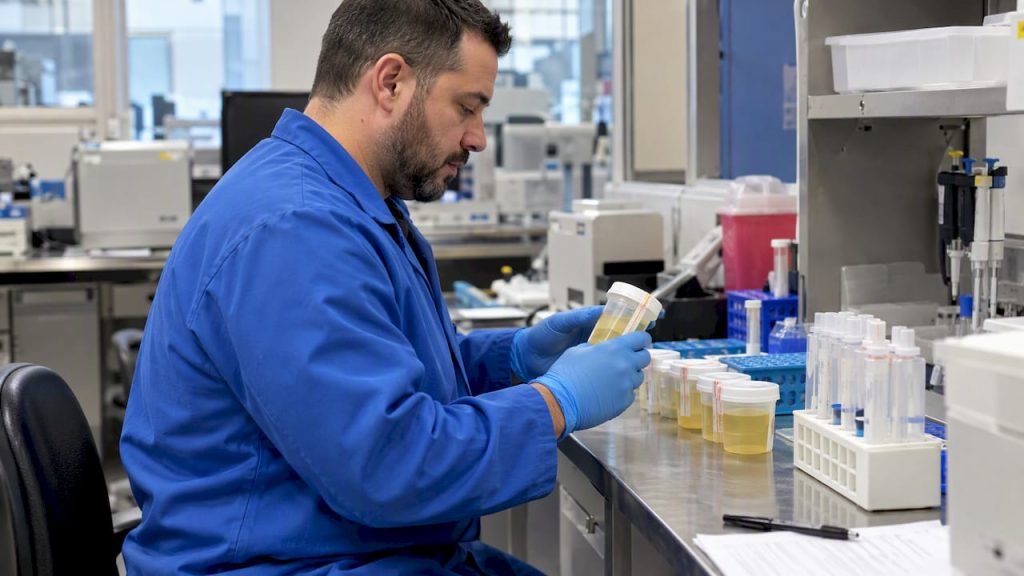
SAMHSA and HHS publish the federal cutoff concentrations that HHS-certified laboratories use for urine and oral fluid workplace drug testing, and hair testing has no federal cutoff standard at all. For urine, THC is reported at 50 ng/mL for initial screening and 15 ng/mL to confirm, while benzoylecgonine sits at 150/100 ng/mL. Every cutoff is expressed in nanograms per milliliter, a unit of concentration, not a measure of how impaired someone was.
TL;DR:
- For undiluted oral fluid, federal THC cutoffs are 4 ng/mL for screening and 2 ng/mL for confirmation; cocaine cutoffs are 15 and 8.
- A screening result at or above the initial cutoff triggers confirmatory testing and Medical Review Officer review; bring prescription records because verbal claims are weaker.
- Federal agencies and workplaces covered by DOT rules do not use hair tests; private employers set their own thresholds, so results can differ between laboratories.
- Labs check creatinine, specific gravity, and adulterants; if you dispute a federal result, ask the Medical Review Officer promptly about the split sample retest deadline.
Table of Contents
- Federal cutoff table for urine and oral fluid
- What a cutoff measures and how labs confirm a result
- Why hair tests skip federal cutoffs entirely
- If your screen comes back non-negative
- What 20 years of hair and urine prep has taught us
- Our take: the cutoff number matters less than people think
- Check yourself before test day
- FAQ
- Sources
Federal cutoff table for urine and oral fluid
The numbers below come from the HHS Mandatory Guidelines and the Federal Register notice on authorized testing panels, which set the analyte panels and cutoff concentrations that federally regulated labs must use. Oral fluid cutoffs come from the same guidance and cover undiluted, or neat, saliva samples.
Urine cutoffs (ng/mL):
Oral fluid cutoffs (ng/mL):
| Analyte | Initial cutoff | Confirmatory cutoff |
|---|---|---|
| THC | 4 | 2 |
| Cocaine/benzoylecgonine | 15 | 8 |
Some analytes are grouped under a single “target analyte” rule, meaning a lab screens for a parent drug and its metabolites together before confirming the specific compound detected. Fentanyl was added to the federally authorized panels in recent guidance, and donors should check the current SAMHSA Drug-Free Workplace FAQs page since panels and cutoffs are periodically revised. The 2026 notification reaffirmed existing panels while updating reporting nomenclature for several opiate analytes.
What a cutoff measures and how labs confirm a result
A cutoff is a line in the sand: any result at or above it is reported as non-negative, and anything below it is negative, regardless of how close the number sits to the line. SAMHSA designed these thresholds to catch genuine drug use while excluding trace amounts from passive exposure, such as secondhand smoke, and the agency is explicit that cutoffs do not measure impairment.
The testing process happens in two stages.
- An initial immunoassay screen checks the specimen against the lower initial cutoff for each analyte.
- Any specimen at or above that threshold moves to confirmatory testing using gas chromatography-mass spectrometry or liquid chromatography-mass spectrometry, which applies the stricter confirmatory cutoff.
- A Medical Review Officer then reviews the lab’s quantitative result, looks for a legitimate medical explanation such as a valid prescription, and issues the final verified result.
Labs report confirmatory numbers rather than a simple pass or fail, and some opiate results (particularly high morphine or codeine values) are reported following specific guidance tied to prescription use patterns.
Pro Tip: Keep a copy of any current prescriptions in your phone or wallet before a scheduled drug test so you can hand documentation to the MRO immediately if your screen comes back non-negative.
Why hair tests skip federal cutoffs entirely
Unlike urine and oral fluid, hair testing has never been added to the SAMHSA Mandatory Guidelines. The SAMHSA Drug-Free Workplace FAQs confirm there are no federally mandated cutoff levels for hair, which means each laboratory and each employer sets its own thresholds.
- Federal agencies and DOT-regulated employers do not use hair testing for mandated programs, so no federal cutoff exists for it.
- Private employers that choose hair testing rely on lab-specific cutoffs that can differ from one testing company to another.
- This lack of standardization is exactly why so many people facing a private hair screen look into preparatory approaches, including the Macujo Method and marijuana-specific hair detox guidance, instead of assuming one fixed number applies everywhere.
Because thresholds vary by lab, a result that passes at one facility could register differently at another, which makes a self-check before the official appointment genuinely useful.
If your screen comes back non-negative
A screening result at or above the initial cutoff does not mean you failed. It means the sample moves into a review process with several built-in checkpoints.
- The lab runs confirmatory GC-MS or LC-MS testing against the stricter confirmatory cutoff before reporting anything to your employer.
- The Medical Review Officer contacts you directly to discuss the result and ask about current prescriptions or medical conditions.
- Bring documentation, such as a pharmacy printout or a doctor’s note, to that MRO conversation since verbal claims alone carry less weight.
- Labs also run validity checks, including creatinine level, specific gravity, and adulterant panels, under 49 CFR Part 40, and a diluted, substituted, or adulterated specimen can be treated nearly as seriously as a confirmed positive.
- Federal programs allow a split-sample retest within a set window if you dispute the result, so ask your MRO about that timeline right away.
If you have time before a scheduled collection, checking your own urine sample with an at-home test first can tell you where you stand before the result becomes official.
What 20 years of hair and urine prep has taught us
We have spent more than 20 years helping people prepare for hair, urine, and saliva screenings, and the biggest lesson is that specimen type changes the entire strategy. An at-home hair test kit lets you see detectable analyte levels before a lab appointment, which matters precisely because hair cutoffs are not standardized and vary by lab.
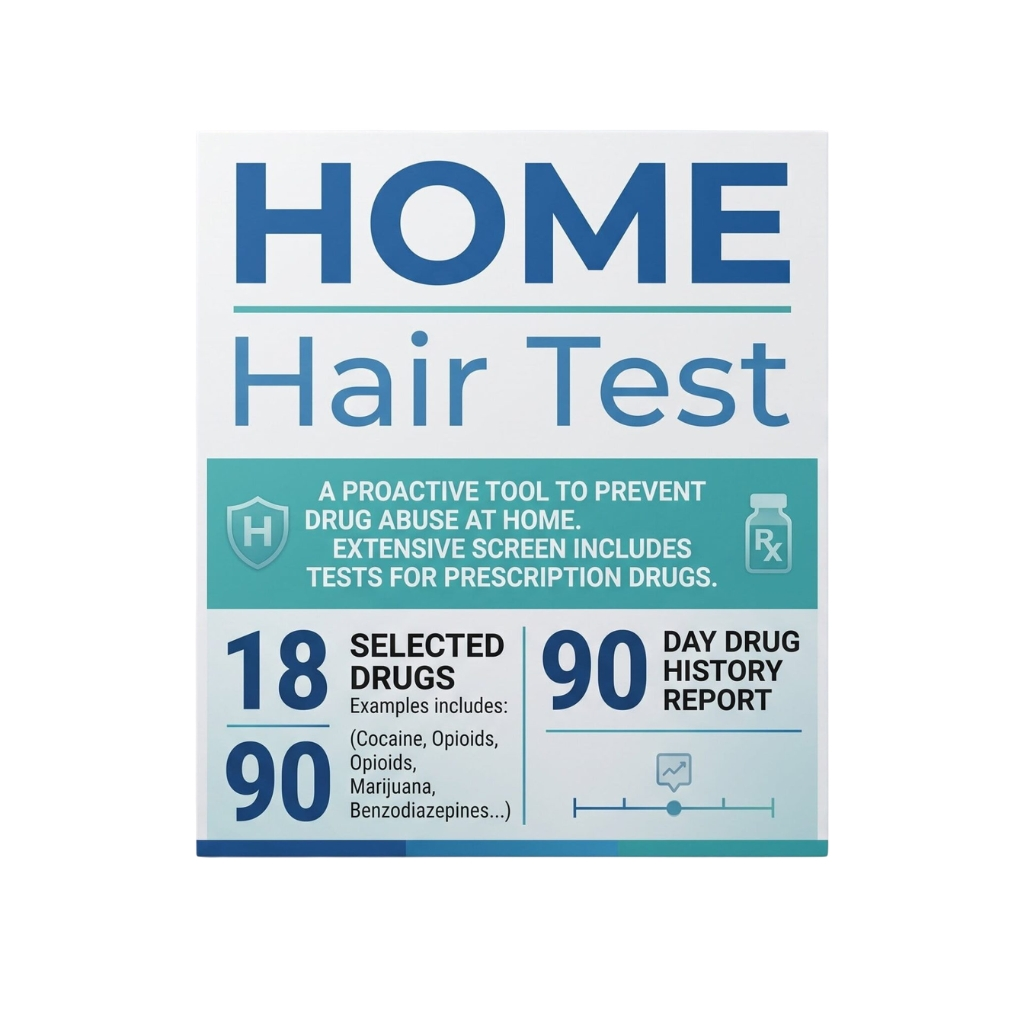
Our approach for hair, built on the Macujo Method, aims to work into the hair shaft and target metabolite buildup rather than just coating the surface. Results vary by hair type, usage history, and timing, so we never promise a guaranteed outcome. For urine and saliva, we also carry detox products built for self-testing before the real thing, and our private consultations walk you through which option fits your specific test date and specimen type.
Our take: the cutoff number matters less than people think
Most people searching for cutoff levels are hunting for a magic number that guarantees a pass, and that instinct misses the point. A cutoff tells you where a lab draws the line, not how your body will metabolize anything on a given day, and two people with identical usage histories can land on opposite sides of the same threshold depending on hydration, body fat, and timing.
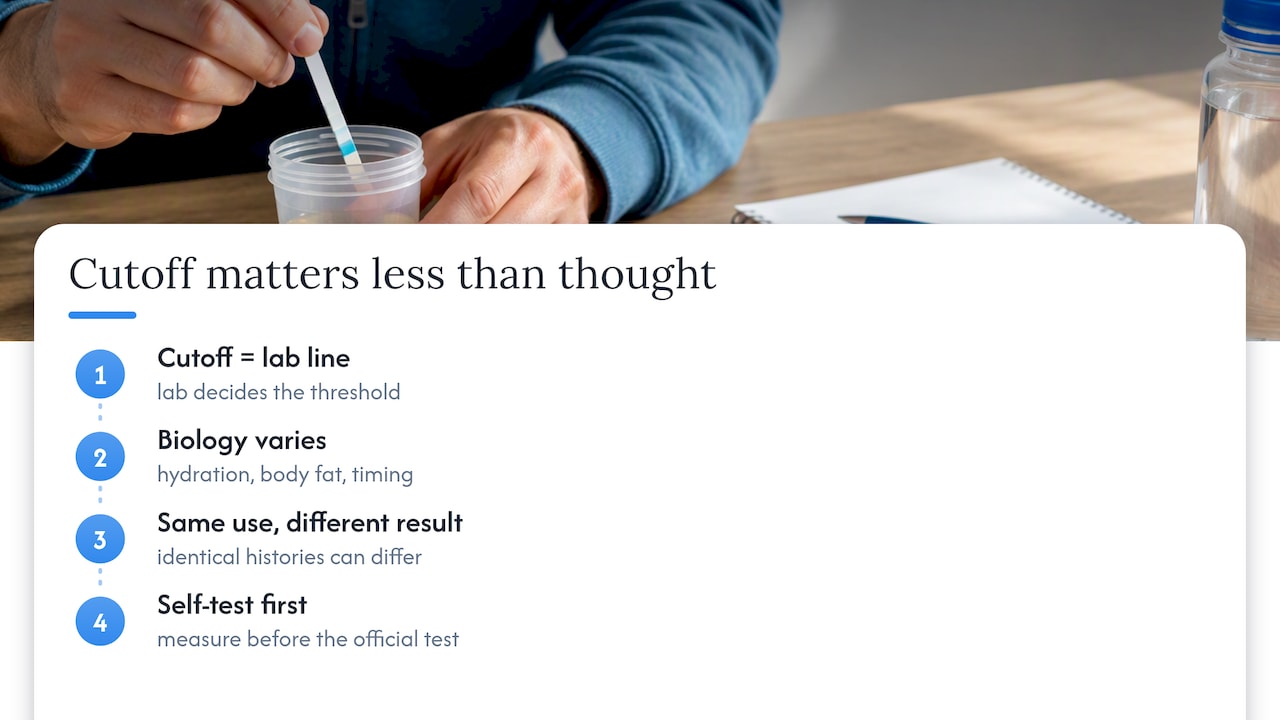
The conventional advice, “just wait it out,” also falls short for hair testing specifically, because there is no federal cutoff to wait under. Hair holds metabolites for months, and the absence of a SAMHSA standard means the lab your employer chooses, not a government chart, decides what counts as passing.
If we had to prioritize one thing, it would be this: test yourself before the test that counts. A self-check, whether for hair, urine, or oral fluid, turns a guessing game into a measurable data point you can act on while there’s still time to adjust.
— Detox Experts
Check yourself before test day
The clearest way to walk into a scheduled screening with confidence is to know where you stand first. Our 13-Panel Urine Drug Test Dip Card and 12-Panel Multi-Drug Oral Fluid Saliva Test give you a fast read on urine and saliva before the real appointment, and our At-Home Hair Follicle Drug Test Kit does the same for hair, where lab cutoffs vary the most.
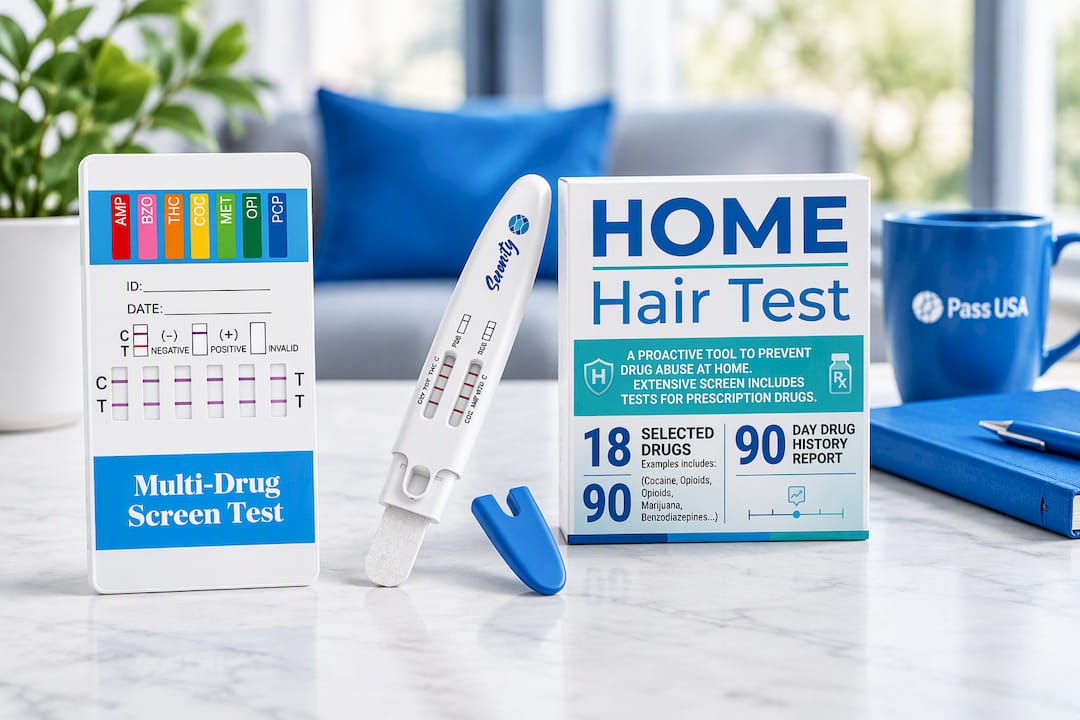
For a plan built around your specific test date and specimen type, book a private consultation with Mike Macujo and walk through your options one on one.
FAQ
What does SAMHSA certified mean?
A SAMHSA-certified laboratory has met HHS requirements for accuracy, chain-of-custody handling, and use of the official federal cutoff concentrations for urine and oral fluid testing. Certification applies to the lab’s process and equipment, confirmed through the HHS Mandatory Guidelines, not to any individual test result.
What does ng/mL mean?
Ng/mL stands for nanograms per milliliter, a unit measuring how concentrated a drug metabolite is in a fluid sample. Federal cutoffs are written in this unit because it allows labs nationwide to apply the exact same threshold consistently.
What is a positive cutoff?
A positive cutoff is the concentration at or above which a lab reports a sample as non-negative rather than negative. Initial screening cutoffs and confirmatory cutoffs differ, with confirmatory testing using a stricter, lower number for most analytes according to the HHS Mandatory Guidelines.
Can federal employees be drug tested?
Yes, federal employees and workers in DOT-regulated safety positions are subject to mandated urine and oral fluid testing under the SAMHSA and DOT framework. The SAMHSA Drug-Free Workplace FAQs note that sensitive positions often face random testing in addition to pre-employment screening.
Sources
- Federal Register: Mandatory Guidelines for Federal Workplace Drug Testing Programs-Authorized Testing Panels
- SAMHSA: Drug-Free Workplace FAQs
- DOT | 49 CFR Part 40 — Adulterant cutoff concentrations and reporting