


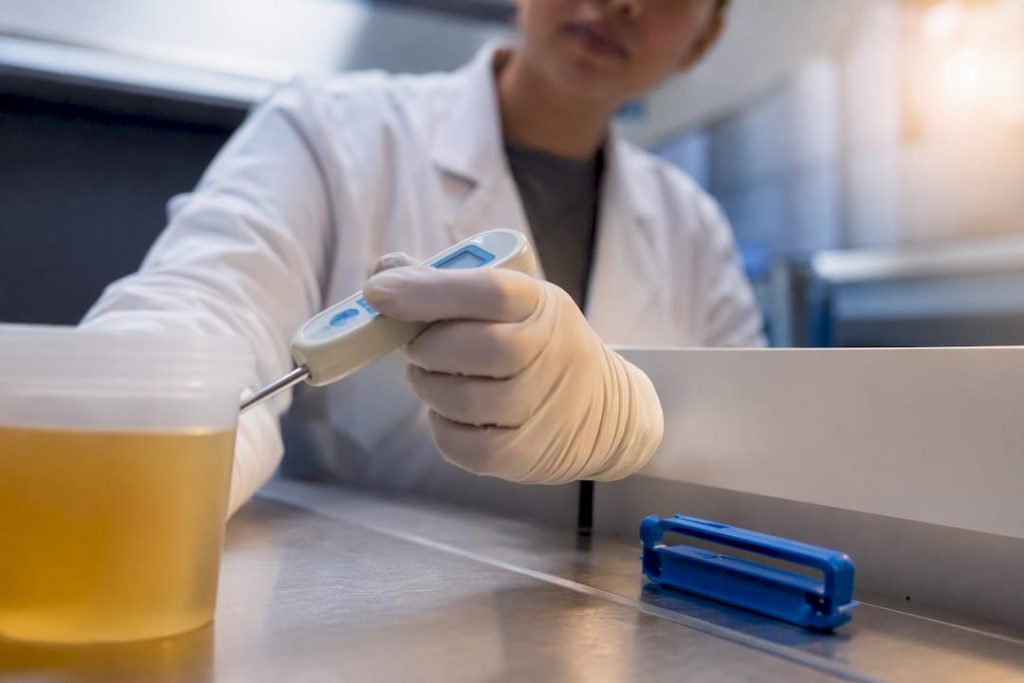
Specimen validity checks, creatinine, specific gravity, pH, oxidant tests, temperature, and visual inspection, are the lab’s tools to detect dilution, substitution, and adulteration of urine specimens. Each check flags a different form of tampering: low creatinine and specific gravity point to dilution, unusual temperature or texture suggests substitution, and abnormal pH or oxidant levels reveal added chemicals. When results fall outside expected ranges, labs often order confirmatory chromatography before reporting a final outcome.
TL;DR:
- Dilution caused by water loading leads to low creatinine and specific gravity, while substitution often fails temperature and visual checks during collection.
- Abnormal pH and oxidant levels indicate adulteration with chemicals like bleach or acids, which are detected through specific assay panels.
- Confirmatory testing with chromatography (GC/MS or LC-MS/MS) is used when initial results are suspicious or after tampering is suspected, increasing accuracy.
- Labs apply layered decision rules based on multiple markers to avoid false positives and determine whether a specimen is dilute, adulterated, substituted, or invalid.
- Specimens flagged for tampering are usually recollected under supervision or sent for additional testing, with attempts to cheat often resulting in invalid reports rather than clean passes.
Table of Contents
- What specimen validity checks actually measure
- How labs classify dilute, substituted, adulterated, or invalid results
- Common tampering methods and the signs that expose them
- When labs escalate to confirmatory testing
- Where our expertise comes from and how it applies to urine testing
- What to do if your specimen gets flagged
- How PassUSA supports hair, urine, and saliva testing prep
- Sources
- FAQ
What specimen validity checks actually measure
Specimen validity testing, or SVT, works by comparing several chemical markers against known human ranges. No single number tells the full story, so labs read them together.
- Creatinine is a metabolic waste product that reflects how concentrated urine is; very low levels suggest the sample was diluted with water or another liquid.
- Specific gravity measures dissolved solids in urine and works alongside creatinine to confirm whether a specimen is too watery to be normal human urine.
- pH should sit in a moderate range; a reading far outside that window often means an acid or base was added to interfere with testing.
- Oxidant and nitrite assays catch bleach, iodine, or other oxidizing agents that chemically damage the immunoassay reagents used in initial screening.
- Temperature and visual inspection happen at the collection site itself, checking that the sample is body temperature and has a normal color and clarity within minutes of collection.
According to Thermo Fisher Scientific, specimen validity testing combines’ creatinine, specific gravity, pH, and oxidant or nitrite assays with temperature and visual checks to detect substitution, adulteration, or dilution as a coordinated panel rather than isolated tests. Many collection sites use point-of-care dipstick strips for a fast first read, then send borderline samples to a laboratory analyzer for a more precise number.
How labs classify dilute, substituted, adulterated, or invalid results
Labs don’t rely on one abnormal number. They apply layered decision rules that combine creatinine, specific gravity, pH, and temperature before assigning a classification.
- A specimen with low creatinine paired with low specific gravity is typically called dilute, while creatinine and specific gravity values that fall outside the physiological range for human urine altogether point toward substitution, according to reference ranges compiled in a urine drug monitoring review.
- pH readings at the extreme low or high end signal a possible adulterant and typically trigger a confirmatory pH meter test rather than relying on the strip result alone.
- Temperature must register within roughly 90°F to 100°F within about four minutes of the void, per the same urine drug monitoring guidance; anything outside that window usually means immediate recollection under direct observation.
- Because a single abnormal marker can result from hydration, medication, or lab variance, most protocols require multiple abnormal findings, or one clearly outside physiological limits, before a specimen is formally reported as invalid.
That layered approach is designed to avoid false flags on legitimate specimens while still catching genuine tampering. Readers who want a deeper walkthrough of how creatinine, specific gravity, and temperature interact in a workplace urinalysis can see the full breakdown of urinalysis mechanics.
Common tampering methods and the signs that expose them
Every tampering method leaves a chemical fingerprint, and SVT is built to spot it.
- Water loading (drinking excess fluids or diluting the sample after collection) shows up as low creatinine paired with low specific gravity.
- Substitution with synthetic or someone else’s urine often fails temperature checks at collection and can show viscosity or appearance that looks off during visual inspection.
- Adulteration with oxidizers, acids, or bases shows up in abnormal oxidant or nitrite readings and extreme pH values.
- Common adulterant categories include household bleach-type oxidizers, acidic or alkaline powders, and commercial “cleansing” additives, all of which are caught by the oxidant and pH panels rather than the initial drug screen itself.
- Advanced synthetic formulas have narrowed the gap with real urine chemistry, which is why collector vigilance at the point of collection remains as important as the lab panel itself, according to a Forensic RTI white paper on specimen validity testing.
Pro Tip: A specimen that passes every SVT check at the lab still had to survive the collector’s temperature strip and visual check first, so the collection moment matters as much as the chemistry.
When labs escalate to confirmatory testing
Initial drug screening relies on immunoassay, a fast, low-cost method that can misfire when a specimen is chemically altered.
- Oxidizing adulterants and extreme pH can suppress immunoassay reagents entirely, sometimes producing a “super-negative” result that looks clean but isn’t reliable, per the urine drug monitoring review.
- When results look unexpected given the SVT profile, labs move to gas chromatography-mass spectrometry (GC/MS) or liquid chromatography-tandem mass spectrometry (LC-MS/MS), both far more specific than immunoassay.
- Confirmatory testing takes longer and costs more, so labs reserve it for flagged specimens rather than running it on every sample.
- In cases where tampering is strongly suspected, some programs move to blood or hair testing instead of repeating urine collection, since hair testing offers a longer detection window that’s harder to defeat through dilution or substitution.
Readers curious about how chromatography actually distinguishes a true positive from an interference can find more detail in this explainer on forensic toxicology methods.
Where our expertise comes from and how it applies to urine testing
Detox Experts write for PassUSA, a company built over more than 20 years around the Macujo Method, a hair-follicle detox approach designed to strip toxins from hair shafts before a follicle test. Hair testing is our core specialty, since hair carries a much longer detection window than urine or saliva and requires a fundamentally different cleansing approach than a same-day urine or saliva screen.
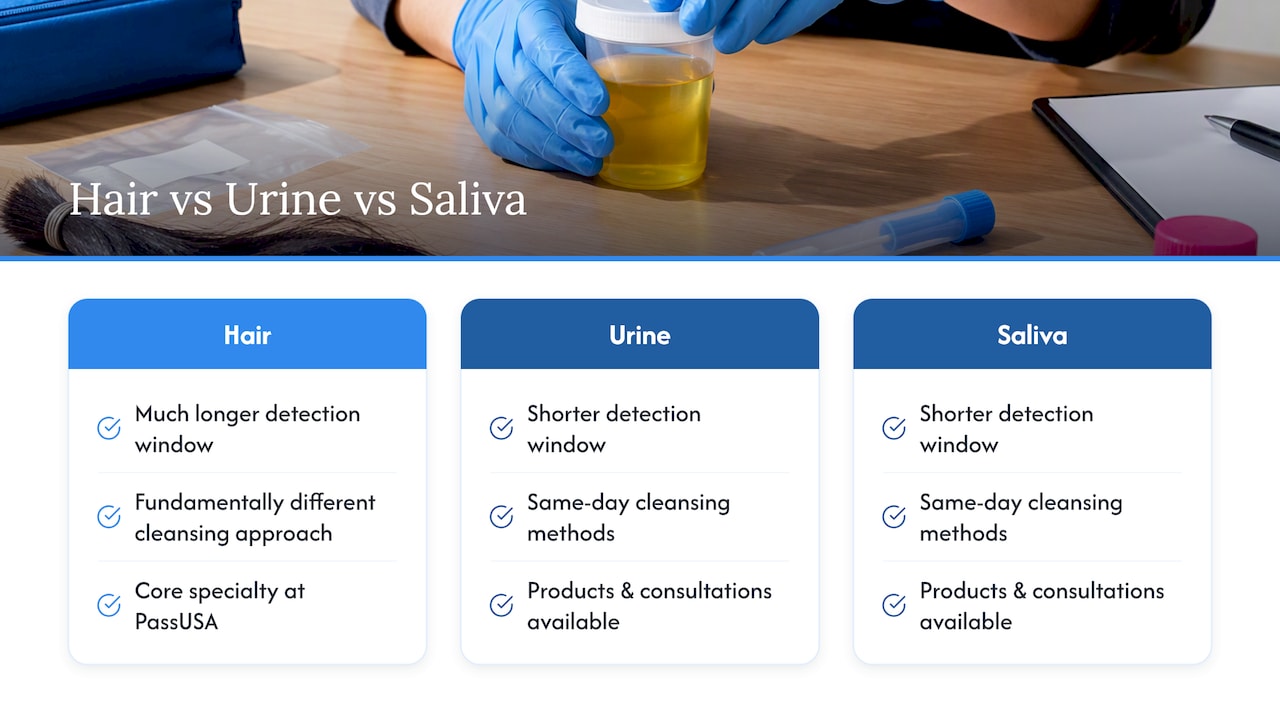
That said, plenty of readers face urine or saliva testing instead of, or alongside, a hair test. The company also offers urine and saliva test products and provides consultations for people trying to determine which testing situation they are facing. Anyone weighing options across hair, urine, and saliva test products can browse the full catalog before deciding which approach fits their timeline.
What to do if your specimen gets flagged
If SVT flags a urine sample, expect the collector or lab to request a fresh specimen, often under direct observation, or to route the original toward confirmatory testing rather than reporting a result outright. Attempting to beat validity checks through dilution, substitution, or additives frequently backfires. It tends to produce an invalid report and disciplinary consequences of of a clean pass. If you believe a flagged result is a genuine error, the reasonable path is to request confirmatory testing and talk to a medical provider or workplace representative before assuming the worst.
— Detox Experts
How PassUSA supports hair, urine, and saliva testing prep
Our main focus is hair-follicle prep through the Macujo Method, paired with our Aloe Rid shampoo line built to help cleanse hair of toxins before a follicle test. For readers facing a urine screen, a range of synthetic urine kits and related products are available.
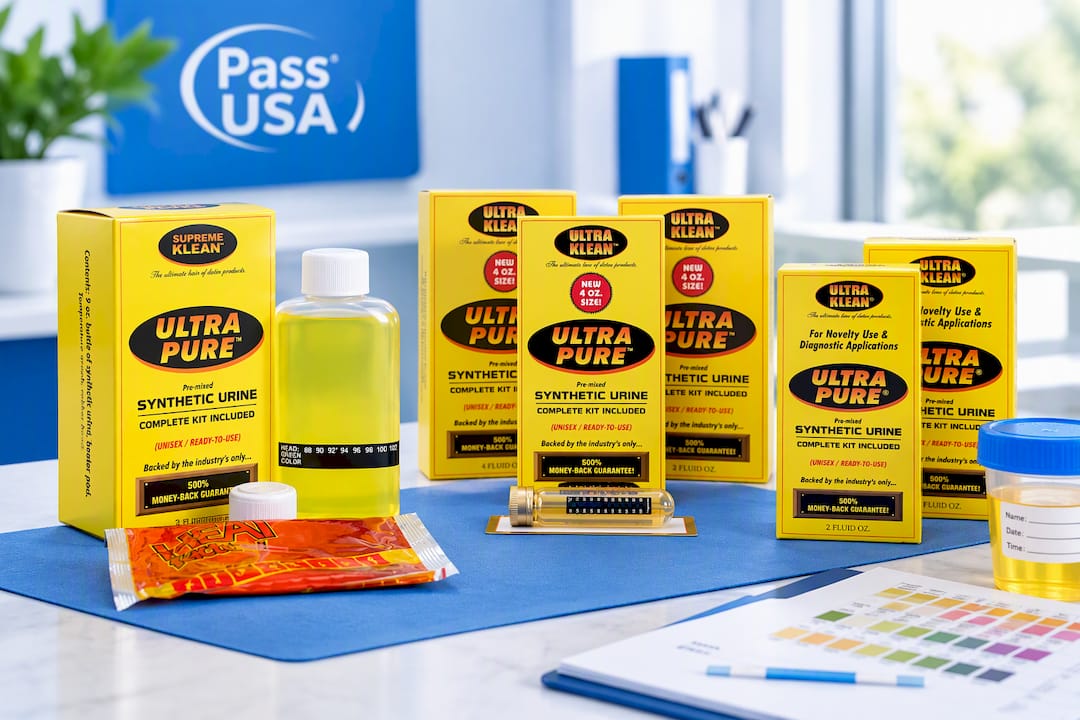
If you’re unsure which product fits your testing situation, a Private Consultation with Mike Macujo walks through your specific timeline and test type. Browse the full hair, urine, and saliva test product range to find the right starting point.
Sources
This article draws on a practical guide to urine drug monitoring, 49 CFR § 40.86 on validity testing requirements, SAMHSA workplace resources, a Forensic RTI white paper on SVT guidance, and Thermo Fisher’s specimen validity testing overview.
- Specimen Validity Testing | Thermo Fisher Scientific – US
- A practical guide to urine drug monitoring – PMC
- An introduction to specimen validity testing in workplace drug testing (ForensicRTI white paper, 2025/2026)
FAQ
What is a validity test for urine?
A validity test checks whether a urine specimen is consistent with normal human urine by measuring creatinine, specific gravity, pH, oxidant levels, temperature, and appearance. It’s designed to catch dilution, substitution, or added chemicals before the drug screen result is trusted.
How long does a urine sample stay valid for testing?
Labs expect a urine sample to be tested within a set collection window, with temperature checked within about four minutes of the void according to urine drug monitoring guidance. Beyond that, proper storage and handling matter more than a fixed shelf life, since temperature drift or contamination can affect later validity readings.
How far back can a urine test see?
Urine testing generally reflects recent use rather than a long history, since most substances clear from urine within days rather than weeks. Detection windows vary by substance and individual factors, which is one reason labs pair urine screening with confirmatory testing when results are unclear.
When is a urine sample considered invalid?
A sample is typically called invalid when multiple markers fall outside expected ranges, such as an abnormal pH combined with unusual oxidant levels, or when a single marker sits clearly outside physiological limits for human urine. Labs use these combined criteria specifically to avoid mislabeling a normal but unusual sample as tampered.