

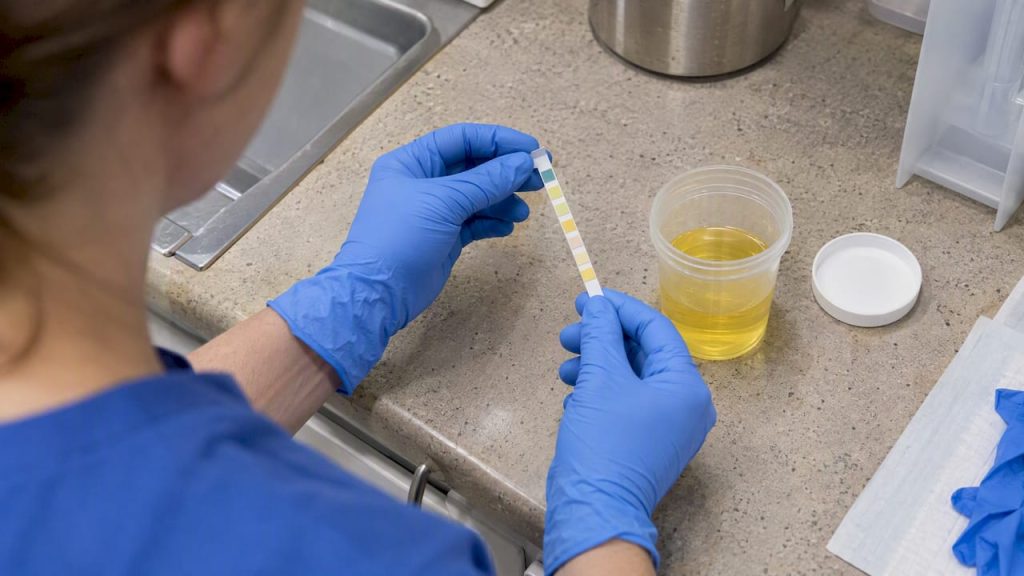
Urine pH is a specimen-validity marker that can force a recollection but does not by itself produce a positive drug finding. Under DOT specimen validity rules, labs check pH alongside creatinine and oxidizing adulterants. An abnormal reading usually triggers manual re-testing and Medical Review Officer (MRO) review, not an automatic tampering verdict. Clinical pH ranges also differ from lab cutoffs, as MedlinePlus explains.
TL;DR:
- Clinical urine pH typically ranges from 4.6 to 8.0, while laboratory readings from 9.0 to below 11.0 are generally classified as invalid.
- Readings from 9.0 to 9.5 prompt checks of transport time and temperature; warm storage can raise pH to about 9.1 to 9.3.
- Potassium citrate, sodium bicarbonate, some diuretics, urinary infections, and kidney conditions can raise pH; keep eating normally and never stop prescriptions without medical advice.
- DOT collections require at least 45 mL in one void; shy bladder procedures permit up to 40 ounces of controlled fluids over three hours.
- A study found pH levels from 9.0 to 9.5 reduced benzoylecgonine, PCP, and the heroin marker 6 AM in tests; losses increased with storage time.
Table of Contents
- How do labs use urine pH to check a specimen?
- What pH numbers trigger an invalid or adulterated result?
- What causes abnormal urine pH?
- Which drug analytes does high pH affect?
- What happens if your specimen is reported invalid for pH?
- How can you lower the risk of an invalid pH result?
- Detox Experts’ perspective on urine pH and test preparation
- Where can you get urine test products and personal guidance?
- FAQ
- Sources
How do labs use urine pH to check a specimen?
Think of pH as one gate in a larger validity workflow. Every primary specimen in a regulated test gets pH, creatinine and oxidizing-adulterant checks, and the federal MRO guidance manual notes that dilution and low creatinine often matter more than pH for dilute or substituted classifications. Our overview of how labs judge urine test validity covers the temperature side of the same process.
Here is who does what:
- The collector checks temperature within four minutes and confirms at least 45 mL, as DOT collection rules require. Separate voids may not be combined to reach the minimum.
- The laboratory runs an automated pH check first. When that reading is out of range, Drug Testing Advisory Board minutes describe manual pH meter confirmation, typically two manual tests before anything is reported invalid.
- The MRO evaluates unexpected results and decides the next step under 49 CFR 40.159.
What pH numbers trigger an invalid or adulterated result?
Clinical and laboratory ranges are not the same thing. A typical clinical urine pH runs from about 4.6 to 8.0, according to MedlinePlus. Validity cutoffs sit higher.
- Invalid: pH from 9.0 up to, but not including, 11.0 is often reported as invalid.
- Adulterated: pH of 11 or above.
- Borderline zone: readings from 9.0 to 9.5 usually prompt review of transport time and temperature, not an automatic adulteration finding.
- Higher readings: pH above 9.5 calls for review. Warm transport can explain some elevated readings, but the result alone does not establish a cause.
SAMHSA/NLCP materials report that pH can climb to about 9.1 to 9.3 during warm storage. That is why a lab treats a slightly alkaline result as a question to investigate rather than a conclusion.
What causes abnormal urine pH?
Plenty of legitimate things move pH, which is the reason labs and MROs separate natural causes from tampering. MedlinePlus lists these:
- Higher pH: potassium citrate, sodium bicarbonate, acetazolamide, ammonium chloride, methenamine mandelate, thiazide diuretics, urinary tract infection, kidney conditions and vomiting.
- Lower pH: the causes depend on the person and the testing context.
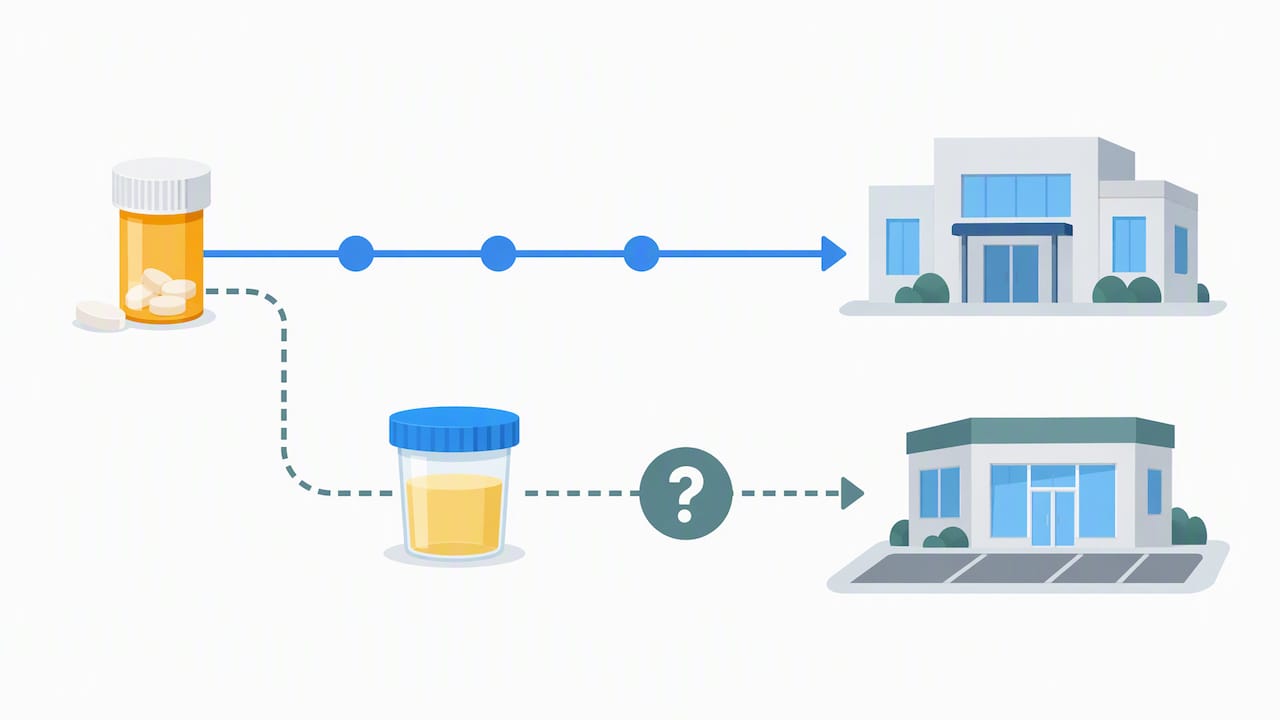
- After collection: during warm transport, bacteria convert urea to ammonia, which can push pH to roughly 9.1 to 9.3, per the SAMHSA/NLCP materials above.
Diet and illness play a role too. MedlinePlus recommends eating normally for several days before a urine pH test and notes no evidence-based reason to fast or manipulate food to change a result.
Pro Tip: Never stop a prescribed medicine to “fix” your pH. MedlinePlus advises against it, and your prescriber, not the collection site, should make that call.
Which drug analytes does high pH affect?
The SAMHSA/NLCP evaluation cites a 2006 study in which three compounds were affected at pH 9.0 to 9.5 under test conditions:
- Benzoylecgonine (BZE), the main cocaine metabolite.
- PCP.
- 6-acetylmorphine (6-AM), a heroin marker.
Losses were time dependent, so how long a specimen sat before analysis matters. A practical review of urine drug monitoring explains that initial immunoassay screening is qualitative and that confirmatory chromatography (GC/MS or LC-MS/MS) is used when results are unexpected. The practical impact depends on how far a concentration sits from its cutoff and how long the sample waited.
What happens if your specimen is reported invalid for pH?
Expect a defined procedure, not a surprise verdict.
- The lab repeats pH with a manual meter and reports invalid if both manual tests are out of range.
- The MRO reviews borderline results, including transport time and temperature, and may order another collection under direct observation.
- If you cannot provide 45 mL, shy-bladder procedures allow controlled fluids over a set window, up to 40 ounces over up to 3 hours.
- Tell the collector or MRO about any prescriptions and bring documentation.
An invalid result is not automatically a positive, and the exact path depends on your testing program.
How can you lower the risk of an invalid pH result?
Most fixes are simple and procedural.
- Follow the collector’s instructions exactly and disclose every prescription.
- Give the full volume in a single void whenever possible.
- Never add household chemicals. Thermo Fisher guidance warns that vinegar, lemon juice, bleach, ammonia, soap and similar additives create extreme pH values and other signs of tampering.
- For temperature worries, read our guide to keeping urine warm safely instead of reaching for additives.
- Skip the water-chugging myth, and see why labs flag dilution in our water explainer.
Pro Tip: An at-home dip card may offer a preliminary check, but it cannot guarantee a test result.
Detox Experts’ perspective on urine pH and test preparation
We see pH as one validity marker among several, which makes manipulation attempts a poor bet. Warm transport can raise urine pH, and labs and MROs use procedures to assess possible causes of an abnormal result. Our core expertise is hair testing and the Macujo Method, but we also support urine and saliva testing, including private consultations. Preparation works best when it is evidence-based and safe.
— Detox Experts
Where can you get urine test products and personal guidance?
Our main focus is hair follicle test preparation, including Macujo Aloe Rid Shampoo, and we support urine and saliva tests as well. For urine, these are the options we offer:
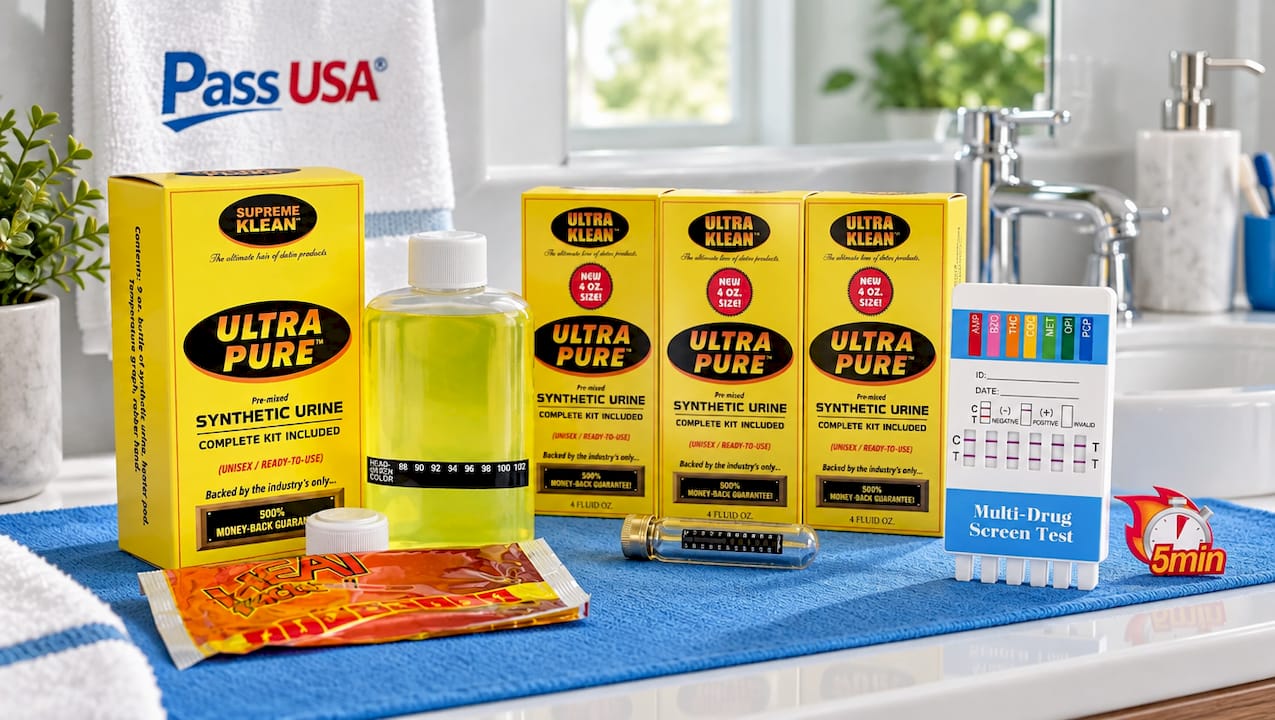
- Ultra Pure Synthetic Urine Kit, Laboratory Grade Formula.
- Ultra Pure Synthetic Urine Kit, Laboratory Grade Multi-Pack Bundle for those who want more than one kit.
- Urine Drug Test Dip Card, Clinical Grade, Includes Fentanyl for at-home checks.
- Private Consultation with Mike Macujo for personalized guidance; current pricing details are on PassUSA’s site.
Before using synthetic urine, read our notes on synthetic urine and validity testing risks. These are commercial products and consultations, so follow legal and medical guidance in your situation. You can browse our hair, urine and saliva lines at PassUSA, or book a consultation to talk through your specific test.
This article is general information, not a substitute for advice from a qualified doctor. Consult a qualified healthcare professional about your own circumstances before acting on anything here.
FAQ
What drugs can increase urine pH?
Medicines such as potassium citrate, sodium bicarbonate, acetazolamide, ammonium chloride, methenamine mandelate and thiazide diuretics can raise urine pH, according to MedlinePlus. Urinary infections and kidney conditions can too. Do not stop a prescription without medical advice.
What not to eat before a urine test?
MedlinePlus recommends a normal, balanced diet for several days before a urine pH test. It finds no evidence-based need to fast or avoid particular foods to change a drug-test result. Disclosing prescriptions and following collector instructions matters more.
How much urine is needed for a sample?
A regulated DOT collection needs at least 45 mL, per 49 CFR 40.65. Separate voids cannot be combined to reach it. If you cannot provide enough, shy-bladder procedures allow controlled fluids over a set time.
Does high urine pH mean a positive drug test?
No. An out-of-range pH is a validity finding that can lead to manual re-testing, MRO review and recollection. 49 CFR 40.159 says the MRO may assess transport time and temperature before deciding next steps.
Sources
- Transportation
- Transportation
- Law
- Urine pH test: MedlinePlus Medical Encyclopedia
- Evaluation of the Cutoff for Invalid pH