


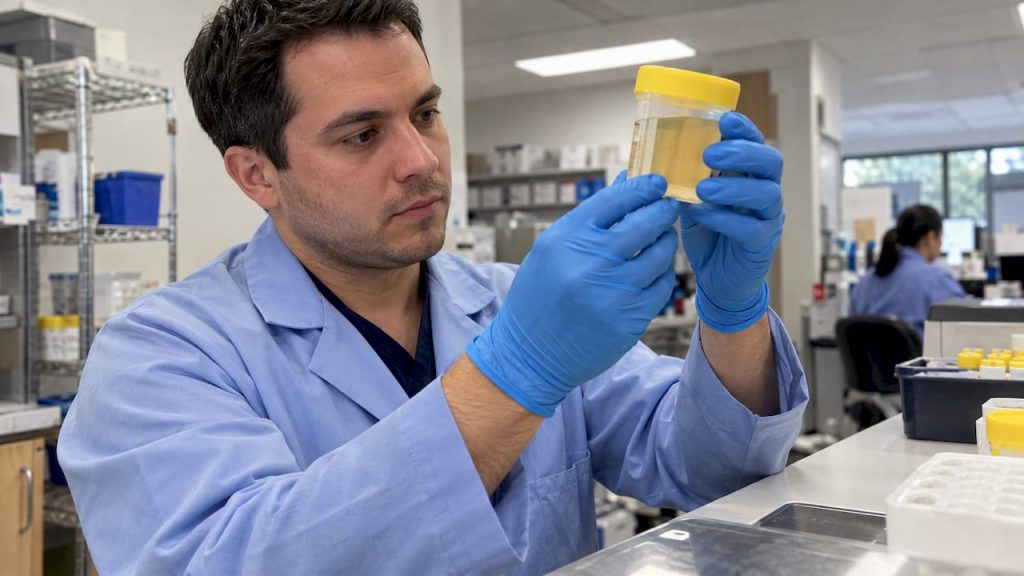
Drinking water will not reliably help you pass a urine drug test, and attempting it puts you at real risk of a flagged or rejected sample. Water can temporarily thin out your urine, but labs are built to catch exactly that. Skip the last-minute chugging, use the safer prep steps below, and if a hair test is on the table, start a structured hair-test preparation plan instead.
TL;DR:
- Fluid loading can lower metabolite concentrations within 1.4 to 1.5 hours, but levels typically recover over 8 to 10 hours, leaving an unreliable testing window.
- Labs commonly flag urine as dilute when creatinine falls below 20 mg/dL or specific gravity reaches 1.003 or lower; extreme readings can trigger observed recollection.
- Use steady, ordinary hydration and take a home dip card two to three hours before collection; a negative result still cannot guarantee a lab pass.
- Hair tests can detect exposure for roughly 90 days, and the recommended cleansing routine takes repeated steps over several days, so begin early.
- Disclose prescriptions and prescribed diuretics before collection, and avoid large amounts of caffeine or alcohol, which can affect urine concentration.
Table of Contents
- Quick prep checklist for the day of your test
- How drinking water changes urine chemistry
- How labs and MROs catch a diluted sample
- Safer, proven preparation strategies
- Practical, safe preparation steps to reduce dilute flags
- Why we discourage dilution and what we recommend instead
- Get the right prep products and support now
- FAQ
- Sources
Quick prep checklist for the day of your test
What you do in the hours before collection matters more than any single trick. A dip card check before you leave home tells you more than guessing ever will.
- Sip water steadily through the morning instead of drinking a large volume right before your appointment.
- Never add water or anything else to a sample after it’s collected. That’s tampering, not dilution, and it carries its own consequences.
- Bring a list of current prescriptions so you can disclose them to the collector or the Medical Review Officer if asked.
- Use an at-home urine test kit earlier the same day to see whether your sample looks appropriately concentrated.
- If you’re physically unable to produce enough urine, say so. Don’t improvise.
Pro Tip: Test yourself with a dip card two to three hours before your appointment, not minutes before. It gives you time to adjust if the result looks off.
How drinking water changes urine chemistry
Urine dilution is simple physiology. When you load up on fluids, your kidneys dump more water into your urine, which lowers creatinine and specific gravity, two markers labs measure on every sample. Push those numbers low enough and the lab flags the specimen as dilute before it even looks at drug results.
A controlled study on fluid loading found that drinking about a gallon of water produced dilute specimens in roughly 1.4 to 1.5 hours, with metabolite concentrations dropping enough to sometimes produce a false negative on an immunoassay screen. The effect was short-lived: concentrations climbed back up over the next 8 to 10 hours as the body processed the excess fluid.
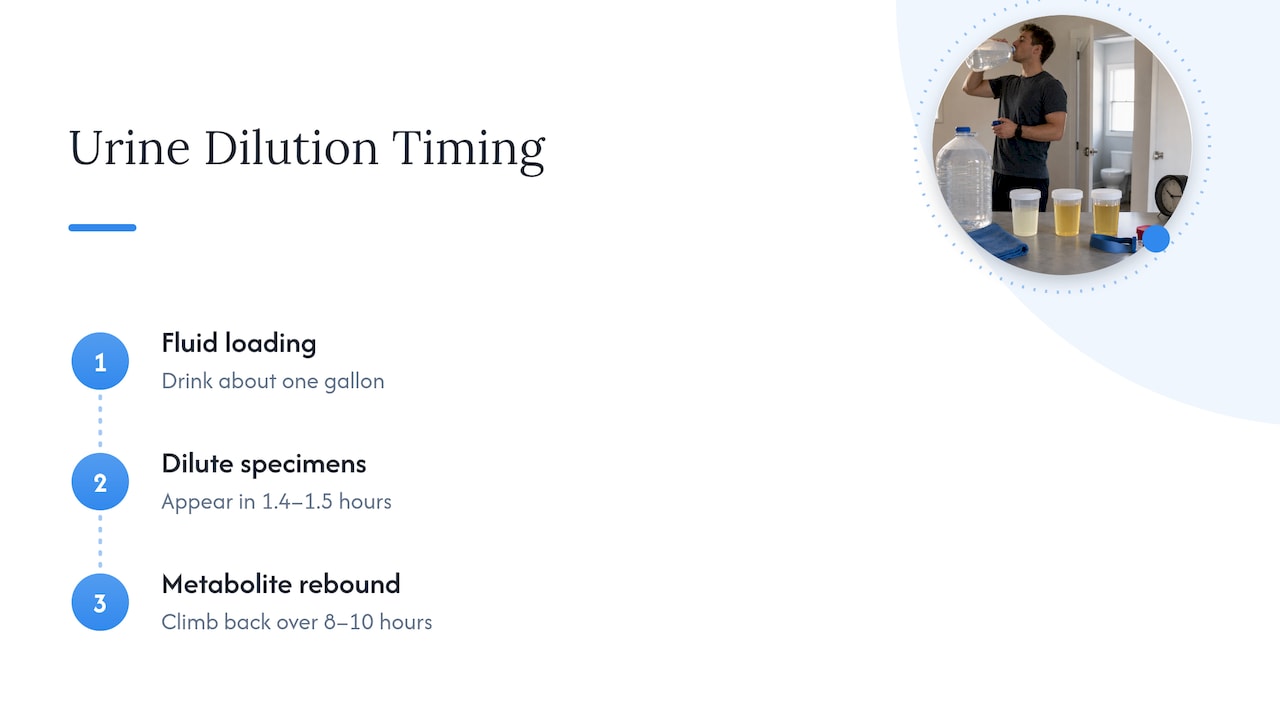
That short window is the core problem with water as a strategy. Cannabinoids tend to be the most sensitive to this kind of dilution on a screening test, while other drug classes can rebound to positive almost as quickly as they disappeared. Timing a test around a narrow dilution window is guesswork, and guessing wrong means a positive result or a second collection you didn’t want.
How labs and MROs catch a diluted sample
Every urine sample that reaches a certified lab goes through specimen validity testing before anyone looks at drug results. That means checking creatinine, specific gravity, pH, and temperature, along with screening for adulterants that don’t belong in human urine.
- Creatinine below 20 mg/dL or specific gravity at or below 1.003 is a common threshold labs use to call a sample dilute.
- Very low creatinine, in the range of 2 to 5 mg/dL, can require an observed recollection under federal workplace testing rules.
- A dilute result can lead to recollection, a substituted or refusal finding if the values look non-physiologic, or simply a negative result with no further action, depending on the program.
| Outcome | What triggers it | Likely next step |
|---|---|---|
| Negative and dilute | Low but not extreme creatinine/specific gravity | May prompt a second collection |
| Substituted or refusal | Values outside human physiologic range | Treated as a refusal to test |
| Negative, no action | Mildly dilute but within policy limits | No further testing required |
Federal guidance under 49 CFR Part 40 spells out exactly how employers and Medical Review Officers are supposed to respond to a dilute report, and real-world MRO case studies show donors being asked to explain their fluid intake before a recollection gets ordered. A dilute flag rarely lets anyone off the hook. It usually just means doing the test again, sometimes under closer supervision.
Safer, proven preparation strategies
Water dilution is a short, unreliable window. A structured prep plan gives you more control, especially if your biggest exposure is a hair follicle test, which can look back roughly 90 days instead of a few hours.
- Start hair preparation early. Hair testing requires breaking down toxins bound inside the hair shaft, which takes a deliberate, multi-step wash routine rather than a one-time fix.
- Use a purifying treatment built for this job. The Macujo Method pairs specific cleansing steps with a product like Zydot Ultra Clean Shampoo to work through the hair cuticle before a follicle test.
- For urine or saliva screenings, skip intentional dilution. Stop any non-prescribed substance use as early as possible, disclose prescriptions, and avoid diuretics or large fluid loads right before collection.
- Check yourself first. A 13-panel urine dip card or a 12-panel saliva test can tell you where you stand before a real test puts you on the spot.
Pro Tip: If you’re facing a hair test and a timeline under a week, don’t wait. The Macujo approach needs repetition over several days to work through accumulated residue.
Practical, safe preparation steps to reduce dilute flags
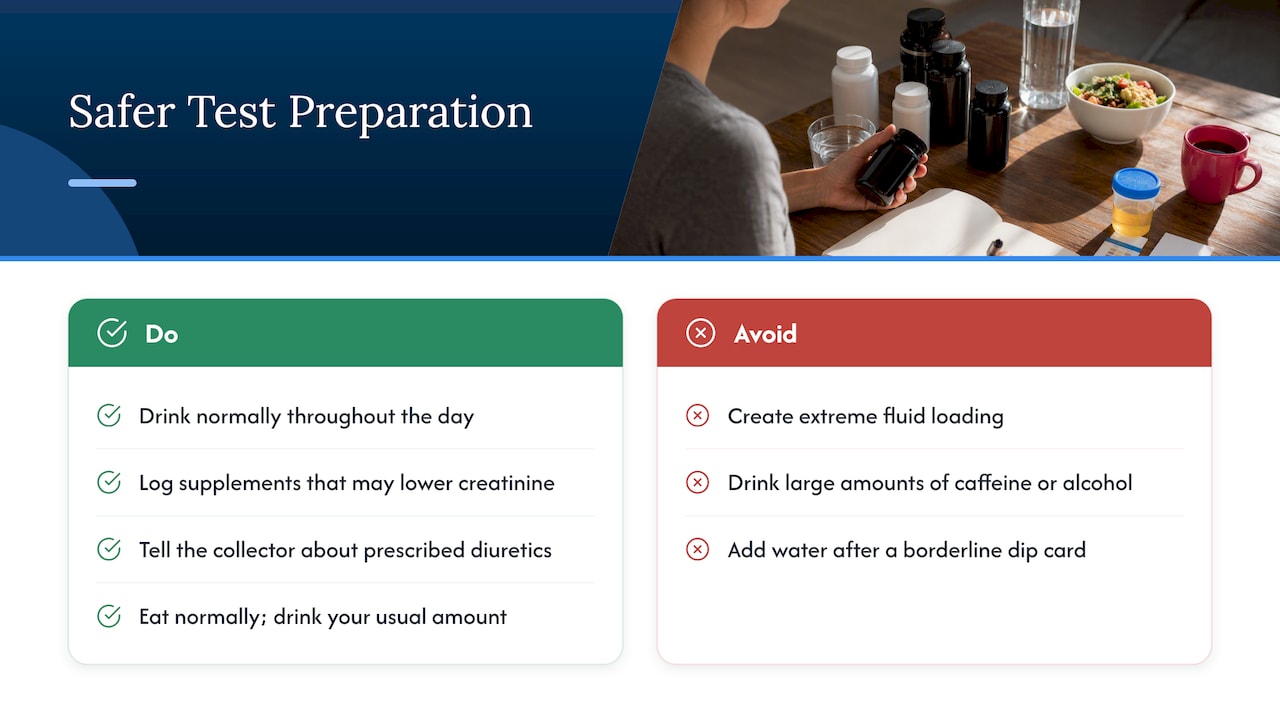
The safest way to avoid a dilute flag is to never create one in the first place. That starts with ordinary hydration, not extremes. Drink water the way you normally would across the day rather than treating your test morning as an emergency fluid-loading event.
Keep a mental log of anything you’ve taken that could lower creatinine on its own, including certain high-dose vitamin supplements, since labs sometimes see dilute patterns in people who weren’t trying to dilute anything at all. If you take prescribed diuretics for blood pressure or another condition, mention this to the collector ahead of time so it’s on record before results come back.
Avoid caffeine and alcohol in large amounts right before testing, since both affect kidney output and can push specific gravity into flagged territory without you intending it. Eat a normal meal and drink a normal amount of water with it, nothing more.
If you’ve already used an at-home dip card and it shows a faint or borderline line, don’t try to fix that with more water. Borderline results call for honest preparation time, not another workaround. Reading your situation accurately now saves you from an observed recollection later, which is a far more invasive process than any of this.
Why we discourage dilution and what we recommend instead
We’ve spent more than 20 years helping people prepare for hair, urine, and saliva screenings, and the pattern is consistent: dilution tricks fail more often than they work, and they fail at the worst possible moment. Labs are built to catch exactly what water dilution does, and a flagged sample often means more scrutiny, not less.
We’d rather see you walk in prepared than gamble on a narrow timing window. That means structured hair prep when a follicle test is on the table, honest disclosure of prescriptions, and realistic self-checks before you ever sit down with a collector. When your situation is urgent or complicated, a private consultation gives you a plan built around your actual timeline.
— Detox Experts
Get the right prep products and support now
If a drug test is coming up, guesswork costs you more than it saves. We carry the products people actually need to prepare properly, plus direct support when the timeline is tight.
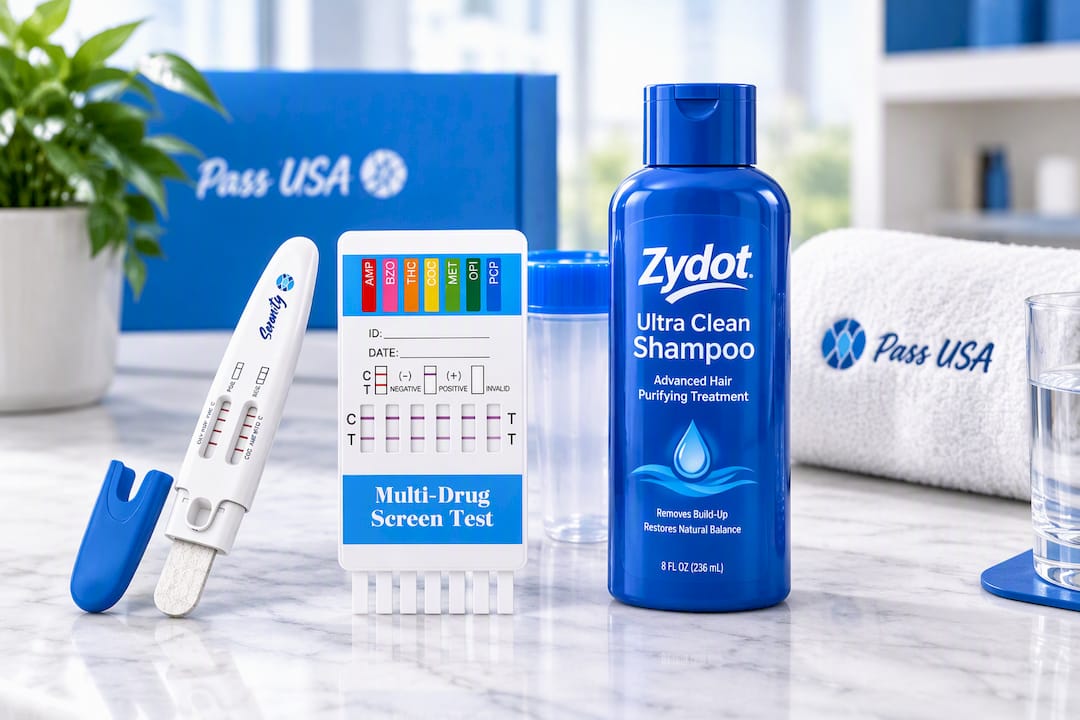
- 12-Panel saliva rapid test: check your status before an oral fluid screening catches you off guard.
- 13-Panel urine dip card: a clinical-grade self-check, including fentanyl, before you walk into a real collection.
- Zydot Ultra Clean Shampoo: our go-to hair purifying treatment for anyone preparing for a follicle test.
For harder cases, a private consultation with Mike Macujo walks you through a tailored, step-by-step plan instead of leaving you to piece one together alone. Browse our full range of hair, urine, and saliva test products and get ahead of your test date today.
FAQ
Is it good to drink water before a drug test?
Drinking a normal amount of water is fine, but large volumes right before a test can push your sample into dilute territory, which labs flag through creatinine and specific gravity checks. A flagged dilute result often leads to a recollection rather than a clean pass, so moderate, steady hydration is the safer approach.
What substances do drug tests detect?
Standard panels screen for drug classes like THC, cocaine, opioids, amphetamines, and PCP, with expanded panels adding substances like fentanyl. The exact list depends on the panel size and the type of test, whether urine, hair, or saliva.
If I pass a home drug test, will I also pass a lab test?
A home dip card gives you a useful early read, but it’s less sensitive than lab confirmation methods, so a clean home result doesn’t guarantee a clean lab result. Labs confirm positives with more precise testing, which can catch lower concentrations a home test might miss.
How do I use a drug test kit?
Most dip card kits ask you to collect a small urine or saliva sample and dip the test strip for a set number of seconds before reading results within minutes. Our 13-panel urine dip card and 12-panel saliva test each include step-by-step instructions for accurate self-checks.
How long does water dilution affect a drug test?
Fluid loading can lower some metabolite concentrations within 1.4 to 1.5 hours, but levels typically recover over the following 8 to 10 hours. That narrow, unpredictable window is why timing a test around dilution is unreliable.
Sources
- In Vivo Adulteration: Excess Fluid Ingestion Causes False-Negative Marijuana and Cocaine Urine Test Results
- Medical Review Officer (MRO) case studies — urine (2025)
- eCFR :: 49 CFR 40.197 — What happens when an employer receives a report of a dilute specimen?